
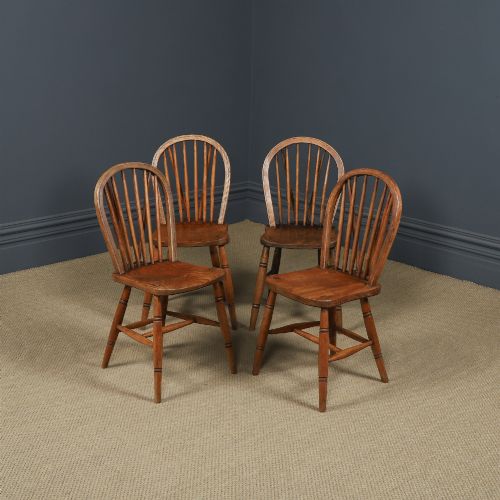
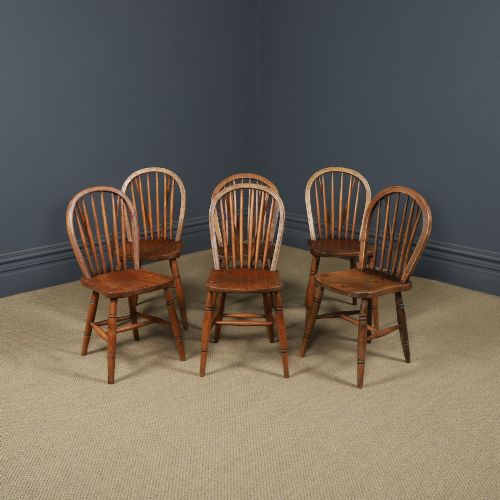
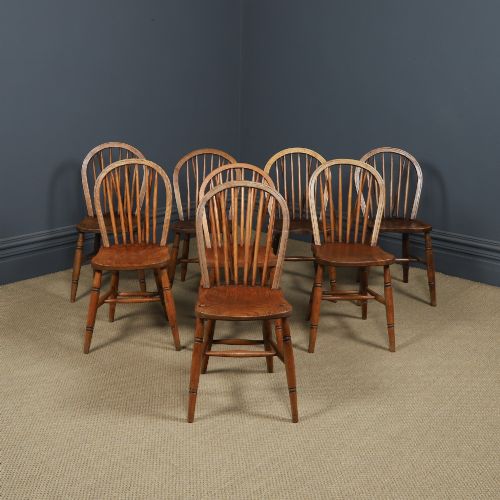
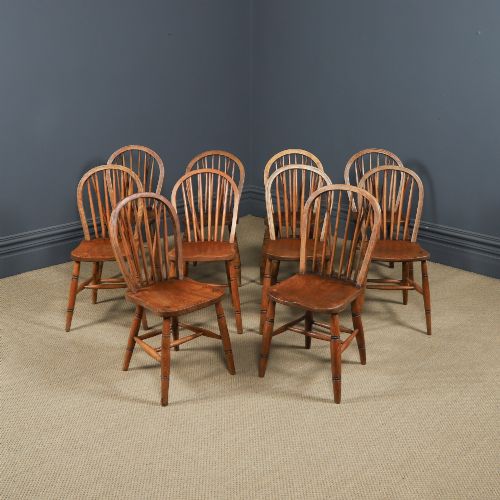


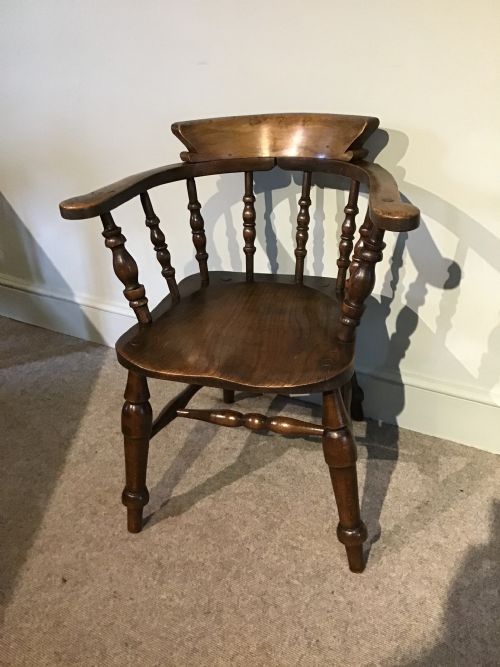
Edwardian Elm Chair
An edwardian elm chair brings honest English country vernacular to a room, offering sturdy wood and tactile grain grown through generations of use.
Edwardian Elm Chair
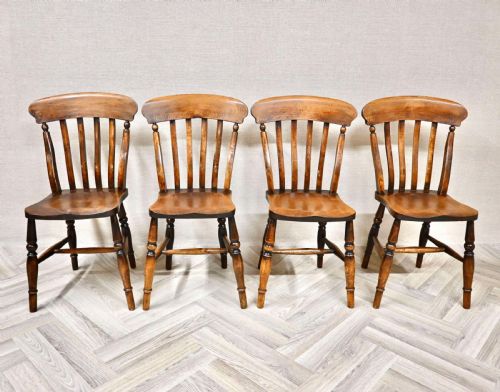
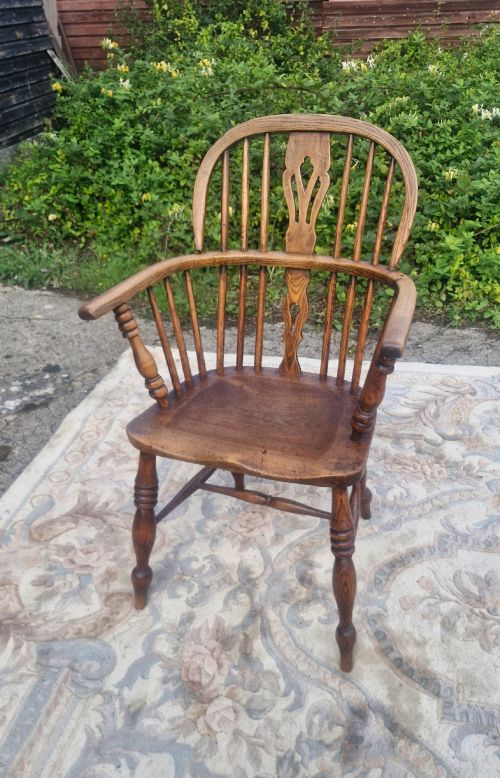
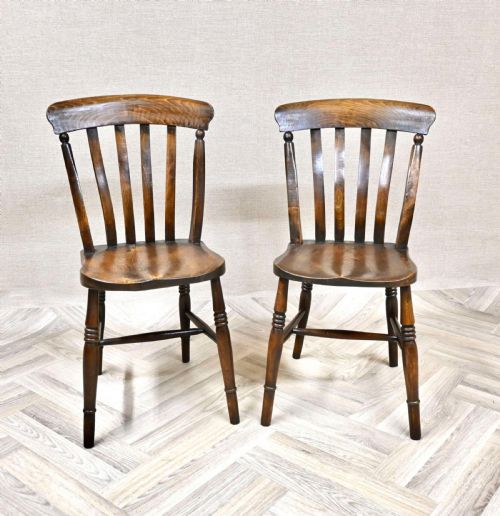
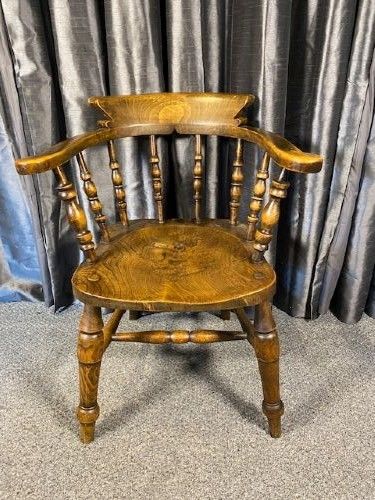
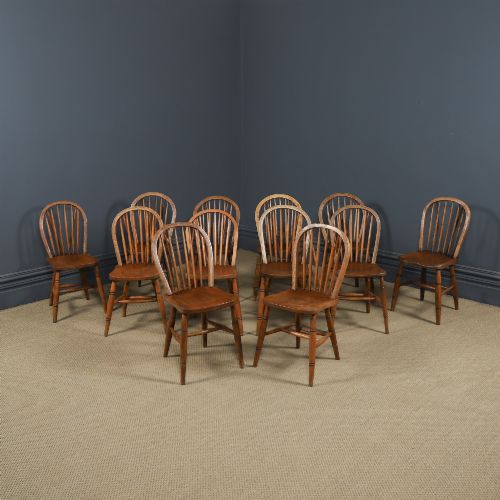
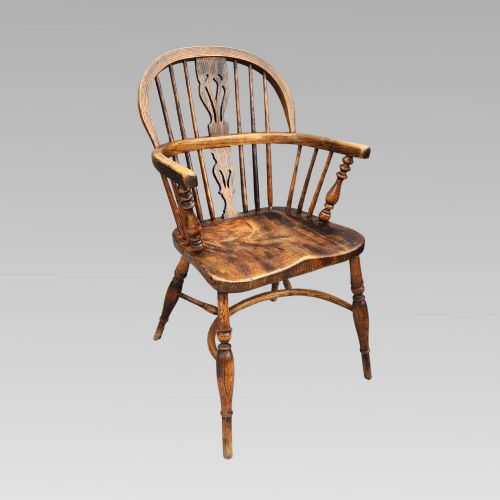
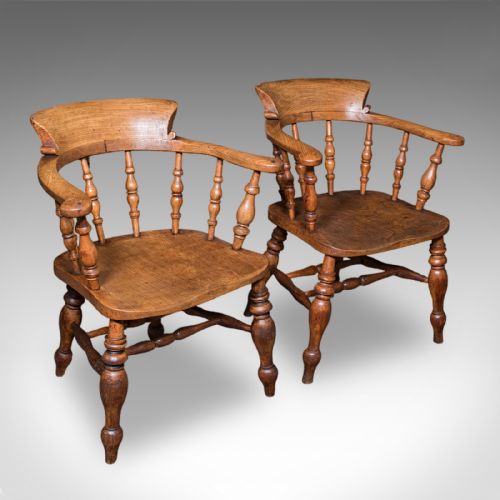
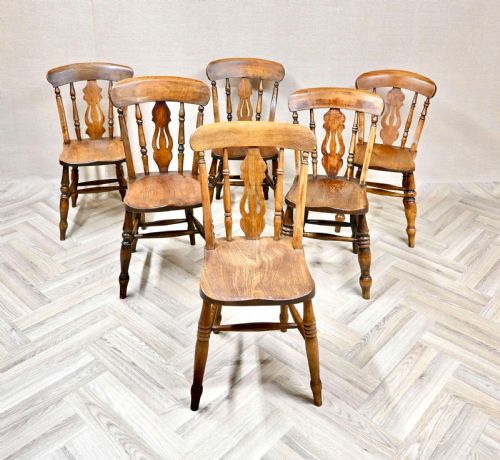
An edwardian elm chair encompasses utilitarian seating made across the countryside and domestic kitchens, most frequently appearing as Windsor variations, low-back armchairs, captain's bows, and sets of dining chairs. These pieces span centuries of regional craftsmanship, with the Edwardian era producing sturdy hybrids of elm seats paired with beech or ash turnings.
Buyers encounter distinct forms ranging from single office desk chairs and smoker's bows to large dining sets and small children's seating. The selection relies heavily on vernacular English country traditions, uniting practical seating with timber selected for strength and resilience.
How They Were Made
Makers utilised solid elm for saddle-shaped seats because the interlocking grain resists splitting under pressure, combining it with ash or beech for flexible steam-bent hoops, spindles, and legs. Traditional construction methods involved wedging tapered tenons directly through drilled seat planks.
Turned components were shaped on pole lathes by regional woodworkers, while wheelback and lathback splats were cut and shaped by hand. Finishes depended on natural wax and decades of polishing rather than heavy synthetic varnishes.
Available pieces range from single children's chairs and office desk revolving seats to matched sets of twelve dining chairs.
What Varies in Quality
The distinction between standard utility seating and finer examples rests in the depth of the seat plinth's sculpting and the balance of the turned spindles. Thicker elm planks permitted deeper, more comfortable saddle scoops shaped by skilled adze work.
Structural integrity depends on the original tightness of the joints and whether replacement turnings match the historic patina. Retaining uniform sets without mismatched replacement legs elevates the standing of dining groups.
The Edwardian Elm Chair Glossary
- Elm
- A tough, fibrous domestic hardwood with a distinctive interlocking grain that prevents splitting, making it the primary choice for solid chair seats.
- Windsor
- A traditional chair construction style featuring turned legs and spindles socketed directly into a solid wooden seat plinth rather than a framed carcass.
- Smoker's Bow
- A sturdy, low-backed armchair with a continuous curved armrail supported by turned spindles, often utilised in Victorian and Edwardian offices or smoking rooms.
- Lathback
- A chair back featuring vertical flat wooden slats, or laths, secured between a top rail and the seat.
- Vernacular
- Objects designed by regional craftsmen to serve a practical local purpose without adhering to grand academic architectural styles.
Edwardian Elm Chair: Frequently Asked Questions
How do I care for an elm chair?
Apply a traditional beeswax polish sparingly to nourish the dry timber and maintain a soft sheen without blocking the grain.
Keep wooden seating away from direct heat sources and sudden humidity changes to prevent shrinkage or loose joints.
Can I mix different chair styles around a table?
Mixing individual country chairs creates an authentic vernacular dining arrangement that reflects how such furniture accumulated in historic homes over decades.
Matching timber tones and similar seat heights help unify a disparate set of kitchen chairs.
Were these chairs used for dining?
Many examples served utilitarian roles in farmhouses and cottages as kitchen dining seats, built to withstand daily family use.
Larger sets and carvers were designated for the heads of tables or formal country house dining rooms.