

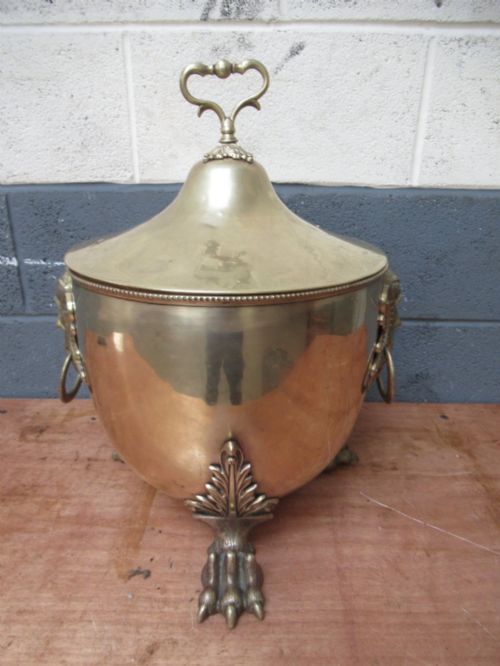


Edwardian Decorative Bucket
An edwardian decorative bucket brings domestic metalwork and coopered timber into a room, serving functional hearth or dining roles with period character.
Edwardian Decorative Bucket
An edwardian decorative bucket encompasses functional vessels shaped for the hearth, dining table, and hallway storage, spanning coal receivers, wine coolers, and stick stands. These items draw on Victorian, Edwardian, Art Nouveau, Arts and Crafts, and English Country styles, adapting utilitarian forms into ornamental objects.
The versions most commonly met on this page include copper coal buckets and brass containers from the early twentieth century alongside coopered oak jardiniere stands and silver-plated bottle coolers. Such pieces reflect the period preference for combining domestic utility with distinct stylistic flourishes in metal and timber.
Makers and artisans of the era utilised specific regional designs, resulting in items that range from Scandinavian caviar ice servers to English mahogany and oak coal boxes. Each object retains a connection to domestic life at the turn of the twentieth century, whether positioned beside a fireplace or utilised for serving.
How they were made
Construction relies heavily on sheet metals such as brass and copper, often hand-beaten or joined with wrought iron mounts to build robust coal receivers and fireside containers. These metal bodies frequently feature riveted seams and hammered surfaces characteristic of the Arts and Crafts movement.
Wooden examples utilise traditional cooperage techniques, employing staves of oak or mahogany held together by metal bands to create watertight jardiniere stands and wine buckets. Leather and glass also appear in select server sets and stick stands, showing material versatility across different workshops.
Edwardian Decorative Bucket Retail Price Guide 2026
Typical asking prices for edwardian decorative bucket among the pieces listed under this phrase on Sellingantiques today, from the lower quarter to the upper quarter. They describe what is for sale here now, not the wider market.
Listings feature items spanning the late Victorian period through the Edwardian era up to the 1920s, constructed in brass, copper, wrought iron, oak, mahogany, glass, and leather.
What varies in quality
The distinction between tiers rests upon the execution of surface work, such as the precision of hand-hammered patination on copper bodies and the integrity of the joinery in coopered oak. Superior examples demonstrate careful attention to structural mounts and hinges, particularly on coal boxes and purdoniums.
Material thickness and the refinement of applied decoration, including brass mountings or inlaid timber work, further separate standard utilitarian containers from more ambitious artistic pieces. The harmony between the functional purpose of the vessel and its decorative style defines the standard of the item.
The Edwardian Decorative Bucket Glossary
- Coopered
- Constructed from wooden staves bound together by metal hoops, traditionally used for casks, buckets, and jardiniere stands. This technique ensures stable assembly for items holding soil, water, or coal.
- Purdonium
- A specialised type of coal box featuring a sloping front and a hinged lid, designed to hold coal neatly beside a fireplace. They often include a removable interior metal liner for cleanliness.
- Jardiniere
- An ornamental stand or pot, typically ceramic, metal, or coopered wood, designed to hold live plants or floral displays. In this context, they frequently take the form of floor-standing buckets.
- Arts and Crafts
- A design movement spanning the late nineteenth and early twentieth centuries that emphasised handcraftsmanship, simple forms, and traditional guild techniques. It rejected mass production in favour of visible maker skill.
- Silver Plate
- A thin layer of silver fused to a base metal, commonly utilised on wine coolers and ice servers to achieve a polished appearance. This method offered the lustre of solid silver at a lower production cost.
Edwardian Decorative Bucket: Frequently Asked Questions
What is an edwardian decorative bucket used for?
These vessels served various domestic duties, primarily holding coal near a fireplace, cooling wine at the table, or containing walking sticks in a hallway.
Over time, their roles shifted as central heating replaced open fires, leading many people to repurpose coal buckets and scuttles as plant planters or umbrella stands.
How do I clean a copper or brass bucket?
Metal surfaces benefit from gentle dusting and occasional cleaning with appropriate metal polishes, though many collectors prefer preserving an aged patina.
Harsh abrasive cleaners should be avoided because they strip away historical surface oxidation and diminish the character of hand-beaten finishes.
Are these buckets waterproof?
Coopered timber planters and metal wine coolers were constructed to hold moisture or ice, but older wooden staves can shrink over time if kept in very dry environments.
It is advisable to check the interior liner or test wooden vessels gently before using them directly for live plants or liquid.
How do I distinguish Edwardian pieces from Victorian ones?
Edwardian items frequently display lighter proportions, cleaner lines, and influences from Art Nouveau and Arts and Crafts design, moving away from heavier Victorian ornamentation.
However, stylistic crossover is common around the turn of the century, meaning construction materials and registry marks often provide the clearest dating evidence.