



Edwardian Cut Glass Salts
Edwardian cut glass salts bring brilliant sparkle to the dining table, combining heavy faceted crystal with polished silver mounts.
Edwardian Cut Glass Salts
Edwardian cut glass salts are small open vessels or pedestal bowls designed to hold table salt, frequently encountered as paired sets or cased collections. These pieces often feature alongside related tableware such as cruet sets, condiment stands, and trinket dishes within the broader category of domestic silver and glass. A buyer seeking this specific phrase will find items spanning the Edwardian period, alongside Victorian and later twentieth century examples.
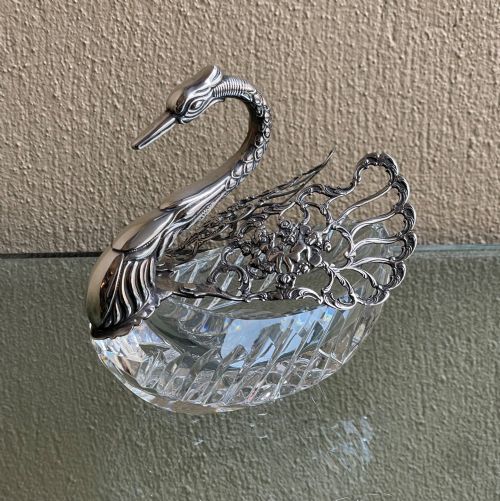
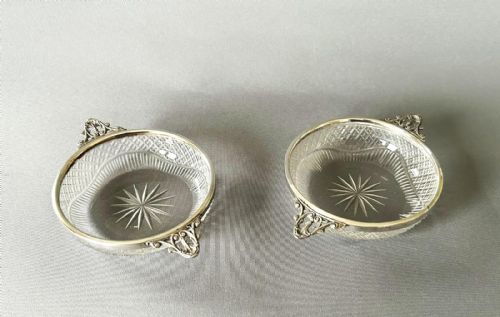
The form ranges from simple open salt cellars to sophisticated pedestal designs, sometimes accompanied by silver spoons. Many examples incorporate silver plate or sterling silver rims, mounts, and collars that contrast with the clear or coloured glass beneath. They serve as functional table accessories that reflect the formal dining habits of their era.
How they were made
Makers produced these pieces using heavy lead crystal or standard glass, shaped by blowing or pressing before artisans applied deep wheel cuts to create geometric or floral facets. This cutting technique maximises light refraction across the surface of the glass, giving the material its characteristic brilliance. Metal components such as silver plate and sterling silver were shaped, cast, and mounted to the glass rims or bases.
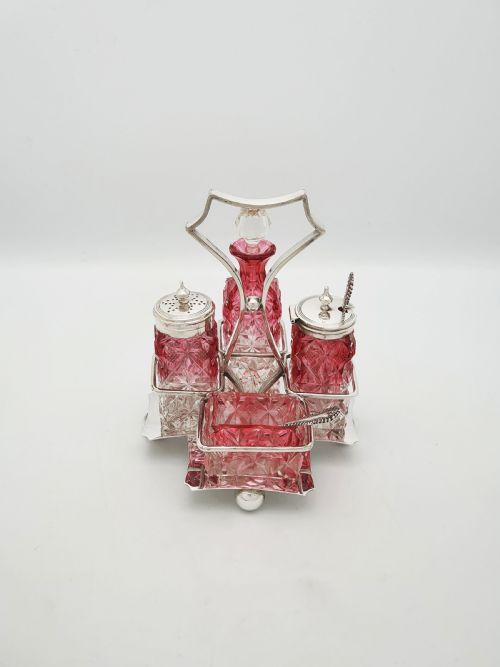
Workshops combined metalworking and glass finishing to secure mounts tightly around the glass vessels, often incorporating hallmarks for silver or standard electroplate marks for silver plate. Coloured variations utilised cranberry glass and ruby glass, created by adding gold or copper compounds to the molten batch before cutting.
Edwardian Cut Glass Salts Retail Price Guide 2026
Typical asking prices for edwardian cut glass salts among the pieces listed under this phrase on Sellingantiques today, from the lower quarter to the upper quarter. They describe what is for sale here now, not the wider market.
Listings for this phrase include items made from cranberry glass, ruby glass, sterling silver, and silver plate.
What varies in quality
The distinction between standard and superior pieces lies in the crispness and depth of the glass cutting, where sharper facets produce superior light play. Heavy gauge metal mounts and substantial glass walls indicate higher manufacturing standards, whereas thin glass and light silver plating suggest everyday utility grades. Complete sets housed in original fitted cases command greater interest from collectors than mismatched or solitary pieces.
Design complexity also defines the tier of the object, moving from basic open salts to elaborate pedestal forms with hallmarked silver rims and matching spoons. The clarity of the crystal, free from cloudiness or heavy internal bubbles, marks the work of superior glasshouses.
Walker And Hall
The Edwardian Cut Glass Salts Glossary
- Cruet set
- A matched collection of bottles, jars, or salts held in a stand for condiments at the dining table. These frames often utilise silver plate.
- Cranberry glass
- A transparent pink-red glass produced by adding gold to the molten mixture. It appears frequently in nineteenth and early twentieth century tableware.
- Hallmark
- An official stamp applied to precious metals indicating purity, maker, and assay office. Sterling silver mounts often bear these marks.
- Pedestal salt
- A salt cellar raised on a small foot or stem rather than resting directly on the table base. Edwardian examples often feature cut glass bowls on square or round feet.
- Ruby glass
- A deep red glass coloured with copper or gold, resembling ruby gemstones. It is seen in scent bottles and decorative dishes.
Edwardian Cut Glass Salts: Frequently Asked Questions
What are edwardian cut glass salts used for?
These small dishes held dry salt for individual diners before shaker bottles became common on dining tables. Guests would take a pinch using a tiny salt spoon or fingers.
Today they function as decorative table accents or small catchalls for rings and trinkets on a dressing table.
How do I clean cut glass salts?
Wash glass components gently in warm soapy water using a soft cloth to avoid scratching the polished facets. Avoid harsh chemical cleaners that can damage vintage silver plate or sterling mounts.
Dry thoroughly with a lint-free cloth to maintain the sparkle of the crystal.
Are silver plated mounts original?
Makers frequently paired cut glass vessels with silver plate or sterling silver rims and collars during the initial manufacturing process. These mounts were secured to protect the glass edges and add decorative contrast.
Matching hallmarks or consistent patination usually indicates that the metal mount and glass body belong together from the period.
How do I tell Edwardian salts from Victorian ones?
Edwardian pieces often lean towards lighter, refined proportions and geometric cut glass patterns influenced by early twentieth century tastes. Victorian examples tend to feature heavier ornamentation, elaborate rococo revival styling, or rich coloured glass like ruby and cranberry.
Examining any accompanying hallmarks, registration dates, or fitted presentation cases helps confirm the precise era of manufacture.