
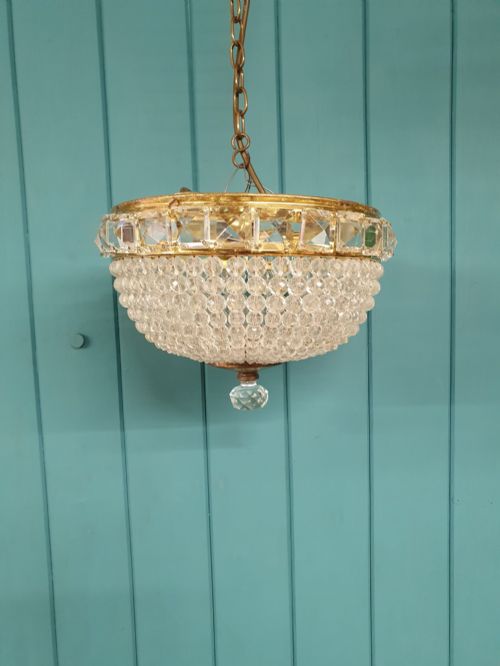
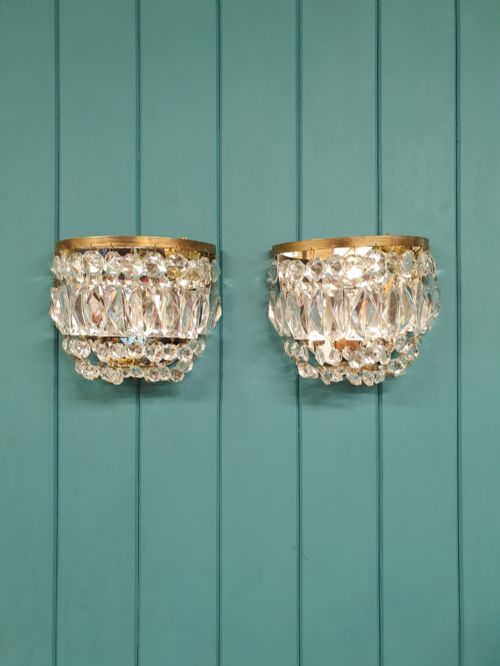
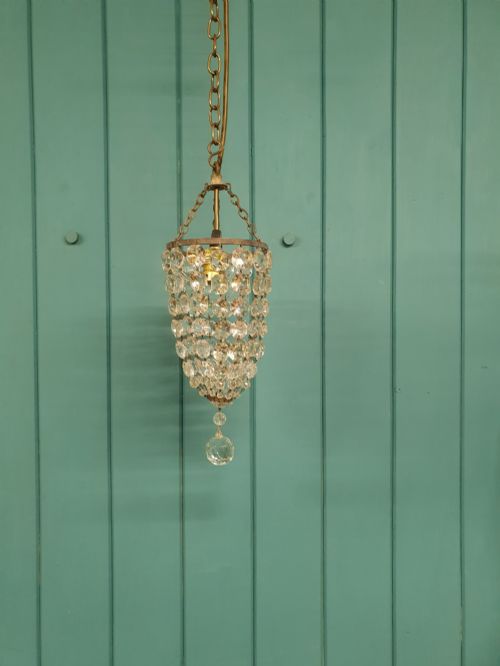


Edwardian Crystal Bag Light
These Edwardian crystal bag light fixtures bring brilliant illumination and classical elegance to any room through intricate glass beadwork.
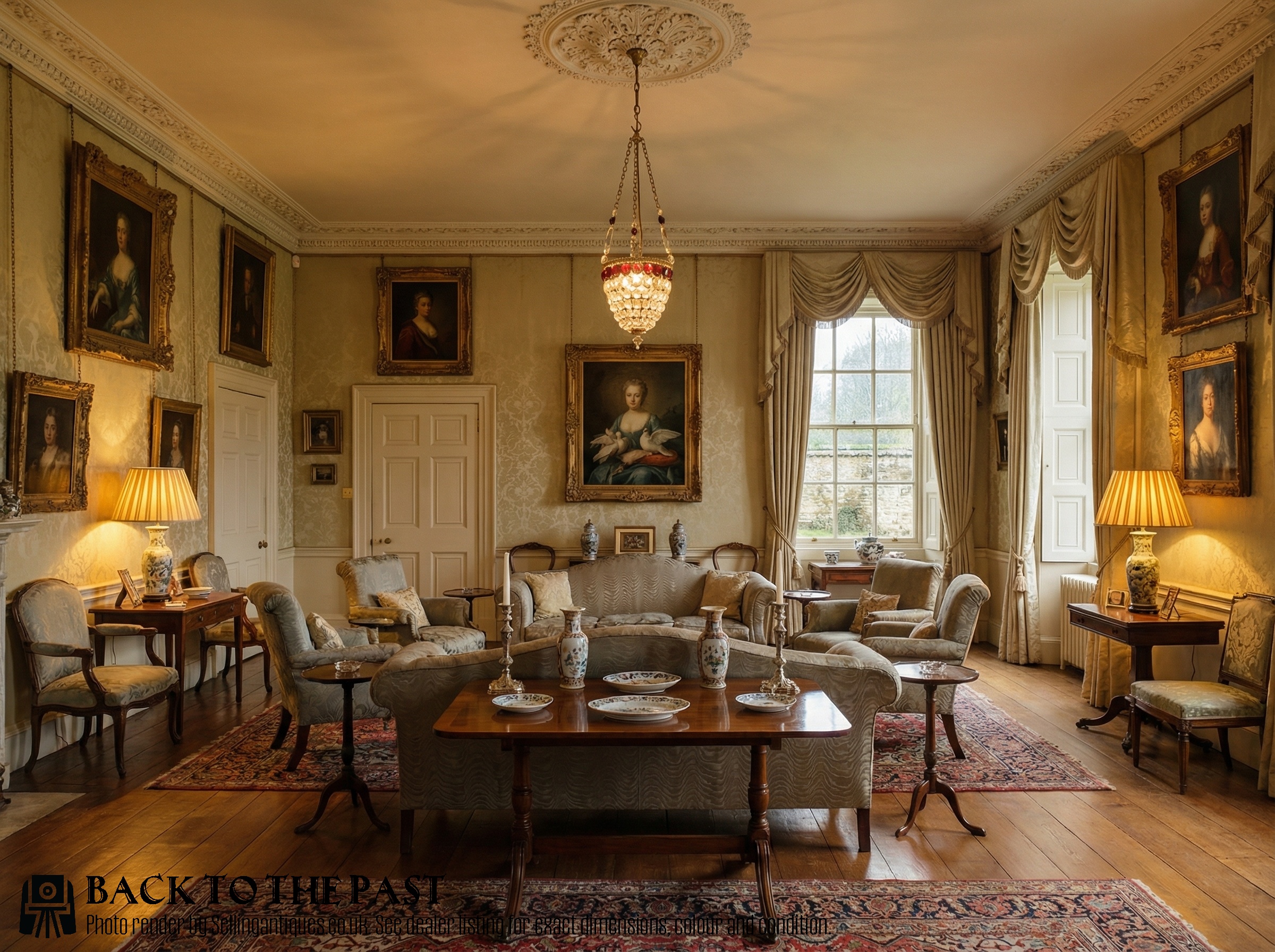
Edwardian Crystal Bag Light
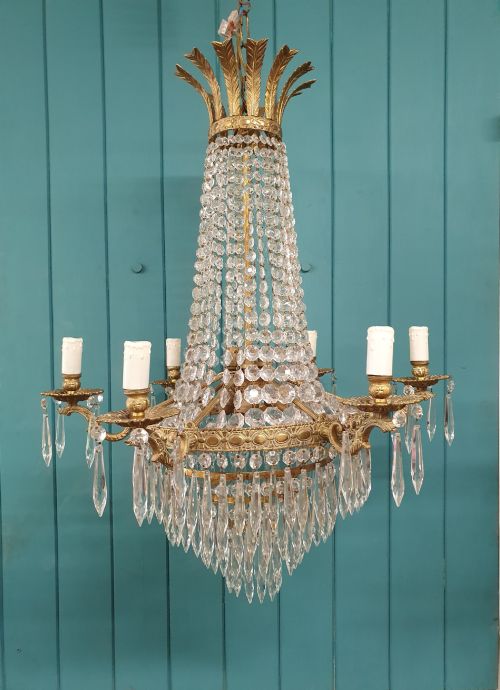
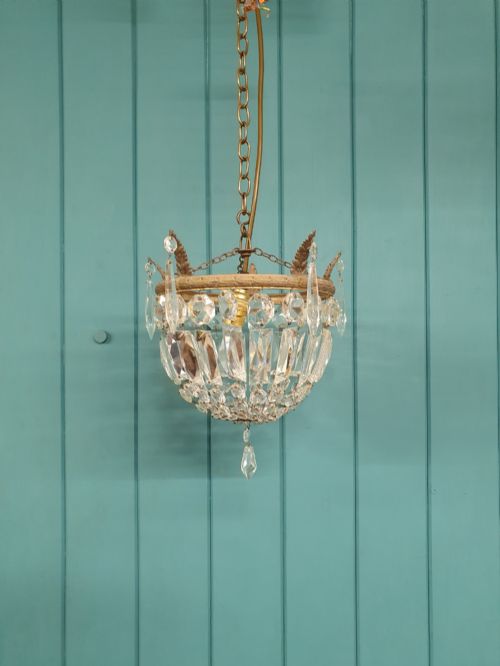
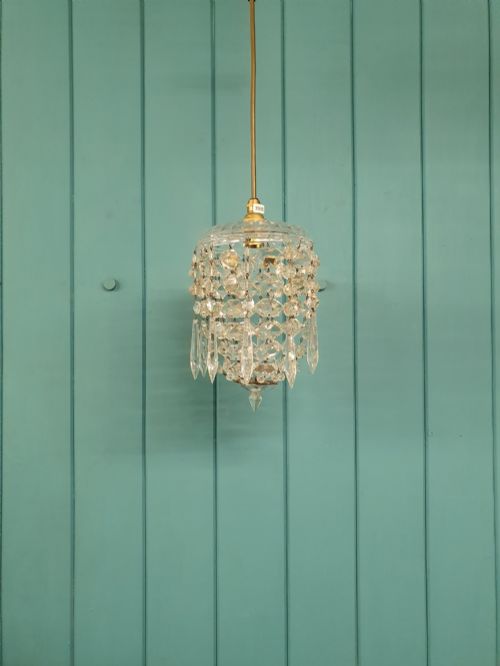
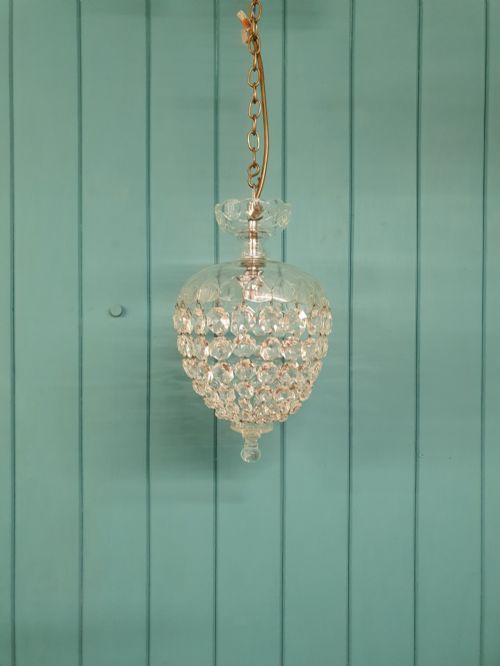
The edwardian crystal bag light category encompasses ceiling lights, chandeliers, and wall lights created in forms like domes, baskets, and tents. You will frequently encounter small bag chandeliers featuring brass mounts and cut glass drops dating from the Edwardian era.
These fixtures combine functional illumination with decorative glass assemblies suspended from metal frames. The designs range from simple tapered bag chandeliers to complex swag chandeliers with cherubs and spikes.
Materials and construction
Makers constructed the structural frames using brass, gilt metal, and wire to support the hanging glass elements. These metal mounts secure the upper tent sections and lower bag configurations.
The ornamentation relies on cut glass, crystal, and glass crystal arranged in beads, coffin prisms, and droplets. These glass components catch and refract light across the room.
Listings feature pieces spanning the late Victorian period through the 1930s, utilising brass, gilt metal, and various cut glass configurations.
Distinctions in quality
The refinement of the glass cutting and the clarity of the crystal components determine the brilliance of the fixture. Heavier brass mounts and more complex wiring arrangements also separate standard production from finer examples.
The complexity of the design, such as incorporated leaf decoration, cherubs, or extensive tent and bag combinations, indicates the level of craftsmanship invested in the piece.
The Edwardian Crystal Bag Light Glossary
- Bag chandelier
- A light fixture featuring a gathered lower section of glass beads resembling a small bag or basket. This shape concentrates the illumination while diffusing light through the crystal drops.
- Tent chandelier
- A style featuring an upper canopy of glass strands arranged in a conical tent shape above the main body. The strings connect the crown to the lower metal ring.
- Coffin prism
- A long, flat-backed cut glass pendant shaped like a wedge or coffin. These pieces hang along the perimeter to refract light.
- Gilt metal
- Metal treated with a gold-coloured finish or plating to enhance the decorative appearance of the frame. This material supports the glass components without adding excessive weight.
- Swag
- A decorative chain or garland of glass beads draped across the upper section of the fixture. These elements soften the architectural lines of the metal frame.
Edwardian Crystal Bag Light: Frequently Asked Questions
Where should I hang a bag chandelier?
These compact light fixtures suit smaller rooms, hallways, or entryways where ceiling height is limited. Their detailed glasswork provides a strong focal point without dominating the spatial proportions of the area.
Positioning them centrally allows the cut glass drops to disperse light evenly across surrounding walls and surfaces.
How do I clean an antique crystal light?
Maintenance involves gently wiping individual glass beads and prisms with a mild cleaning solution applied to a soft cloth. Removing the dust regularly prevents buildup that dulls the refractive quality of the crystal.
Care must be taken around the brass and wire connections to avoid disturbing the strung glass elements.
What periods do these lights come from?
The available fixtures primarily date from the Edwardian period and the early twentieth century, spanning roughly from 1890 to 1930. These pieces reflect stylistic revivals of French Regency, Empire, and Rococo designs.
Construction methods and metal finishes often help distinguish the specific decade of production.