






Edwardian Cottage Artwork
Edwardian cottage artwork captures pastoral life through watercolours and oils, offering buyers a glimpse into rural tranquility.
Edwardian Cottage Artwork
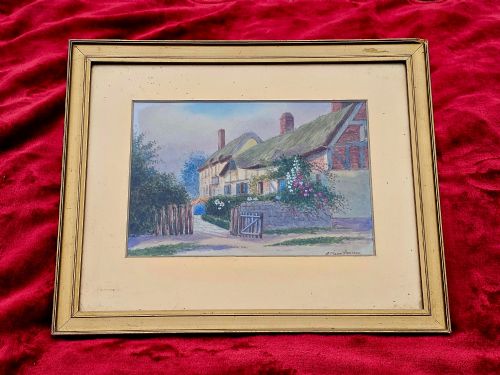
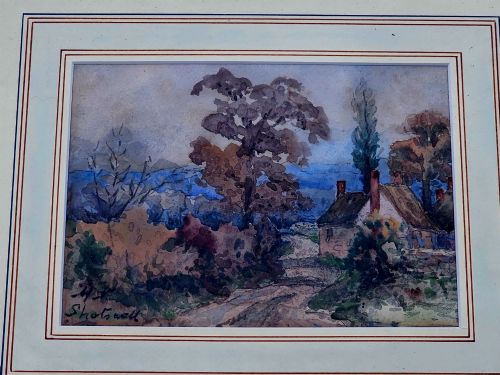
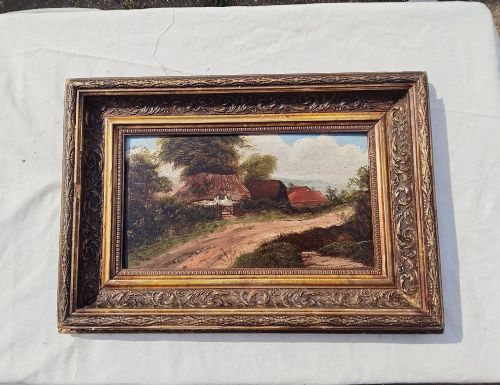
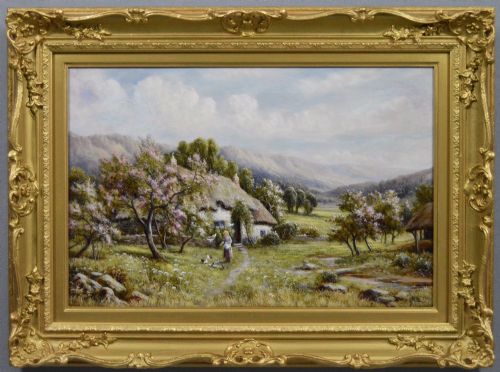
Edwardian cottage artwork centres on rural scenes, depicting thatched homes, gardens, and pastoral daily life through paintings and works on paper. The majority of pieces found here date from the late nineteenth century to the early decades of the twentieth century, aligning with Edwardian and late Victorian periods.
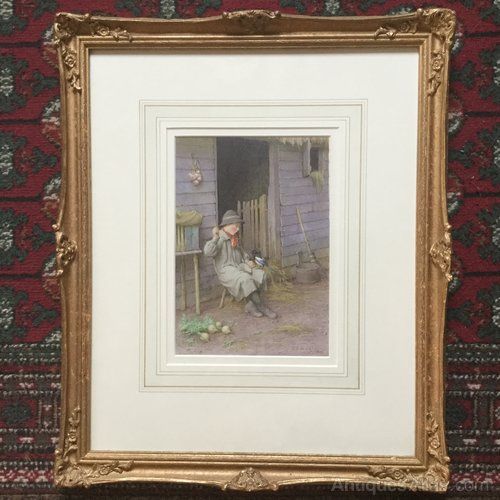
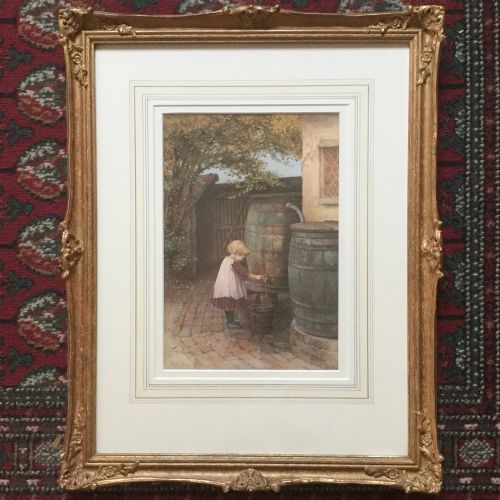
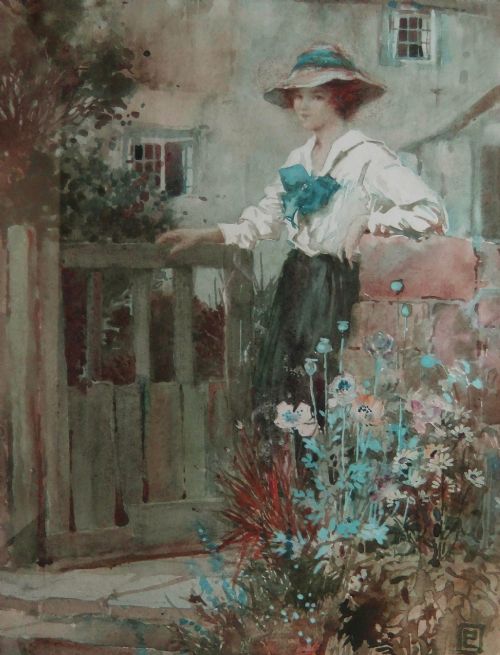
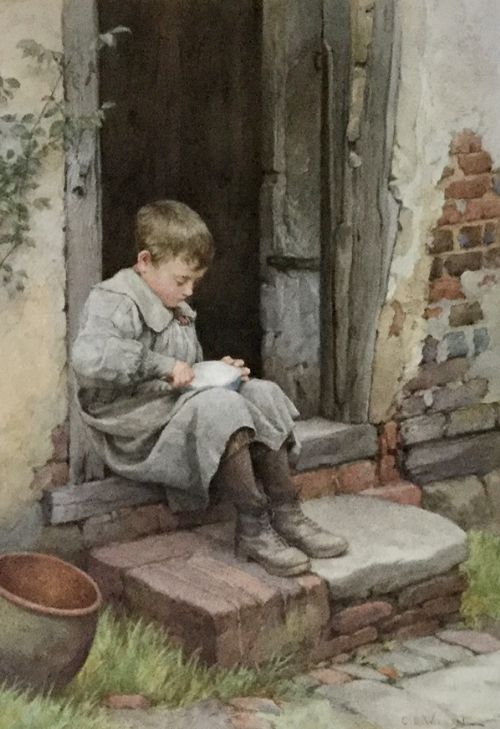
Subjects frequently record figures outside cottages, feeding poultry, tending gardens, or resting by riversides. These watercolours and oil paintings reflect British Impressionist and pastoral styles popular during the period.
Works appear in various forms, including framed watercolours on paper, oil paintings on canvas or board, and lithographs after original paintings. Sizes range from intimate studies to larger landscape compositions.
Materials and methods
Artists utilised watercolour pigment on paper and oil paint on canvas, board, or card to render these rural scenes. Many watercolours capture bright garden tones and pastoral light, while oil paintings employ richer textures.
Pieces commonly sit within wooden or gilt wood frames, often protected behind glass in the case of works on paper. Lithographs provide reproductions of original paintings using printing techniques from the era.
Edwardian Cottage Artwork Retail Price Guide 2026
Typical asking prices for edwardian cottage artwork among the pieces listed under this phrase on Sellingantiques today, from the lower quarter to the upper quarter. They describe what is for sale here now, not the wider market.
Listings feature works in oil and watercolour across periods spanning the late nineteenth century to the 1940s.
Distinctions in quality
Skill in handling light and pigment distinguishes accomplished works from simpler student pieces. Artists who capture atmospheric depth and naturalistic movement in figures and foliage elevate the work.
Preservation of the paper, canvas, and original pigment condition influences the visual impact of the piece. Strong framing materials like period gilt wood enhance the presentation.
A. Marie Parsons·Robert John Hammond·Charles Edward Wilson·Frederick James Knowles·Theresa Stannard·Linnie Watt·Ernest Higgins Rigg·Kershaw Schofield·Lorenzo Headley·Lilian Stannard·Harry Sylvester Stannard·Robert Hollands Walker·Thomas James Lloyd·B. Kaufmann·David Woodlock·Henry Spernon Tozer·Harry Pennell·Joseph Kirkpatrick·John Abernethy Lynas-Gray·Walter Henry Sweet·Thomas Nicholson Tyndale·Arthur Claude Strachan·John Falconar Slater·James William Stamper·Henry John Sylvester Stannard
The Edwardian Cottage Artwork Glossary
- Watercolour pigment
- A colour medium suspended in a water-soluble vehicle, applied to paper to create translucent washes. It defines the delicate finish seen in many rural scenes.
- Oil paint
- A slow-drying paint made with pigments suspended in oil, allowing for textured brushwork on canvas or board. It provides depth in landscape oil paintings.
- Lithograph
- A print produced from a flat stone or metal plate, used to reproduce original painted compositions. This technique allowed popular pastoral scenes to reach wider audiences.
- Gilt wood
- Wood coated with gold leaf or a gold-coloured finish, commonly used for traditional picture frames. It complements the palette of period oil paintings.
Edwardian Cottage Artwork: Frequently Asked Questions
What periods do these paintings represent?
The works span from the late nineteenth century through the Edwardian era up to the 1930s. Most pieces originate from the early decades of the twentieth century.
Styles reflect British Impressionism and Victorian pastoral traditions, focusing on rural village life and cottage gardens.
How should I care for watercolour cottage art?
Watercolours on paper require protection from direct sunlight to prevent pigment fading over time. Keeping them behind glass in stable indoor environments preserves the paper.
Avoid hanging pieces in humid spaces such as kitchens or bathrooms to protect both the paper and the wooden frame.
Are these paintings original works?
The collection includes original oil paintings on canvas and board, alongside hand-painted watercolours on paper. Each unique piece carries the distinct brushwork of the artist.
Some listings also feature vintage lithographs produced after original paintings from the period.
What subjects appear most often?
Common subjects include thatched cottages, walled gardens, and riversides with figures engaged in daily rural tasks. Scenes often feature figures feeding poultry, herding livestock, or children playing outside.
These compositions capture a nostalgic view of English village life from the Edwardian period.