



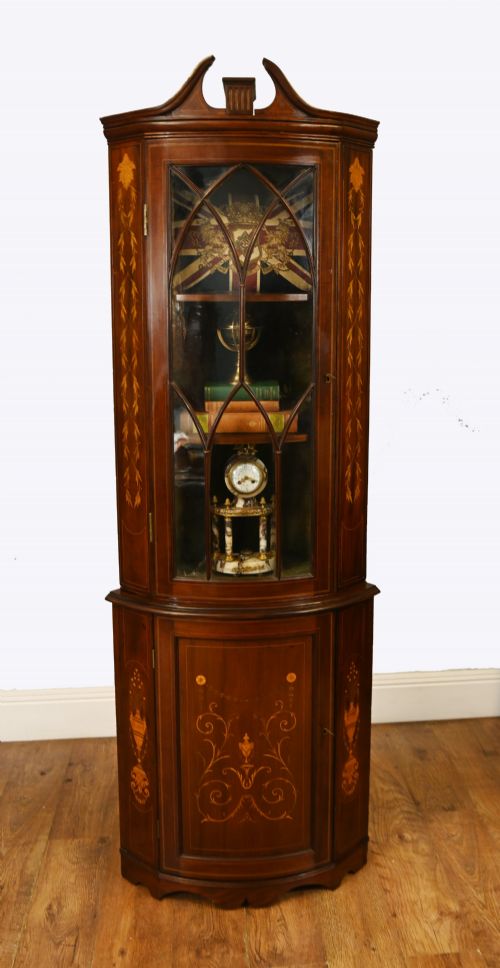


Edwardian Corner Unit
An Edwardian corner unit makes the most of difficult angles, bringing polished mahogany and subtle marquetry to empty rooms.
Edwardian Corner Unit
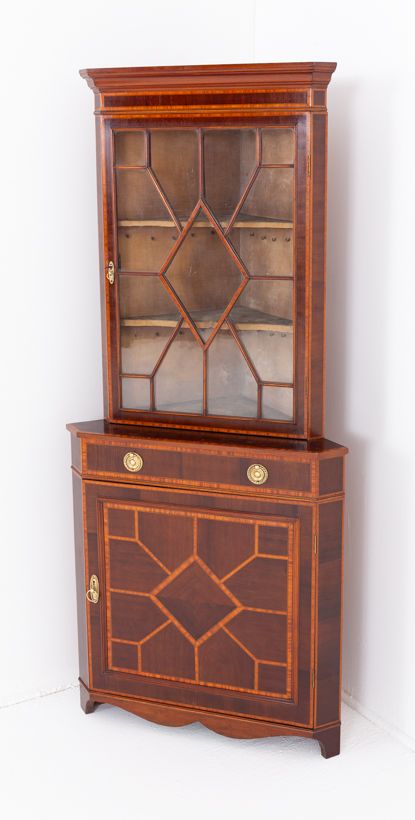
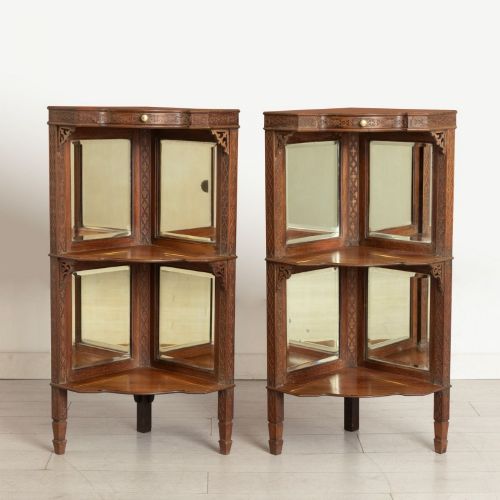
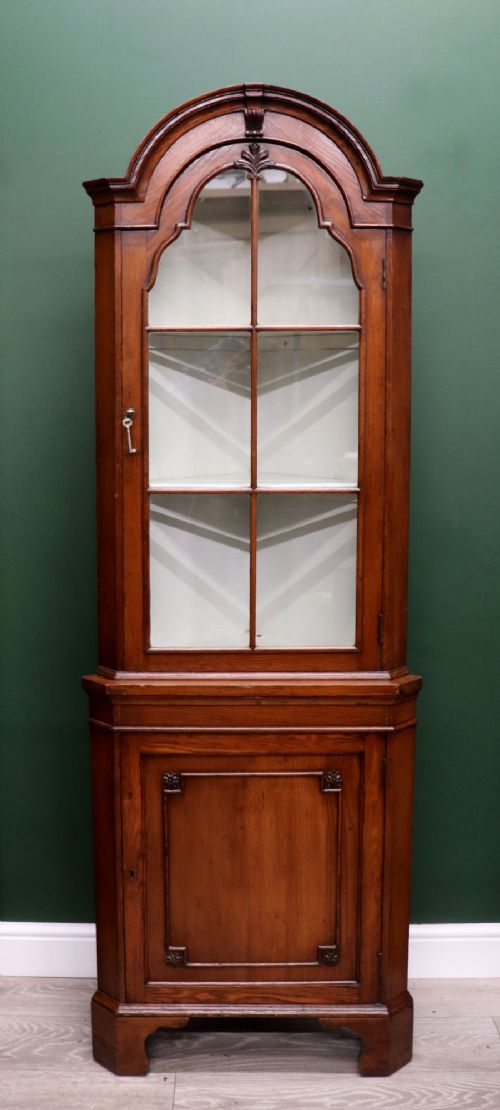
When you search for an edwardian corner unit, you find furniture designed to fit neatly into the ninety-degree junction of two walls, saving floor space while adding storage or display. The examples on this page include hanging wall cupboards, floor-standing glazed display cabinets, open bookcases, and multi-tiered whatnots.
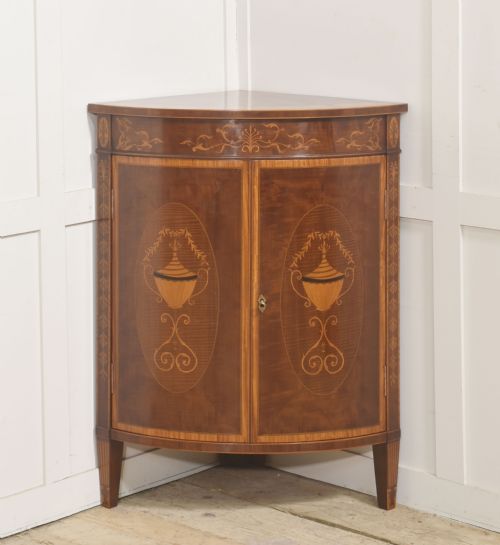
Mahogany remains the dominant wood, often paired with satinwood inlay, alongside walnut and oak pieces stretching from the late nineteenth century into the twentieth. You will encounter both compact wall-mounted cupboards that lift off the floor and substantial two-part standing corner cabinets with serpentine fronts.
Materials and Construction
Cabinet makers built these units primarily in solid mahogany and walnut, frequently applying fine satinwood stringing and marquetry floral motifs to the door panels and friezes. Glazed doors utilise timber framing to hold individual panes of glass, while interior shelving provides structured storage for books or porcelain.
Brass hardware such as hinges, escutcheons, and hanging brackets secure the doors and provide structural support, particularly on wall-mounted variants. Standing versions rest directly on plinths or bracket feet, balancing the weight of taller glass-fronted display sections.
Assessing Quality
The distinction between standard production pieces and finer workshops lies in the crispness of the marquetry inlay and the selection of figured timber veneers. Superior cabinets show meticulous hand-cutting in the satinwood details and tighter joinery around the curved bow fronts and glazed door frames.
Proportion and scale dictate the visual weight of the piece, with better examples maintaining balanced cornices and harmonious wood grain across the visible surfaces. The integration of original brass fitments and functioning locks further separates exceptional surviving items from standard utility furniture.
Edwards & Roberts·Goodhall, Lamb and Heighway
The Edwardian Corner Unit Glossary
- Marquetry
- Decorative patterns formed by fitting together small pieces of veneer into wood panels. These floral or geometric designs often define the front doors of Edwardian cabinets.
- Bow Front
- A convex, outwardly curved front facade. This shape softens the angular geometry typical of furniture built for room corners.
- Whatnot
- An open shelving unit designed for displaying ornaments and books. Multi-tiered versions appear frequently alongside enclosed cupboards in room corners.
- Satinwood Inlay
- Contrasting pale wood lines or motifs embedded into a darker primary wood such as mahogany or walnut. It creates decorative borders and central medallions.
- Serpentine Front
- A furniture front featuring a concave centre flanked by two convex curves, or the reverse. This undulating shape requires advanced woodworking skill.
Edwardian Corner Unit: Frequently Asked Questions
How do I hang a wall corner cabinet?
Wall-hanging corner cupboards require secure fixing to solid wall studs or masonry using appropriate heavy-duty brackets screwed through the internal back panels.
Because these timber cabinets carry significant weight when filled with ceramics or books, professional installation ensures the unit remains stable and level.
Are these units suitable for small rooms?
Corner units utilise dead space where two walls meet, making them practical additions to compact dining rooms, hallways, and living spaces.
Tall standing models draw the eye upward without protruding far into the middle of the room, while wall-hung versions leave floor space entirely clear.
How do I clean mahogany and walnut surfaces?
Dust timber surfaces regularly with a soft, dry cloth to prevent dirt accumulation on the polished wood and delicate marquetry inlay.
Apply a quality beeswax periodically to nourish the grain and maintain the natural lustre without applying heavy silicones or modern aerosol polishes.