




Edwardian Corner Shelving
Edwardian corner shelving offers a practical and decorative way to utilise neglected room angles using fine period timbers.
Edwardian Corner Shelving
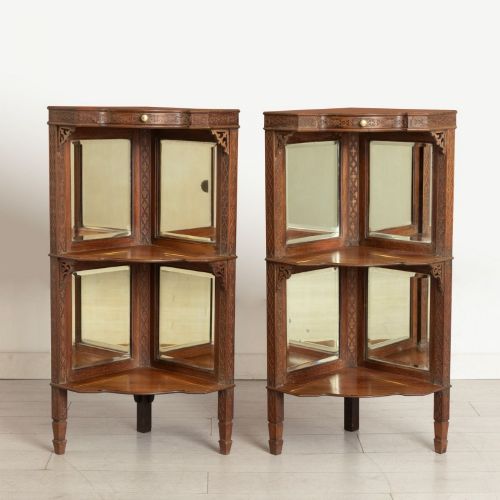
Edwardian corner shelving encompasses multi-tiered display pieces and corner cabinets designed to fit snugly into room angles. The evidence shows forms ranging from multi-tiered whatnots and etageres to enclosed corner bookcases and display cabinets.
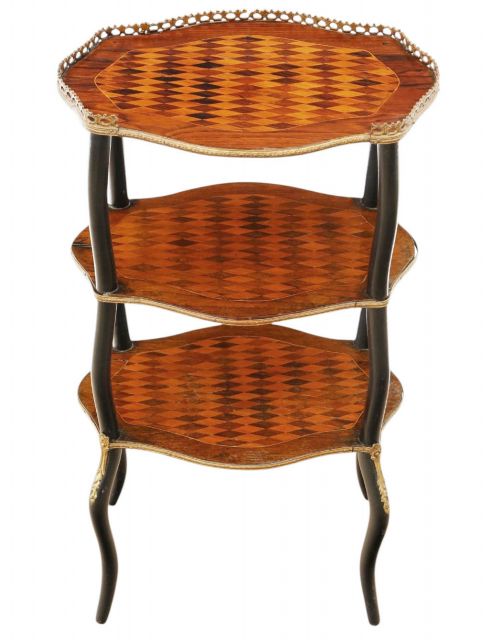
Buyers are most likely to encounter walnut and mahogany examples spanning the late nineteenth century through to the Edwardian era. These pieces often feature inlaid marquetry, ebonised wood details, and multiple tiers for displaying ornaments or books.
The objects serve both functional storage and decorative display purposes within domestic spaces. Their triangular footprints make them efficient space-savers while introducing period character to room corners.
How they were made
Cabinetmakers utilised dense timbers such as mahogany and walnut as the primary structural foundations for these corner pieces. Marquetry inlay and mixed timber parquetry were frequently applied to flat surfaces to create decorative geometric or floral patterns.
Specialised turning techniques produced structural supports, including hollow barley twist columns on tiered whatnot stands. Ebonised wood finishes and glass panels were also incorporated into cabinets and display shelves for visual contrast.
Edwardian Corner Shelving Retail Price Guide 2026
Typical asking prices for edwardian corner shelving among the pieces listed under this phrase on Sellingantiques today, from the lower quarter to the upper quarter. They describe what is for sale here now, not the wider market.
Listings demonstrate a strong presence of walnut and mahogany timbers alongside glass panels and brass fittings.
What varies in quality
Quality in these corner pieces rests upon the selection of timber and the precision of the marquetry inlay. Superior items display carefully matched veneers and tightly executed joinery that remains stable across multiple tiers.
The refinement of turned supports and the inclusion of maker signatures distinguish standard production items from workshop pieces. Attention to detail in the secondary woods and surface polishing further separates the range.
Edwards & Roberts·Goodhall, Lamb and Heighway of Manchester
The Edwardian Corner Shelving Glossary
- Etagere
- A piece of furniture consisting of a set of open shelves for small objects and ornaments. These tiered stands were popular for displaying collections in nineteenth-century interiors.
- Whatnot
- An open shelved cabinet used for storing books, ornaments, or bric-a-brac. They commonly feature multiple vertical tiers supported by turned columns.
- Parquetry
- A geometric mosaic of wood pieces used for decorative floors or furniture surfaces. It appears on tabletops and shelf panels as contrasting timber arrangements.
- Marquetry
- Decorative veneer applied to furniture in intricate designs using various woods and materials. This technique creates pictorial or abstract patterns across cabinet doors and shelves.
Edwardian Corner Shelving: Frequently Asked Questions
What is an etagere?
An etagere is an open-shelved piece of furniture designed specifically for displaying small ornamental items and collections.
These tiered stands offer multiple levels of surface space while maintaining a visually light profile in a room.
How were corner cabinets used?
Corner cabinets were utilised to store household items, books, and display pieces within otherwise wasted room angles.
Enclosed versions kept dust away from valued possessions, whilst open variants prioritized accessible display.
What timber was used?
Cabinetmakers primarily used dense hardwoods such as mahogany and walnut for structural stability and rich grain patterns.
Additional decorative effects were achieved through marquetry inlay, ebonised wood, and mixed timber parquetry.
How do I identify periods?
Period identification relies upon observing timber choices, construction techniques, and decorative styles recorded in the physical evidence.
Details such as barley twist supports and marquetry help distinguish late nineteenth-century items from later Edwardian examples.