



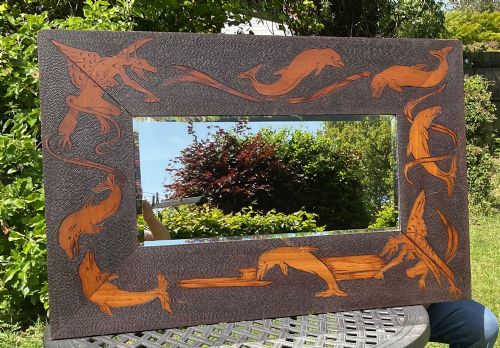


Edwardian Copper Frame Mirror
An edwardian copper frame mirror brings tactile warmth and handcrafted character to a wall.
Edwardian Copper Frame Mirror
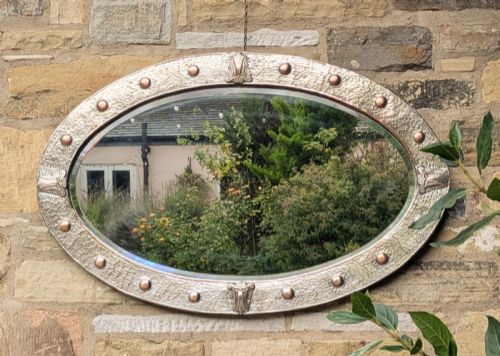
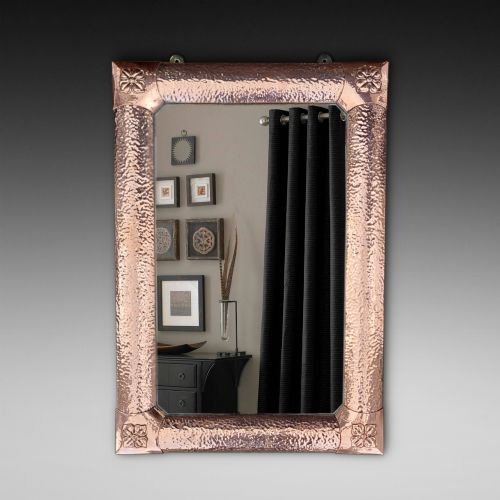
An edwardian copper frame mirror combines domestic utility with the distinct aesthetic of the Arts and Crafts movement. These wall mirrors frequently employ hand-beaten or hammered metalwork, often paired with oak or brass detailing.
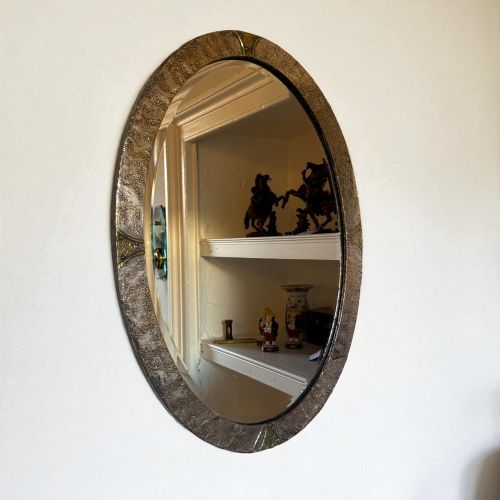
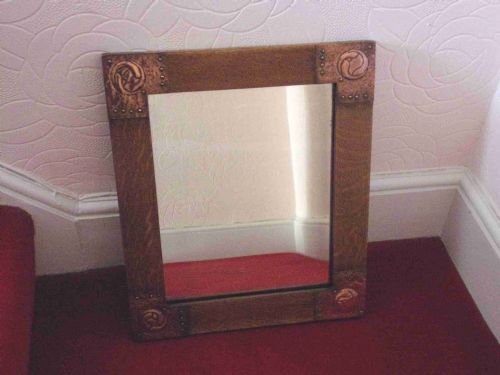
Examples on this page span the late Victorian period through the nineteen twenties, though the Edwardian decade dominates. Forms range from simple rectangular and oval shapes to round formats and large decorative pieces incorporating dragon, dolphin or Celtic knot motifs.
Buyers will encounter both plain metal surrounds and those embellished with Ruskin cabochons or attributed to notable makers. They serve equally well as functional hallway pieces and focal points in living spaces.
How they were made
Makers shaped these frames from sheet copper, using hand hammers to create textured, beaten surfaces that caught the light. Wood such as oak provided a sturdy structural backing or framing element to support the weight.
Reflective surfaces typically consisted of thick mirror glass, frequently featuring hand-bevelled edges to refract light at the margins. Brass rivets, strapwork and ceramic cabochons were often integrated into the metal frames for additional contrast.
Edwardian Copper Frame Mirror Retail Price Guide 2026
Typical asking prices for edwardian copper frame mirror among the pieces listed under this phrase on Sellingantiques today, from the lower quarter to the upper quarter. They describe what is for sale here now, not the wider market.
Materials appearing across these listings include hammered copper, bevelled glass, solid oak, and ceramic cabochons.
What varies in quality
Quality rests in the depth and crispness of the hand-hammered work on the copper sheet and the complexity of the overall design. Pieces featuring cast or applied motifs like dragons, dolphins or Celtic knots demonstrate greater ambition.
The integration of materials also defines the hierarchy, from simple metal surrounds to those incorporating Ruskin ceramic cabochons and substantial oak frames. Original bevelled glass and attributable workshop origins elevate individual examples.
Liberty & Co
The Edwardian Copper Frame Mirror Glossary
- Arts and Crafts
- A design movement valuing handcraft, natural materials and traditional techniques over mass production. It heavily influences the style of these metal frames.
- Bevelled glass
- Mirror glass with edges cut and polished at an angle to create a framed border effect. This technique adds depth and catches light.
- Cabochon
- A polished, convex cabochon stone or ceramic piece without facets. Ruskin pottery cabochons frequently adorn the corners of these metal frames.
- Hammered metal
- Sheet metal beaten by hand with a hammer to create a textured surface. This finish shows the maker's hand and diffuses reflections.
- Celtic knot
- An interlaced ribbon design used in decorative art. It appears on copper frames as embossed or applied ornamentation.
Edwardian Copper Frame Mirror: Frequently Asked Questions
What is an Edwardian copper frame mirror?
These are wall-hanging looking glasses housed in hand-worked metal surrounds, produced around the turn of the twentieth century. They embody the honest craftsmanship promoted by the Arts and Crafts movement.
Most feature beaten or hammered copper surfaces, sometimes accented with brass, oak, or ceramic cabochons. Their designs range from plain geometric shapes to elaborate motifs like dragons and Celtic knots.
How do I clean the copper frame?
Copper develops a natural patina over time, which many collectors prefer to leave undisturbed. Gentle dusting with a soft, dry cloth is usually sufficient for routine maintenance.
Avoid abrasive metal polishes that can strip away the historical finish or damage adjacent wood and glass. If cleaning is necessary, use a mild, pH-neutral soap solution and dry thoroughly.
How do I date these mirrors?
Dating relies on stylistic clues, construction methods, and materials associated with the Arts and Crafts period. Pieces often date from eighteen ninety to nineteen twenty, with the Edwardian decade forming the core.
Characteristics such as hand-beaten copper, oak backing boards, and specific motifs like Ruskin cabochons help place an item within this era. Maker marks, where present, provide the most precise indication of origin.