



Edwardian Chippendale Revival Chairs
Edwardian chippendale revival chairs bring late nineteenth and early twentieth century mahogany craftsmanship and classic pierced splats into domestic dining spaces.
Edwardian Chippendale Revival Chairs
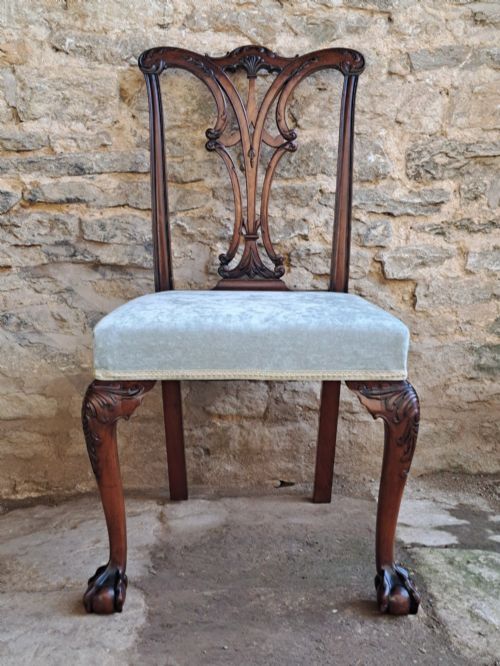
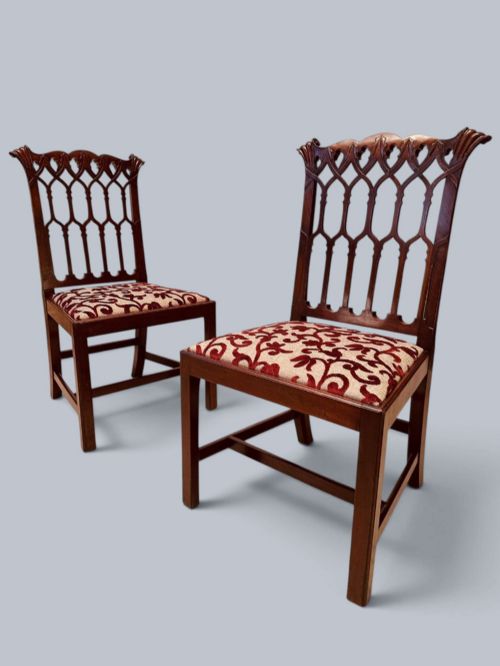
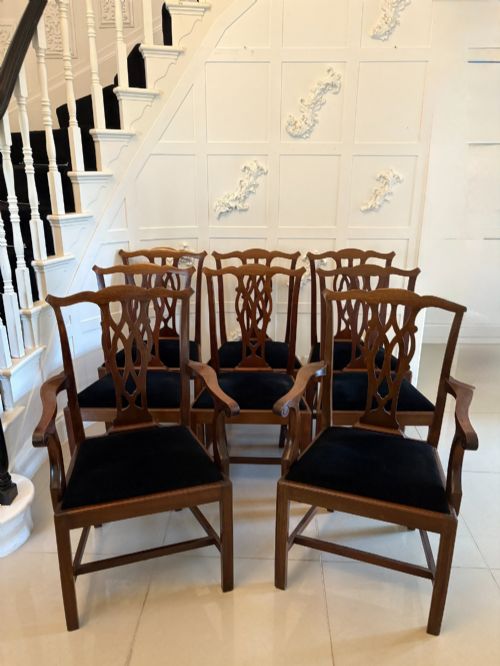
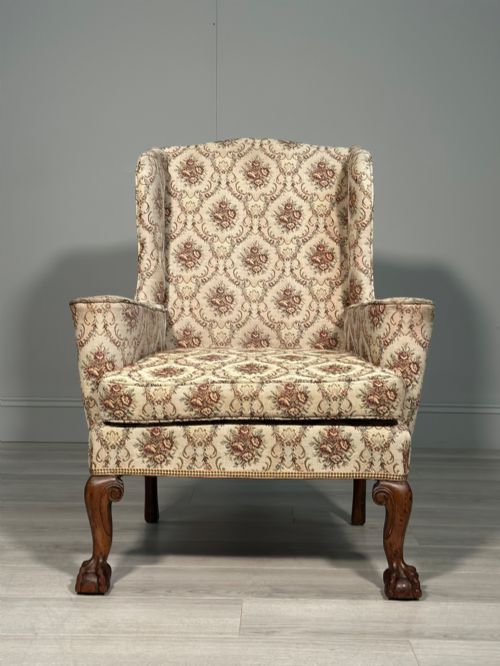
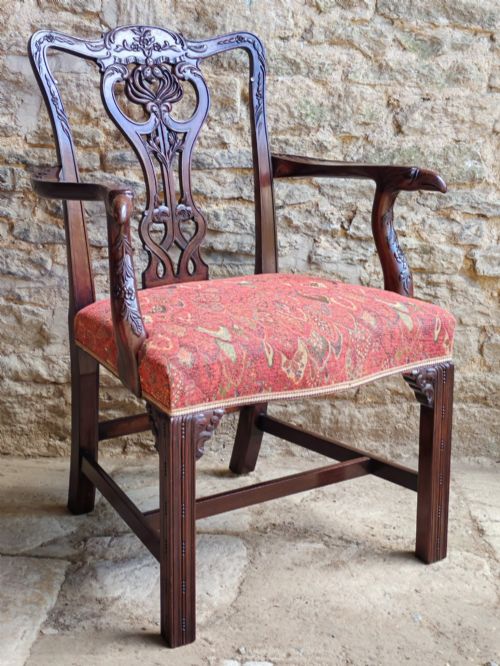
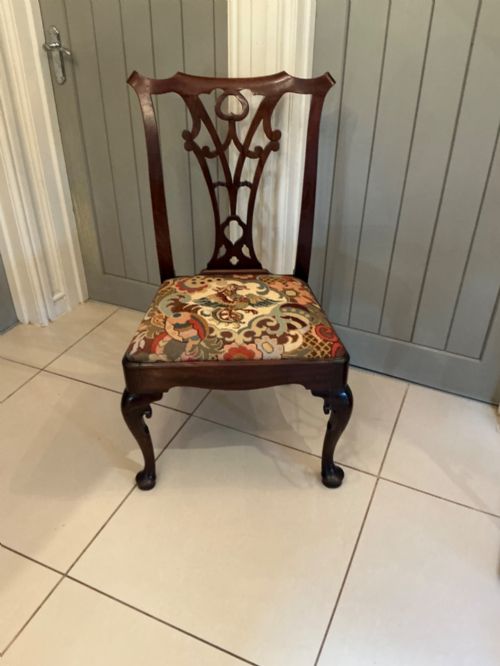
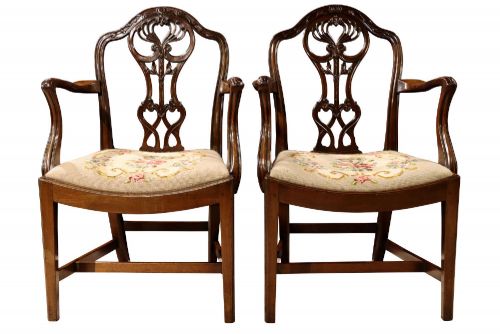
Edwardian chippendale revival chairs draw on eighteenth century Georgian forms, reinterpreted during the late Victorian and Edwardian periods. Buyers encounter dining chairs, armchairs, and elbow chairs built to furnish formal rooms.
Mahogany forms the primary timber across sets and individual pieces, often complemented by upholstered seats in fabric, leather, or tapestry. These chairs appear singly or in larger matching dining sets numbering up to twelve pieces.
Makers of the era combined traditional proportions with sturdy Edwardian construction to produce seating suitable for daily use or display. The revival style references distinct ornamental motifs while maintaining practical seating heights and sturdy frames.
Materials and Construction
Cabinet makers utilised solid mahogany to shape the frames, backs, and legs of these chairs. Timber selection focused on grain consistency and structural strength, particularly in weight-bearing components such as chair rails and back splats.
Upholstery methods involved drop-in seats covered in fabric, leather, velvet, or tapestry textile, sometimes secured over wool or traditional stuffing. Workshops applied brass details or reinforcements where functional stability required them.
Edwardian Chippendale Revival Chairs Retail Price Guide 2026
Typical asking prices for edwardian chippendale revival chairs among the pieces listed under this phrase on Sellingantiques today, from the lower quarter to the upper quarter. They describe what is for sale here now, not the wider market.
One unexpected Edwardian seat functions as an end-of-bed bench rather than dining furniture.
Assessing Quality
The precision of the carved splats and the crispness of the moulded details distinguish finer examples from standard production. Carving depth and symmetry reflect the skill of the workshop that shaped the mahogany frame.
Timber selection and joinery integrity dictate the longevity of each chair. Tighter grain matching and robust internal joints separate the top tier of sets from more utilitarian workshop output.
Howard and Sons·Warings·H. Samuel, London
The Edwardian Chippendale Revival Chairs Glossary
- Chippendale Revival
- A late nineteenth and early twentieth century style that reinterprets the mid eighteenth century designs associated with Thomas Chippendale. This movement focused on carved ribbon backs, interlaced splats, and cabriole legs.
- Elbow Chair
- An armchair designed with shorter arms that allow the sitter to draw close to a desk or dining table. These pieces frequently match larger sets of single chairs.
- Splat
- The vertical wooden strip positioned in the centre of a chair back. In these revival pieces, the splat is often pierced and carved in scroll or ribbon patterns.
- Carver
- A traditional term for an armchair, typically used at the head of a dining table. Carvers complement matching sets of single side chairs.
- Satinwood
- A fine hardwood occasionally utilised for painted decorative seating during the Edwardian period. It provides a pale, contrasting surface to standard mahogany.
Edwardian Chippendale Revival Chairs: Frequently Asked Questions
How do I identify these chairs?
Look for characteristic mahogany frames, pierced carved back splats, and stylistic references to eighteenth century Georgian furniture. These details separate revival seating from simpler Victorian or later styles.
Date markers include Edwardian construction methods, specific upholstery textiles, and stylistic crossover from the late nineteenth century into the 1910s.
Were these sold in sets?
Many dining chairs from this period survive in matched sets ranging from four to twelve pieces, often including carvers or armchairs for the table ends. Sets were produced for substantial dining rooms of the era.
Individual armchairs and pairs of side chairs also appear, originating from drawing rooms or studies rather than formal dining settings.
What upholstery was used?
Original and period appropriate seating surfaces feature fabric upholstery, leather, velvet, tapestry textile, or wool. Many chairs utilise drop-in seat frames that lift out for reupholstery.
Material choices varied according to the intended room, with leather and tapestry frequently appearing in studies and libraries, while lighter fabrics suited drawing rooms.
How do I care for mahogany?
Maintain mahogany frames by keeping them away from direct heat sources and sudden humidity changes. Regular dusting with a dry cloth preserves the polished surface.
Avoid harsh chemical polishes that can degrade the finish over time. Periodic waxing helps nourish the timber and maintain its natural lustre.