




Edwardian Chippendale Dining Set
These edwardian chippendale dining set pieces combine period proportion with robust timber frames, built for formal dining rooms.
Edwardian Chippendale Dining Set
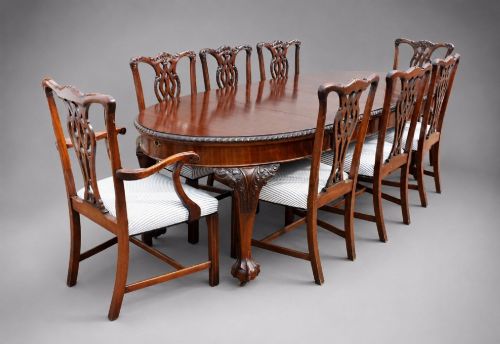
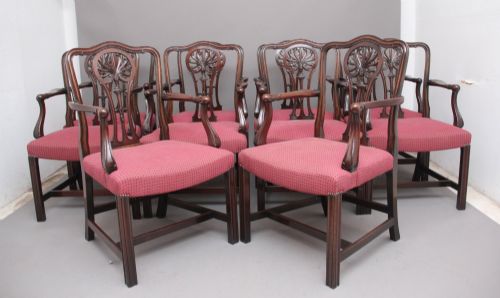
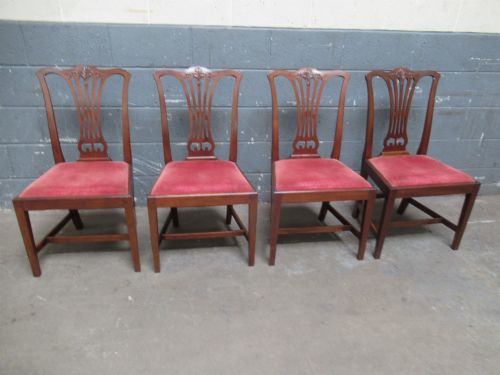
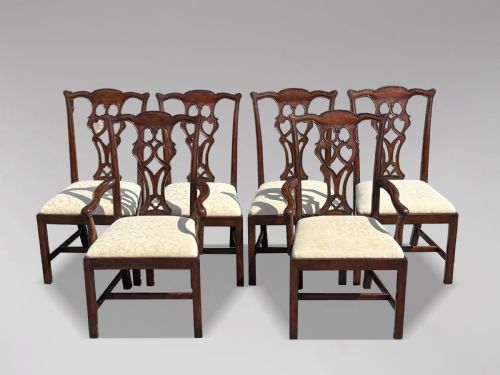
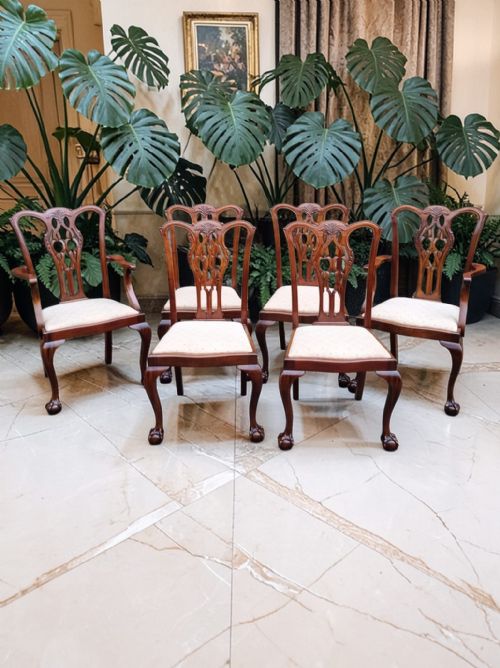
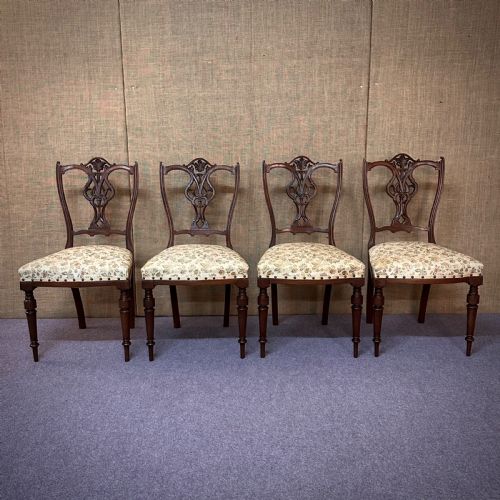
An edwardian chippendale dining set brings together matching chairs, and sometimes an extending table, fashioned in revival styles. Most examples found here comprise sets of four, six, eight, ten, or twelve chairs, often split into carvers with arms and single chairs without.
The aesthetic draws heavily on mid eighteenth century design principles, translated through the Edwardian period and late nineteenth century revivals. These suites are intended for practical dining use while maintaining the formal presence of their earlier Georgian inspirations.
How They Were Made
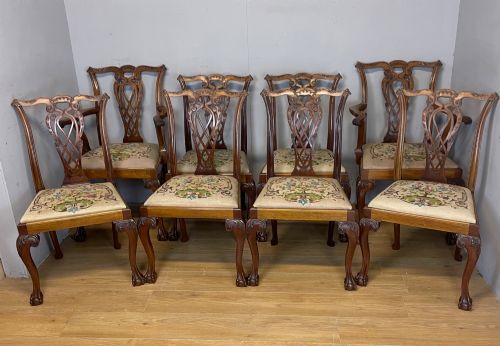
Cabinetmakers worked predominantly in solid mahogany, shaping timber frames with carved splats and rails. Seats were constructed to receive upholstery, utilising materials such as leather, fabric, velvet, and tapestry textiles secured with metal tacks.
Structural elements frequently incorporated stylistic details like ball and claw feet, alongside mortise and tenon joinery to sustain daily weight. Polishing brought out the deep grain of the mahogany, while brass fittings occasionally reinforced extending dining tables.
What Varies In Quality
Depth and crispness of carving separate standard production sets from finer workshop outputs. Carved mahogany splats and shaped top rails demand skilled hand work, whereas lesser suites rely on simpler, shallower relief.
Completeness and matching integrity govern the standing of a suite. Retaining an original count of twelve chairs, or an entire grouping including carvers that share identical timber grain and wear, elevates the assembly.
Warings·Alfred Allen of Birmingham·H. Samuel, London
The Edwardian Chippendale Dining Set Glossary
- Chippendale Revival
- A late nineteenth and early twentieth century style copying eighteenth century forms. It reinterprets ribbon backs, carved splats, and ball and claw feet.
- Carver
- An armchair designed to match a set of single dining chairs. These were traditionally placed at the heads of the table.
- Splat
- The vertical wooden strip down the centre of a chair back. In these designs, it is pierced and intricately carved.
- Ball and Claw
- A furniture foot carved to represent a bird's talon gripping a ball. This motif originates in Chinese art and was adopted by eighteenth century English cabinetmakers.
Edwardian Chippendale Dining Set: Frequently Asked Questions
What is an edwardian chippendale dining set?
It is a matching collection of dining chairs and tables produced around the early twentieth century, echoing eighteenth century aesthetic designs.
These suites generally comprise multiple single chairs and occasional armchairs intended for formal dining spaces.
How were these dining sets used?
Owners utilised them for daily family meals and formal dinner parties in Edwardian households. Large sets of ten or twelve accommodated extensive dining rooms.
Carver armchairs were traditionally reserved for the host and hostess seated at either end of the table.
How do I care for the upholstery?
Maintenance depends on whether the seats are finished in leather, velvet, tapestry, or standard fabric. Regular gentle dusting protects the textile fibres from settling dirt.
Leather and wood frames benefit from appropriate conditioners to prevent the natural materials from drying out over time.
How can I tell the period?
Examine the timber species, construction joints, and underside wear to gauge age. The Edwardian and late nineteenth century revival periods favoured solid mahogany with specific machine and hand tool marks.
Stylistic cues also point to the era, blending eighteenth century Chippendale forms with turn of the century manufacturing techniques.