

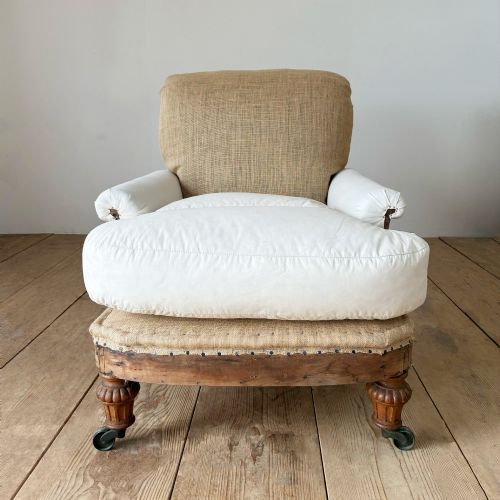


Edwardian Chair Brass Castors
Edwardian chair brass castors bring together comfortable seating and practical mobility, offering both period character and ease of placement in a room.
Edwardian Chair Brass Castors
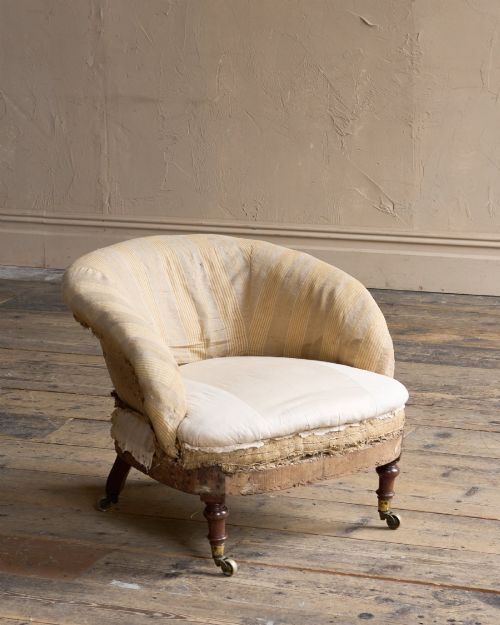
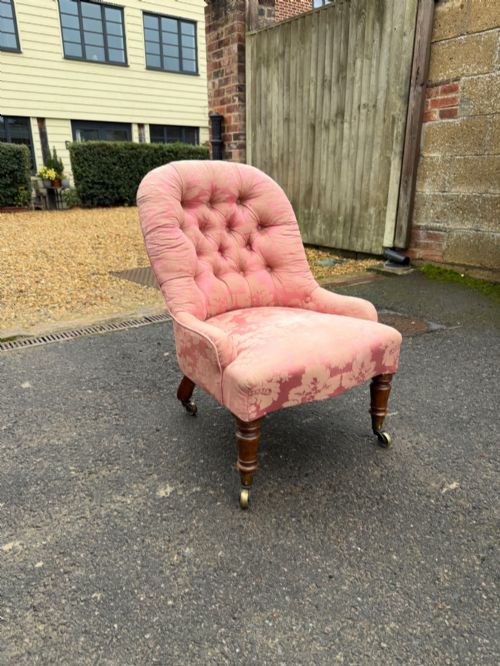
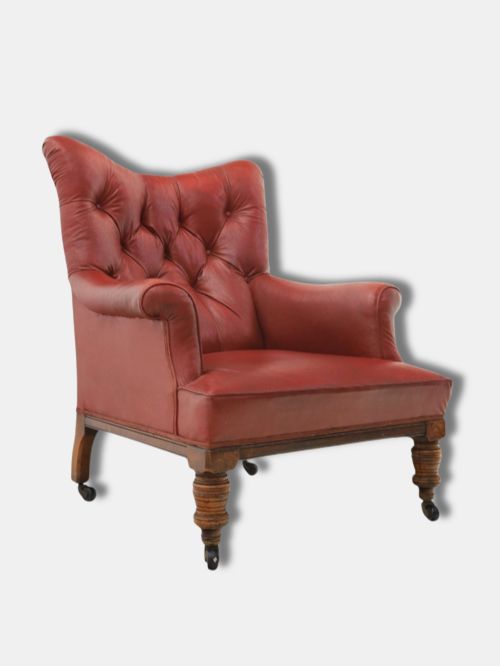
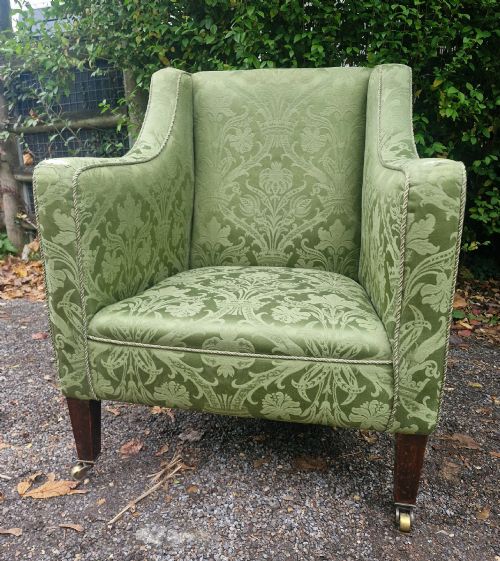
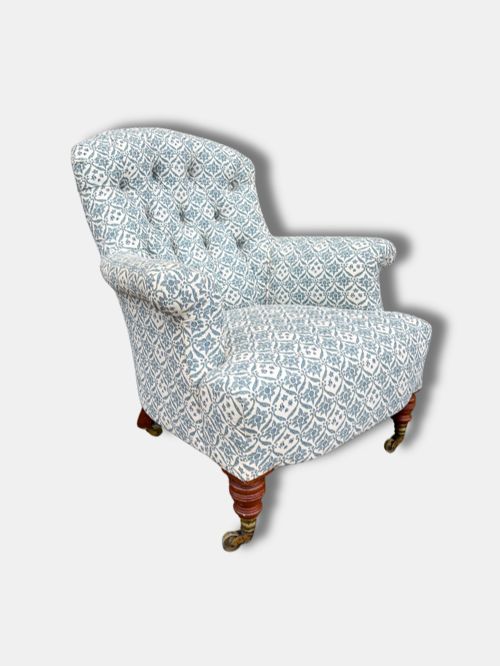
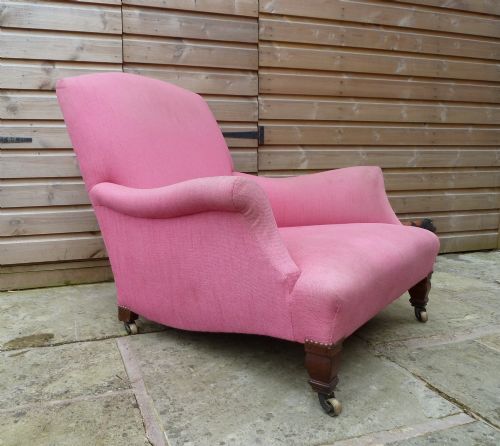
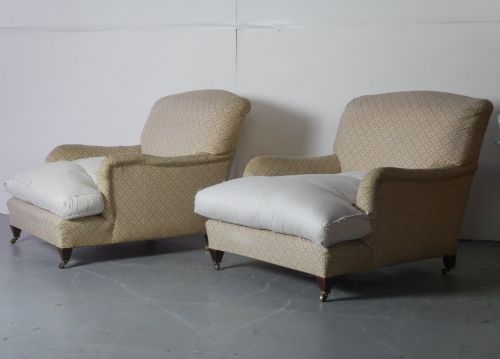
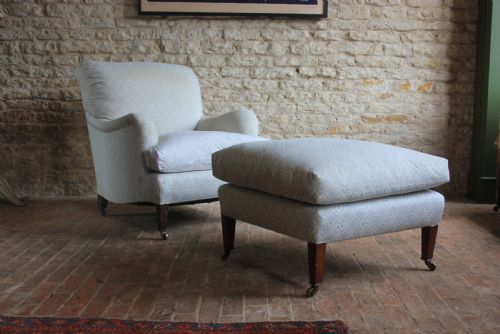
When you search for Edwardian chair brass castors, you encounter seating designed for comfort and ease of movement within the home. The pieces on this page span armchairs, library chairs, and occasional chairs from the Edwardian period and neighbouring decades, anchored by their metal wheel mounts.
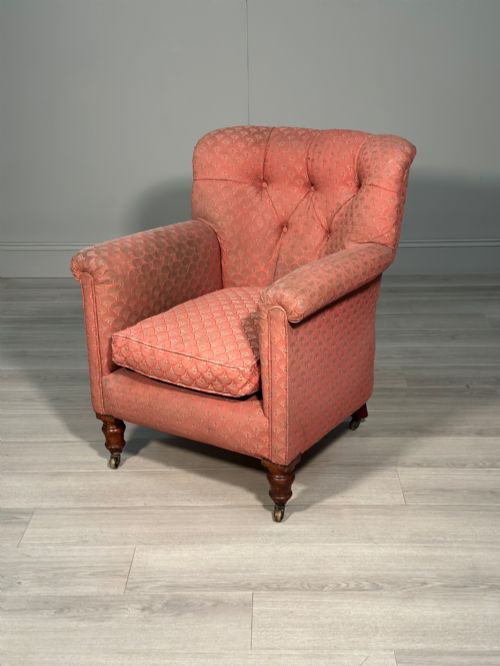
The most common forms on this page include deep club armchairs, library chairs, and open armchairs. These items draw on Victorian and Edwardian traditions, frequently appearing in forms associated with notable makers and styles of the era.
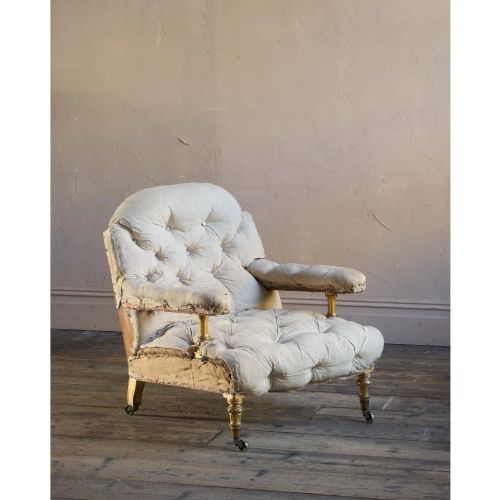
Materials range from exposed mahogany and walnut frames to upholstered surfaces covered in velvet, calico, leather, and ticking. The inclusion of brass castors on these seats reflects a practical domestic requirement to reposition heavy upholstered furniture without damaging floor coverings.
Assessing quality
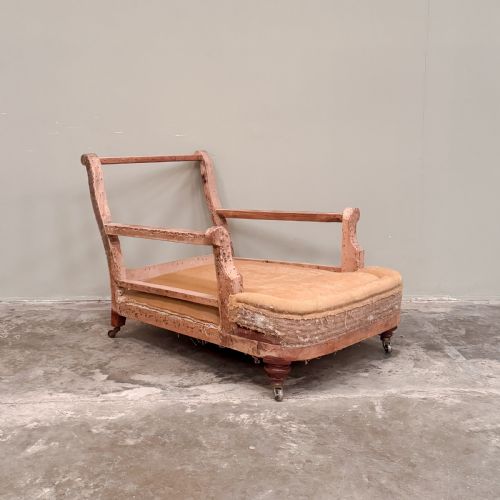
Quality in these chairs rests upon the integrity of the underlying wooden frame and the precision of the upholstery work. Heavier timber frameworks and robust internal springing separate substantial pieces from lighter decorative seats.
The finish of the brass castors and the quality of the timber grain on exposed mahogany or walnut sections indicate the original tier of manufacture. Pieces bearing maker attributions or stamps also demonstrate a higher standard of workshop production.
Edwardian Chair Brass Castors Retail Price Guide 2026
Typical asking prices for edwardian chair brass castors among the pieces listed under this phrase on Sellingantiques today, from the lower quarter to the upper quarter. They describe what is for sale here now, not the wider market.
Some library chairs arrive with brass castors so enthusiastic they still want to roll across the room by themselves.
Whytock and Reid·Howard and Sons·SF Cullen·Hindley and Sons·Gillows·Hampton and Sons·Harrods London·William Birch
The Edwardian Chair Brass Castors Glossary
- Castor
- A small wheel mounted on a swivel attached to the bottom of a leg, allowing furniture to roll across the floor. They are commonly cast from brass on nineteenth and early twentieth century seating.
- Bergere
- An upholstered armchair with an enclosed wooden frame where the sides and back are frequently filled with cane work. This French style influenced British makers throughout the nineteenth and early twentieth centuries.
- Library chair
- A substantial armchair designed for reading rooms, typically featuring upholstered arms and a low back. These pieces often incorporate castors to allow easy movement across large rooms.
- Ticking
- A tightly woven heavy cotton or linen fabric traditionally used to cover mattress springs and upholstery stuffing. In antique seating, it is frequently utilised as a durable baseline or decorative outer covering.
Edwardian Chair Brass Castors: Frequently Asked Questions
What defines an Edwardian chair with brass castors?
These pieces combine early twentieth-century or late nineteenth-century seating forms with small metal wheels fitted to the base of the legs. They are built for domestic comfort, often featuring upholstered bodies supported by hardwood frames.
The inclusion of brass castors allowed domestic staff or homeowners to move heavy upholstered armchairs across carpets and wooden floors with minimal effort.
How do I identify a Howard style armchair?
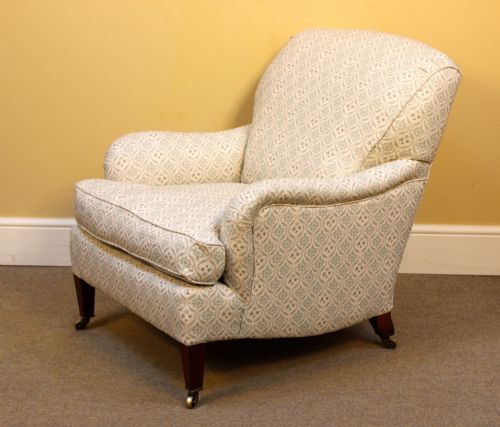
Howard style armchairs are known for their deep, sprung seats, low arms, and generous proportions designed for relaxation. They frequently sit on low wooden legs equipped with brass castors.
Many examples from this era are attributed to or inspired by the firm Howard and Sons, though similar club chairs were produced by various workshops.
Where were these chairs used in the home?
They were primarily placed in libraries, drawing rooms, and bedrooms as functional seating for reading and resting. Their mobility made them versatile additions to principal rooms.
Smaller bedroom chairs and occasional chairs provided flexible seating options that could be repositioned as household needs changed throughout the day.
What fabrics are typically found on these chairs?
Original and replacement upholstery materials include leather, velvet, calico, and woven ticking. Durable fabrics were chosen to withstand daily use on heavy club and library seating.
Many pieces retain traditional button-backed detailing or simple fabric covers that reflect both period tastes and subsequent reupholstery by later owners.