

Edwardian Chain
An edwardian chain offers the delicate metallurgy of the early twentieth century, formed in gold and silver to secure pocket watches and pendants.
Edwardian Chain
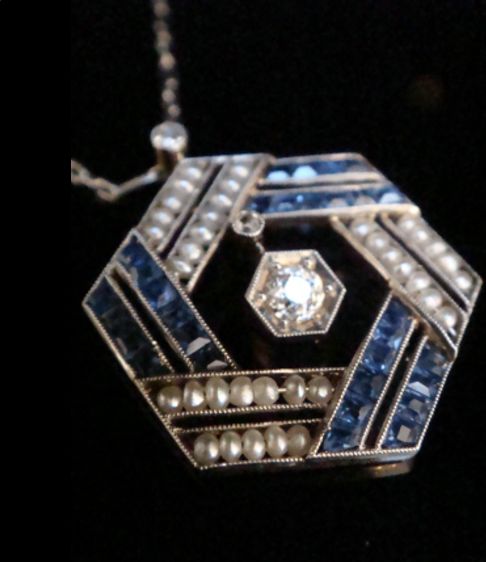
When searching for an edwardian chain, buyers encounter watch chains, guard chains, and necklaces spanning the late nineteenth century through to the interwar years. These pieces originate primarily from the Edwardian period, alongside Victorian and early twentieth-century examples.
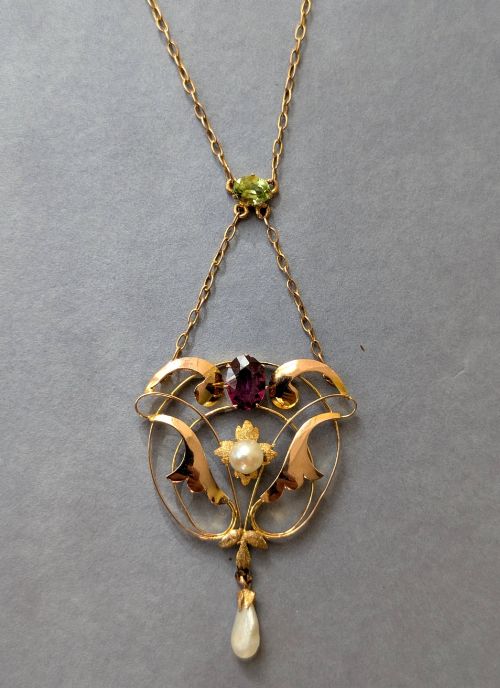
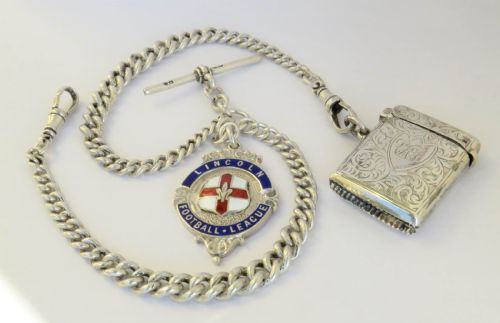
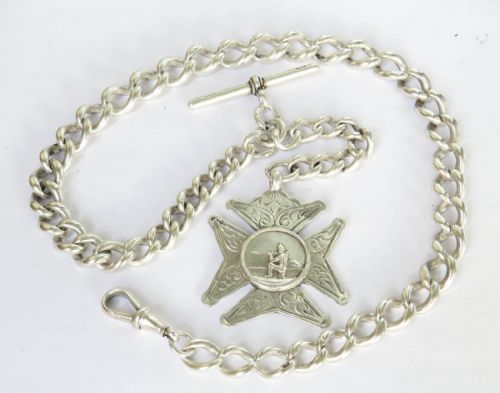
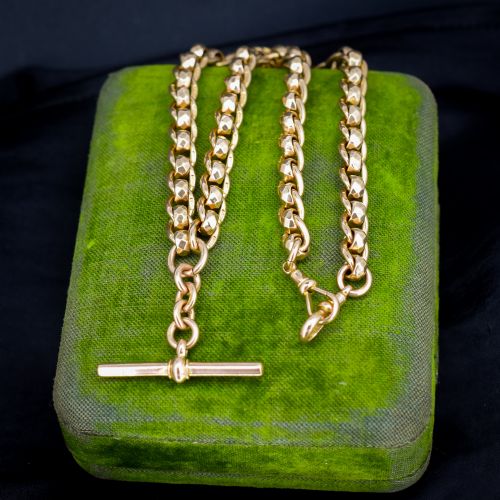
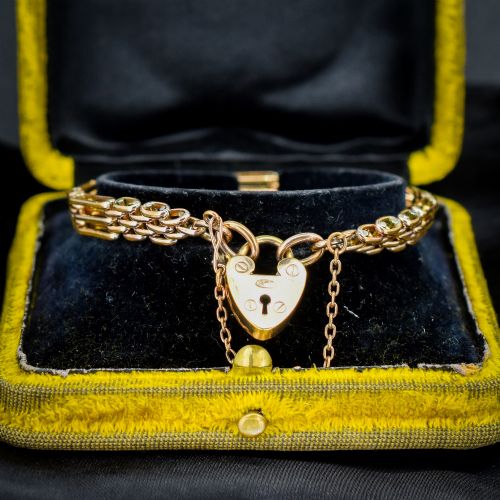
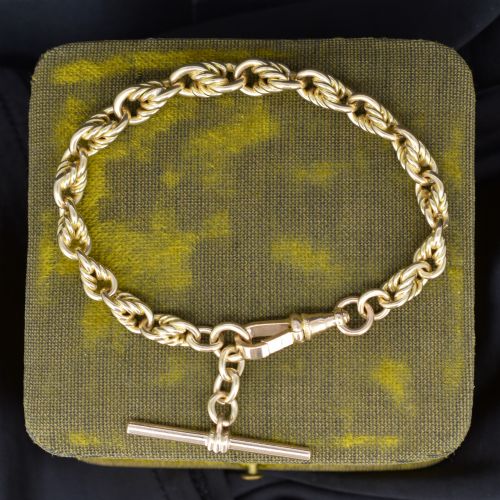
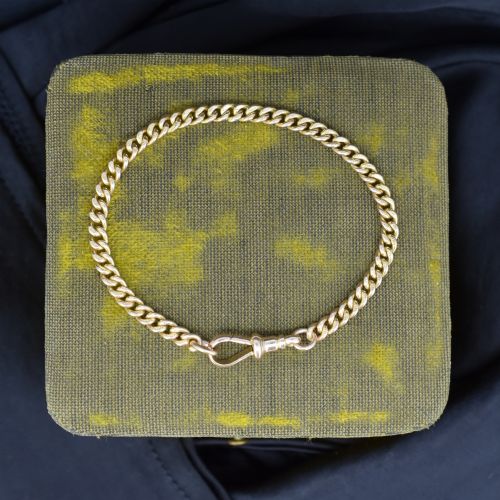
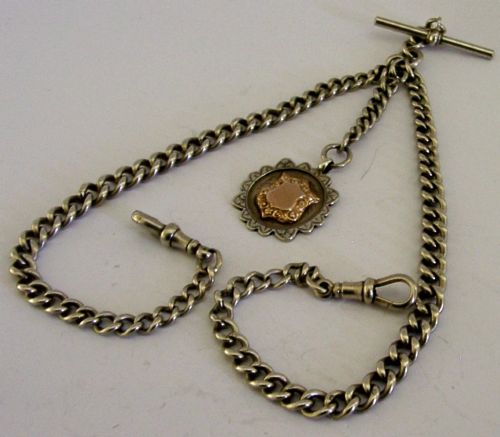
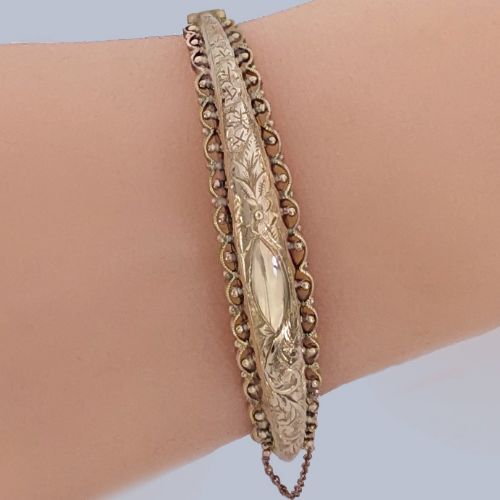
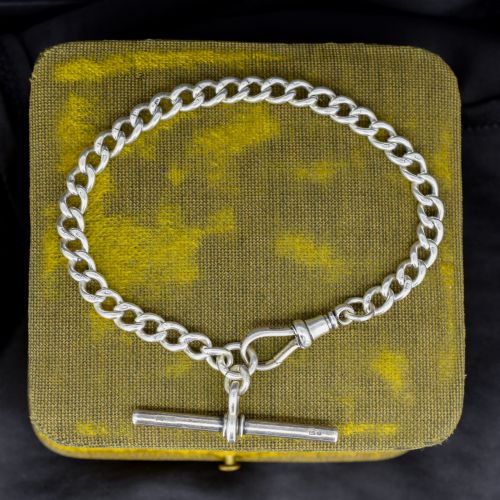
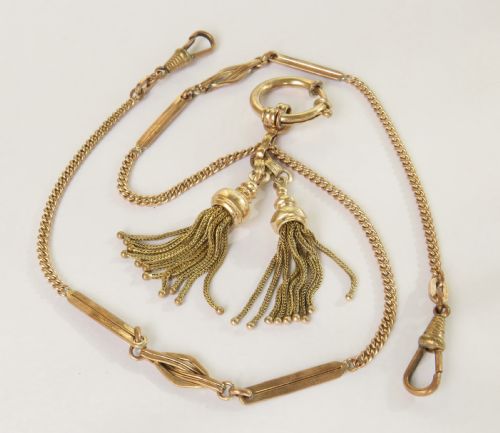
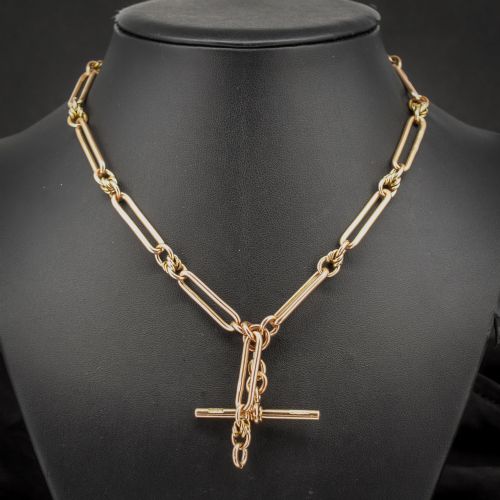
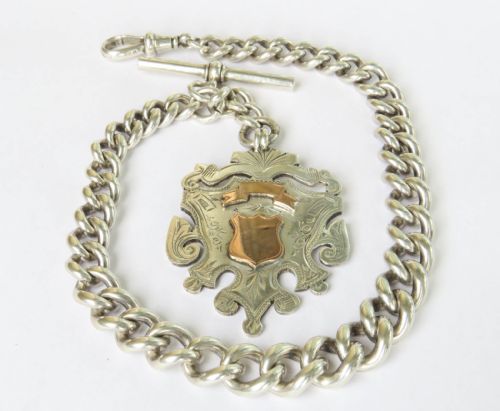
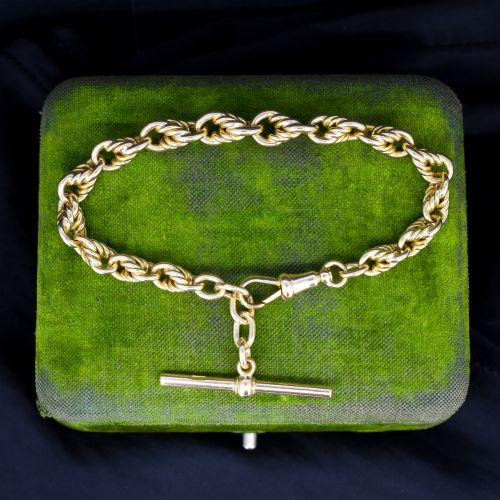
The most common forms on this page include curb link albert chains fitted with dog clips and T-bars, paperlink trombone chains, and long guard chains in sterling silver or 9ct gold. Pendant necklaces featuring seed pearls and peridots also appear, alongside heavy rose gold chain bracelets.
How they were made
Metals such as sterling silver, 9ct rose gold, 9ct yellow gold, 15ct gold, and 18ct gold form the backbone of these pieces, often worked into hollow or solid links. Techniques involve hand-assembling curb, paperlink, and love knot configurations.
Details include functional additions such as dog clips, swivel fobs, screw-lock pocket watch clips, and barrel clasps. Gemstones like seed pearls, turquoise, aquamarine, and bloodstone integrate into drops and fobs.
Edwardian Chain Retail Price Guide 2026
Typical asking prices for edwardian chain among the pieces listed under this phrase on Sellingantiques today, from the lower quarter to the upper quarter. They describe what is for sale here now, not the wider market.
Listings feature periods spanning from the late 19th century through the 1930s, utilising sterling silver, 9ct rose gold, and seed pearls.
What varies in quality
Quality differentiates by the weight of the metal and the integrity of the links, moving from lightweight rolled gold to substantial 15ct and 18ct gold or heavy sterling silver. The presence of original, matching components like dog clips and T-bars elevates a piece.
The finesse of the link shaping, whether a hand-assembled trombone pattern or a solid curb link, marks the distinction between standard production and superior craftsmanship.
The Edwardian Chain Glossary
- Albert chain
- A watch chain designed to attach a pocket watch to a waistcoat, featuring a T-bar at one end and a clip at the other. It takes its name from Prince Albert, who popularized the accessory during the Victorian era.
- Dog clip
- A spring-loaded snap hook used on watch chains and bracelets to secure fobs or pocket watches. It allows the wearer to attach and detach items quickly.
- T-bar
- A horizontal metal bar attached to the centre of an albert chain, slipped through a buttonhole to secure the watch in a pocket. It functions as both a fastener and a decorative terminal.
- Paperlink chain
- A link style featuring elongated, rectangular wire links alternating with smaller round or oval connectors, resembling paperclips. It is also known as a trombone link.
- Guard chain
- An extra-long necklace worn doubled or tripled around the neck, originally used to secure a pocket watch or lorgnette. They often measure well over thirty inches in length.
Edwardian Chain: Frequently Asked Questions
What is an albert chain?
An albert chain is a specific type of watch chain equipped with a T-bar and a dog clip, designed to anchor a pocket watch to a garment.
These pieces were essential daily accessories for men and women, allowing timepieces to be carried securely while remaining accessible.
How do I wear a long guard chain?
Long guard chains can be doubled around the neck to create a layered necklace effect or worn as a single strand.
Their substantial length accommodates pendants, lockets, and watches, making them versatile for modern styling.
What gold purity should I expect?
Gold pieces in this category commonly appear in 9ct rose or yellow gold, with occasional examples rendered in higher purities such as 15ct and 18ct gold.
Purity marks and hallmarks often assist in identifying the exact metal standard and the decade of manufacture.
How do I secure a pocket watch chain?
The T-bar fastens through a buttonhole on a waistcoat or jacket, while the pocket watch itself rests safely in the corresponding pocket.
Alternatively, the chain can be worn around the neck or wrist as a bracelet when detached from a timepiece.