



Edwardian Carved Wooden Settee
An edwardian carved wooden settee brings together the refined joinery of the late nineteenth and early twentieth centuries to anchor a room.
Edwardian Carved Wooden Settee
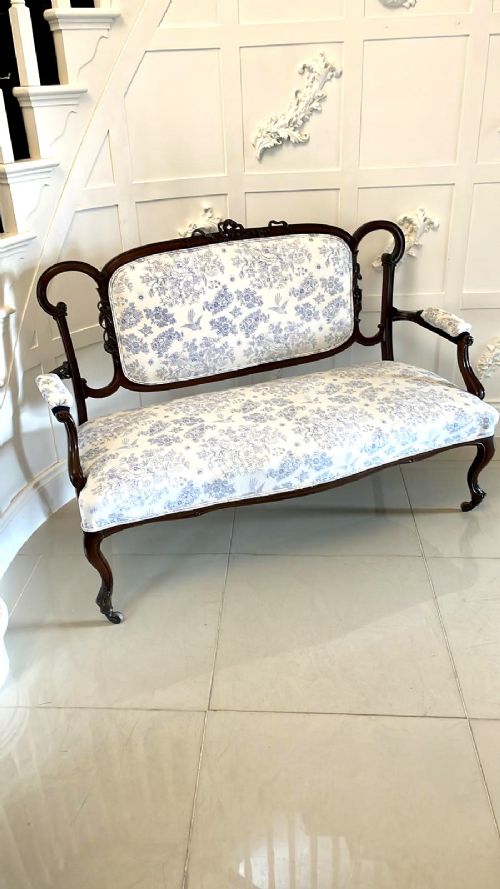
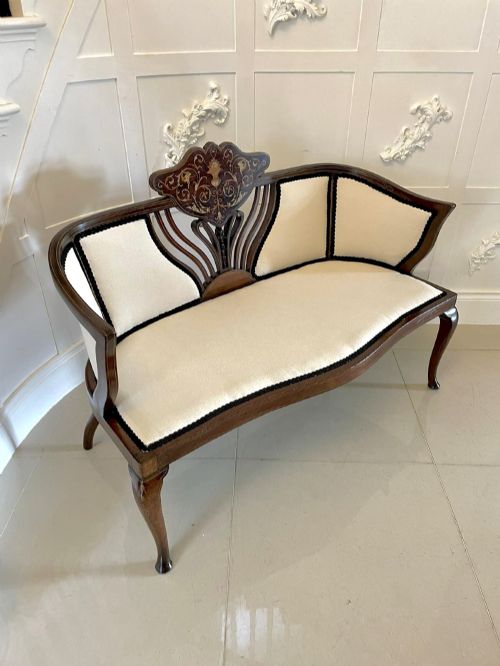
An edwardian carved wooden settee stands as a principal seating form that emerged from the Victorian era into the lighter tastes of the early twentieth century. You will most frequently meet mahogany frameworks embellished with satinwood inlay, alongside revival styles that borrow from Chippendale and Louis XVI designs. These pieces range from compact window seats and two-seater salon settees to large country house sofas and expansive parlour suites.
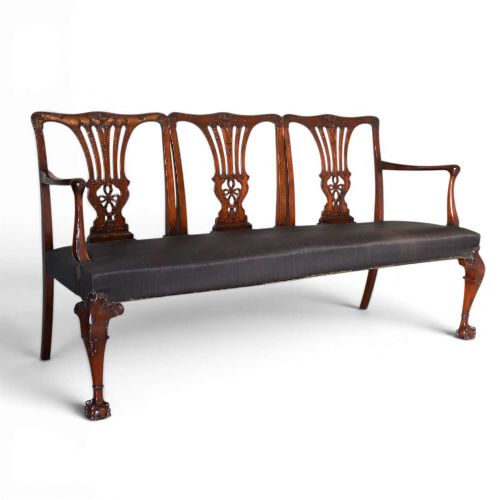
The construction spans the late nineteenth century through to the nineteen-twenties, incorporating both formal drawing-room pieces and bedroom window seats. Makers of the period drew on historical motifs, yielding triple chair backs, fluted legs, and carved woodwork that define the domestic interior of the era.
Assessing quality and execution
The distinction between standard production and superior work lies in the crispness of the timber carving and the precision of the satinwood inlay. Finer examples display deeply articulated backsplats and well-balanced proportions, whereas simpler pieces rely on painted or minimal decoration.
The integrity of the mahogany frame and the sophistication of the revival styling - whether channelling French Chateau elegance or English Chippendale traditions - dictate the standing of an individual settee within the broader range.
Edwardian Carved Wooden Settee Retail Price Guide 2026
Typical asking prices for edwardian carved wooden settee among the pieces listed under this phrase on Sellingantiques today, from the lower quarter to the upper quarter. They describe what is for sale here now, not the wider market.
Current listings demonstrate a prevalence of mahogany frames dating from the Edwardian period, frequently enhanced with satinwood inlay and damask upholstery.
The Edwardian Carved Wooden Settee Glossary
- Satinwood inlay
- A decorative technique using thin veneer pieces of contrasting yellowish timber inserted into the mahogany background to form geometric or floral patterns. This ornamentation characterises much of the cabinetwork from the period.
- Chippendale revival
- A design movement drawing inspiration from eighteenth-century English furniture, identifiable through carved interlaced ribbon backs and cabriole legs. These elements were frequently reinterpreted by early twentieth-century makers.
- Bergere
- A closed-arm upholstered armchair or sofa featuring cane panels set into the wooden frame. The technique provides a lighter visual weight than fully stuffed upholstery.
- Parlour suite
- A coordinated group of seating furniture designed for a formal reception room, typically comprising a settee and matching chairs sharing identical timber and upholstery.
Edwardian Carved Wooden Settee: Frequently Asked Questions
How do I distinguish Edwardian from Victorian settees?
Victorian settees tend to feature heavier, darker timber frames with dense upholstery and ornate, substantial turning. Edwardian pieces generally present lighter proportions, crisper inlay work, and more restrained decoration.
Cabinetmakers working in the Edwardian period favoured mahogany combined with satinwood, often looking back to lighter eighteenth-century aesthetics rather than the heavy revival styles of the late nineteenth century.
Where were these settees originally placed?
These pieces served multiple functions across the domestic interior, sitting in formal drawing rooms, entrance halls, and private parlours. Smaller window seats were specifically proportioned for placement beneath bay windows.
Larger country house sofas provided principal seating in reception rooms, while bedroom settees offered secondary seating at the foot of a bed or in private dressing rooms.
How should I care for the wooden frame?
Maintenance requires keeping the mahogany away from direct heat sources and strong sunlight to prevent the timber and veneer from drying out. Regular dusting with a soft, dry cloth preserves the polished surface.
Avoid commercial silicone polishes, as repeated application builds up a film that obscures the grain and delicate satinwood inlay details over time.
Can I reupholster a salon settee?
Many salon settees and parlour suites are well-suited for re-upholstery, allowing new fabrics to match contemporary interiors while preserving the historic wooden frame. Traditional webbing and stuffing methods should be maintained where possible.
Consulting a professional upholsterer ensures that the sprung foundations and delicate carved show-wood edges receive proper support during the recovering process.