

Edwardian Carved Stone
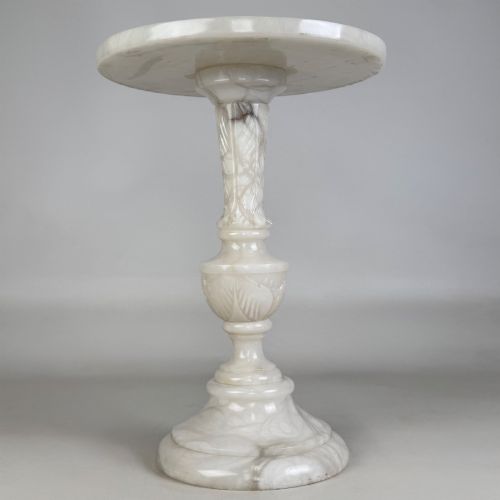
Edwardian carved stone encompasses pieces shaped from materials like alabaster, soapstone, and marble during the early twentieth century.
Edwardian Carved Stone
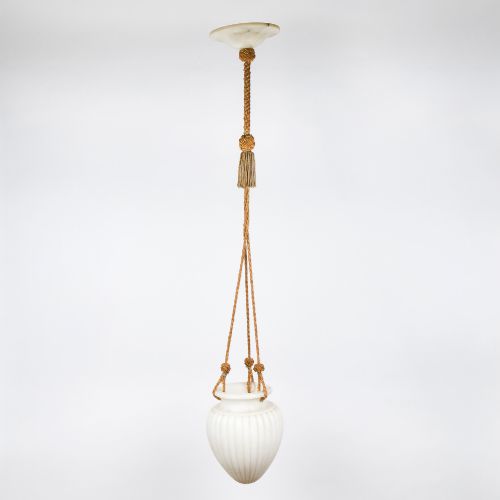
When buyers search for Edwardian carved stone, they encounter sculptural objects and vessels produced during the Edwardian period and adjacent years. The selections span decorative sculpture, busts, table lamps, and hanging lights alongside inlaid vases.
Most pieces met on this page originate from the early twentieth century, utilising alabaster, soapstone, and marble. Forms range from figurative busts of young women to campana urns and ceremonial animal studies.
Makers utilised traditional carving techniques to shape mineral substances into decorative home furnishings. These objects reflect the classical revival and arts and crafts movements popular at the time.
Materials and Methods
Alabaster and soapstone served as the primary carving mediums for sculptural busts, lamps, and architectural vessels. Artisans shaped these softer minerals using chisels and hand-polishing tools to achieve smooth finishes and detailed contours.
Marble formed the base for pietra dura inlay work, where coloured stones were fitted precisely into recesses. These techniques required skilled handwork to balance structural integrity with decorative refinement.
Edwardian Carved Stone Retail Price Guide 2026
Typical asking prices for edwardian carved stone among the pieces listed under this phrase on Sellingantiques today, from the lower quarter to the upper quarter. They describe what is for sale here now, not the wider market.
Listings feature alabaster, soapstone, and marble across sculpture, lighting, and vase forms from the early twentieth century.
Judging Quality
Quality rests upon the precision of the carving and the uniformity of the mineral medium. Finer pieces display crisp facial expressions on busts and symmetrical proportions on urns and lamps.
The integration of decorative elements, such as inlaid stone details or balanced suspension in lighting fixtures, separates standard production from superior examples.
The Edwardian Carved Stone Glossary
- Alabaster
- A fine-grained mineral, often white, used for carving sculptural busts and light fixtures. Its translucent quality allowed early twentieth-century lamps to diffuse light softly.
- Pietra dura
- An artistic technique where cut and fitted polished coloured stones create mosaic designs. Artisans inlaid these stones into marble bases to form decorative vases.
- Campana urn
- A bell-shaped garden or decorative vessel originating from classical forms. These pieces appeared in stone during the early twentieth century.
- Soapstone
- A talc-schist mineral prized for its soft texture and ease of carving. It frequently formed small animal studies and decorative figures.
Edwardian Carved Stone: Frequently Asked Questions
What is Edwardian carved stone?
Edwardian carved stone refers to decorative items and sculptures shaped from minerals like alabaster and soapstone during the early twentieth century.
These pieces include figurative busts, lighting fixtures, and decorative vessels reflecting classical revival styles.
How were alabaster lamps used?
Alabaster lamps served as interior lighting fixtures designed to diffuse soft illumination across rooms.
Table lamps and hanging lights made from this material utilised the natural translucency of the stone.
What is pietra dura inlay?
Pietra dura inlay involves fitting precise slices of coloured stone into a marble surface to form pictorial designs.
This technique decorated vases and decorative objects during the Raj period.
How do you identify soapstone studies?
Soapstone studies are small figurative carvings, such as ceremonial elephants, produced from soft talc-schist minerals.
They display smooth surfaces and subtle variations in natural stone colour.