

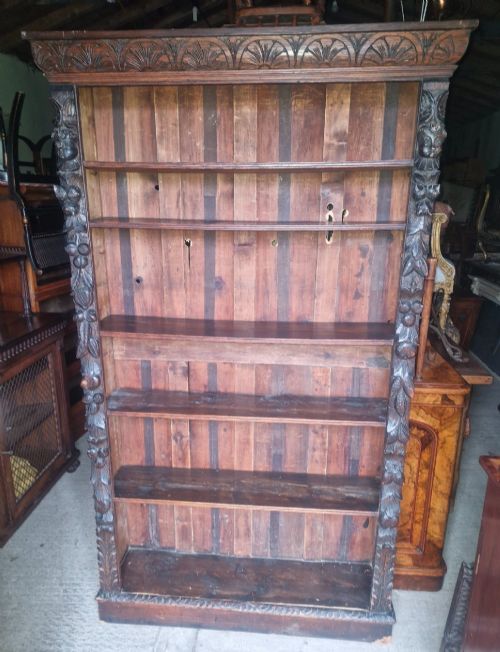
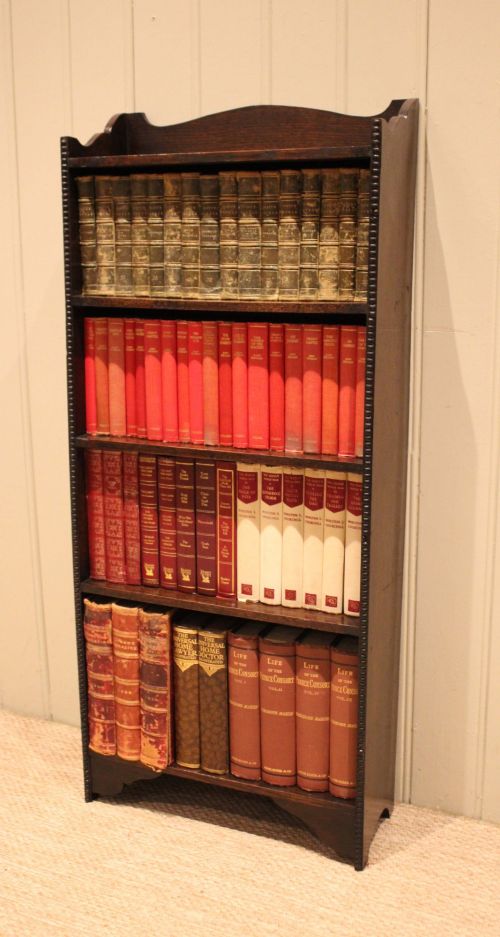
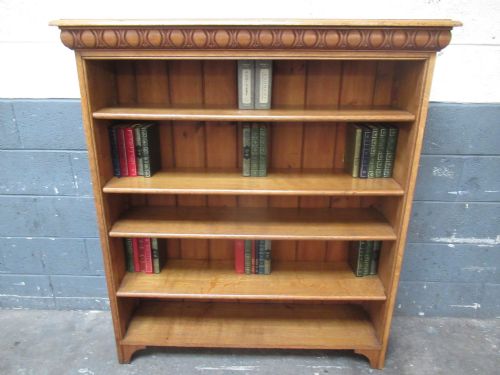
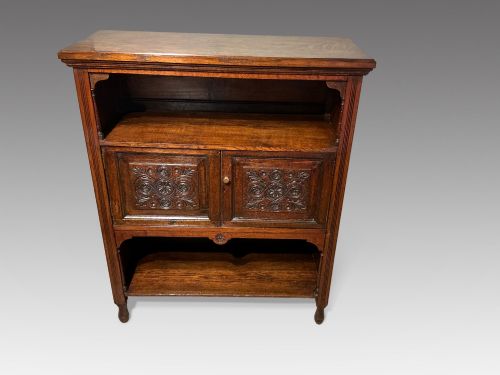


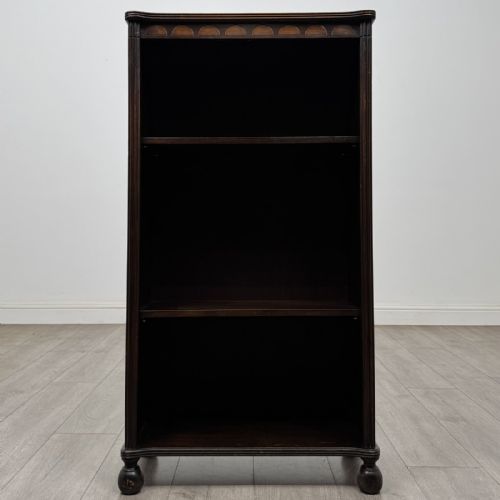
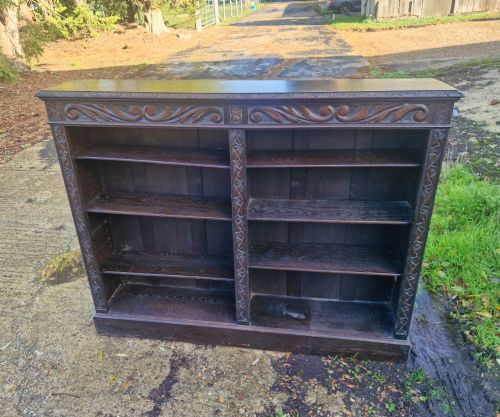
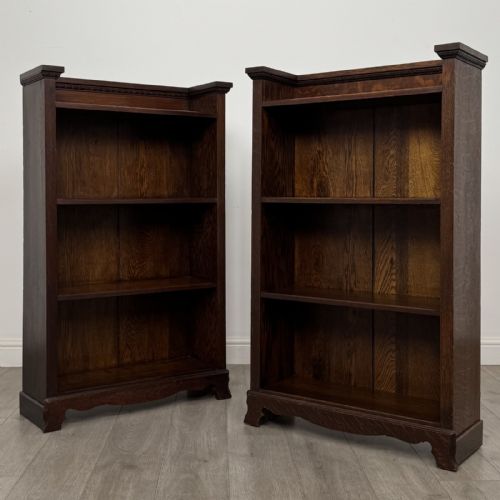
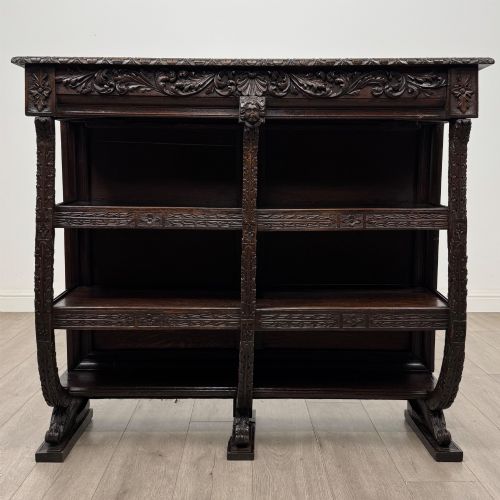
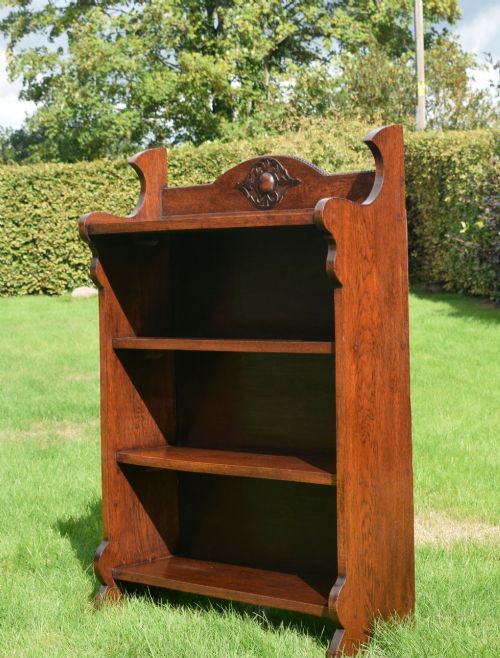
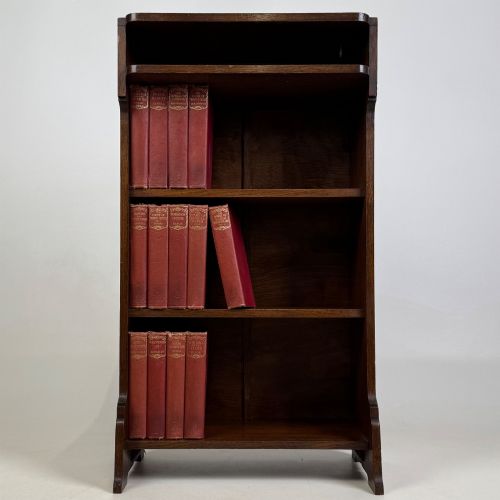
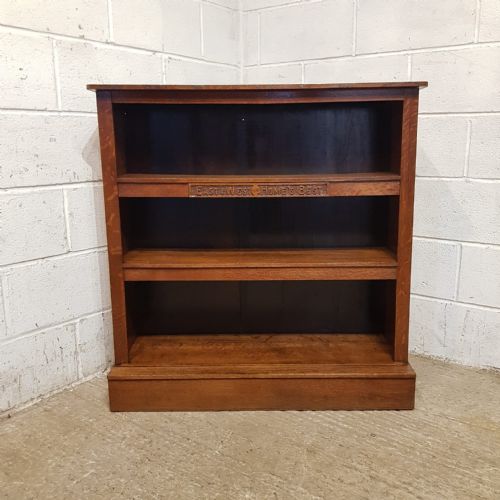
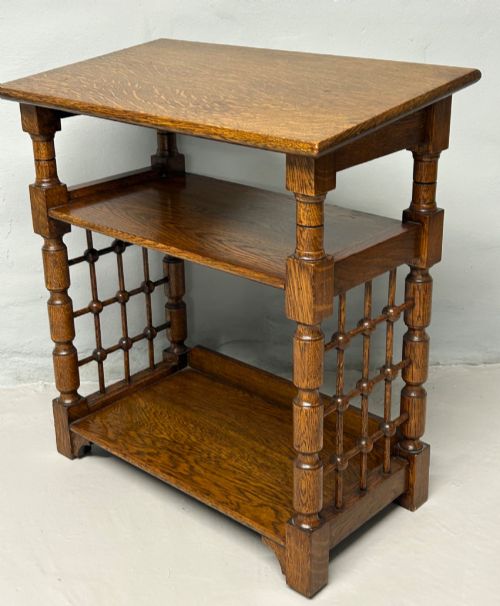

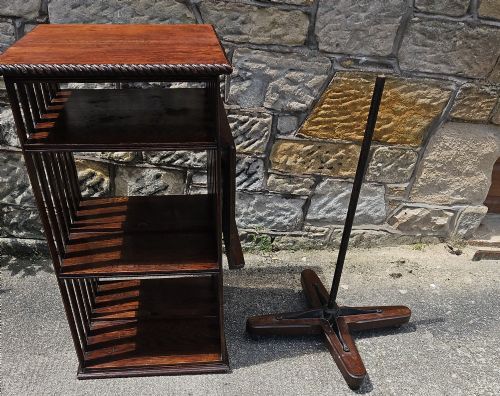
Edwardian Carved Oak Bookshelf
An edwardian carved oak bookshelf brings sturdy timber and honest utility to a room, offering open storage for a working library.
Edwardian Carved Oak Bookshelf
The edwardian carved oak bookshelf appears across open freestanding formats, revolving table models, and smaller desktop book stands. Most examples date from the Edwardian period or the surrounding decades of the early twentieth century, though nineteenth-century Victorian antecedents also occur.
Makers of this era employed solid oak to build sturdy open shelves, occasionally incorporating adjustable tiers and carved ornamentation. Pieces range from modest table-top revolving stands to large library bookcases designed for standing service.
Alongside standard open shelving, related variants include occasional tables fitted with book storage, display cabinets, and pieces influenced by the Arts and Crafts and Aesthetic movements.
Materials and Construction
Construction relies heavily on solid oak, selected for durability and finished to display the natural grain. Workshops utilised metal or brass for adjustable shelf mechanisms and hinges, while some variants integrate iron or cast iron components.
Carving and fret-cut detailing ornament the uprights and galleries, reflecting stylistic currents such as Jacobean Revival and Art Nouveau. Surfaces receive polished or waxed treatments that protect the timber while maintaining a warm lustre.
Edwardian Carved Oak Bookshelf Retail Price Guide 2026
Typical asking prices for edwardian carved oak bookshelf among the pieces listed under this phrase on Sellingantiques today, from the lower quarter to the upper quarter. They describe what is for sale here now, not the wider market.
Listings feature solid oak across periods from the late nineteenth century through the nineteen-thirties, including revolving stands and large open library cases.
Distinctions in Execution
Quality rests upon the weight of the solid timber and the precision of the joinery rather than surface embellishment alone. Superior examples feature well-fitted adjustable shelving systems and crisp, purposeful carving that defines the architectural form.
Proportion and stability separate standard utility pieces from finer items. Desirable execution shows balanced proportions in smaller revolving stands and robust construction in standing library bookcases.
John Moyr Smith·Waring and Gillows
The Edwardian Carved Oak Bookshelf Glossary
- Edwardian
- Pertaining to the reign of King Edward VII, spanning the early years of the twentieth century. Furniture from this era often lighter in scale than Victorian predecessors.
- Arts and Crafts
- A design movement valuing honest construction, visible handcraft, and simple materials. Oak serves as a primary medium for pieces bearing these characteristics.
- Revolving Bookcase
- A small tabletop or standing bookcase mounted on a central pivot allowing rotation. This form provides easy access to a collection of volumes.
- Adjustable Shelves
- Shelves supported on pegs or racks permitting height variation. This mechanism accommodates books of differing vertical sizes within a single case.
Edwardian Carved Oak Bookshelf: Frequently Asked Questions
How do I spot an Edwardian bookcase?
Look for lighter proportions in the solid oak frame combined with restrained carving characteristic of the early twentieth century. These pieces often feature open shelves or revolving tabletop mechanisms.
Construction methods and timber selection help separate Edwardian examples from heavier Victorian or later twentieth-century furniture.
Are revolving bookcases sturdy enough for heavy books?
Most revolving book stands utilise a central pivot designed to balance moderate weight across multiple compartments. They suit smaller volumes rather than heavy folios.
Standing open bookcases provide greater stability for larger libraries and heavier hardcover collections.
What is an Arts and Crafts oak bookcase?
This style emphasises visible construction, solid oak timber, and simple carved or fret-cut details. Makers avoided excessive ornamentation in favour of honest utility.
Such pieces date predominantly around the early nineteen-hundreds and reflect a movement away from factory mass production.
How do adjustable shelves work in antique bookcases?
Traditional adjustable shelves rely on wooden ratchets, metal brackets, or rows of peg holes inside the upright panels. These allow the user to alter shelf heights for different book sizes.
Original brass or iron fittings indicate quality execution in period pieces.