

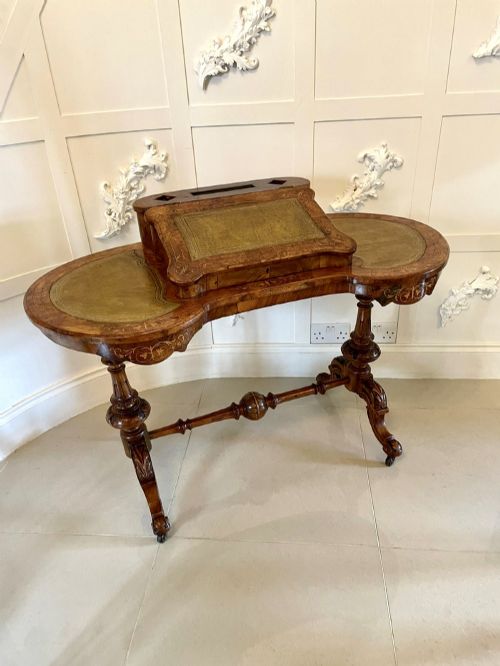
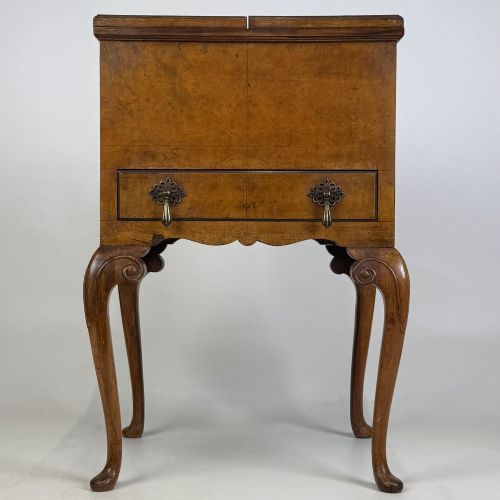


Edwardian Burr Walnut Box
An Edwardian burr walnut box brings tactile warmth and exquisite timber figuring to any room, offering a refined home for letters, games, or keepsakes.
Edwardian Burr Walnut Box
When you search for an Edwardian burr walnut box, you encounter pieces designed for practical storage with ornamental flair, originating from the Edwardian era as well as the Victorian period.
The selections on this page encompass various forms, ranging from stationery cabinets and games boxes to writing slopes and glove boxes, constructed from rich burr walnut timber.
Most examples display the characteristic swirling grain patterns of burr walnut, occasionally enhanced by brass mounts, inlaid wood, or marquetry detailing.
Materials and construction methods
Cabinet makers utilised burr walnut veneers applied over solid wood carcases, harnessing the distinctive knot formations of the timber to create striking symmetrical patterns on lids and doors.
Many boxes incorporate brass banding, escutcheons, and mounts, securing the structural edges and adding a metallic contrast to the dark timber.
Interiors frequently lined with silk, fabric, or leather provide dedicated compartments for stationery, writing implements, cards, or vanity accessories.
Edwardian Burr Walnut Box Retail Price Guide 2026
Typical asking prices for edwardian burr walnut box among the pieces listed under this phrase on Sellingantiques today, from the lower quarter to the upper quarter. They describe what is for sale here now, not the wider market.
Listings feature burr walnut alongside brass, leather, glass, and silk across forms including stationery boxes, games boxes, and writing slopes.
Assessing quality in burr walnut boxes
The distinction between standard pieces and the finest examples lies in the selection and bookmatching of the burr walnut veneer across the entire surface.
Superior construction reveals itself in tight corner joints, well-fitted internal trays, original working locks with keys, and crisp marquetry or inlay work.
Refined pieces maintain their original fitted velvet or silk linings and show careful attention to internal dividers rather than later replacements.
Whytock And Reid·JH Browne
The Edwardian Burr Walnut Box Glossary
- Burr walnut
- A timber harvested from the wart-like growths on walnut trees, prized by cabinet makers for its intricate, swirling grain patterns. It is typically sliced into thin veneers for decorative furniture surfaces.
- Stationery box
- A desk accessory designed to hold writing paper, envelopes, and correspondence. These often feature tiered internal partitions and sloping or domed lids.
- Marquetry
- The art of applying pieces of veneer to a structure to form decorative patterns and pictures. Craftsmen use various coloured woods to create pictorial designs on box lids.
- Writing slope
- A portable desk that folds open to reveal a slanted writing surface and internal storage wells for inkwells and pens. They were widely used for correspondence before the widespread adoption of fixed desks.
- Escutcheon
- A flat plate of brass surrounding a keyhole. It protects the surrounding wood from wear and adds a decorative metallic accent to the box front.
Edwardian Burr Walnut Box: Frequently Asked Questions
What is an Edwardian burr walnut box used for?
These boxes served various domestic purposes, functioning as compact storage for letters, writing equipment, card games, or personal accessories like gloves and cigars.
Today, they adapt readily to modern living as decorative tabletop storage for contemporary trinkets or desktop organisation.
How do I tell an Edwardian box from a Victorian one?
Edwardian pieces often feature lighter timber tones and refined marquetry inlay, reflecting the decorative shifts away from heavier Victorian styles.
Victorian boxes more commonly employ solid brass banding, robust brass mounts, and darker, more heavily padded interiors.
How should I care for burr walnut furniture?
Keep burr walnut surfaces away from direct sunlight and heat sources to prevent the delicate veneers from drying out or warping.
Dust gently with a dry, soft cloth and occasionally apply a quality beeswax to nourish the timber grain.
Are original keys usually included with these boxes?
Original working keys are occasionally present, but many antique boxes survive without them due to centuries of displacement during house moves.
Lock mechanisms can often be opened or fitted with a replacement key by a specialist restorer if required.