

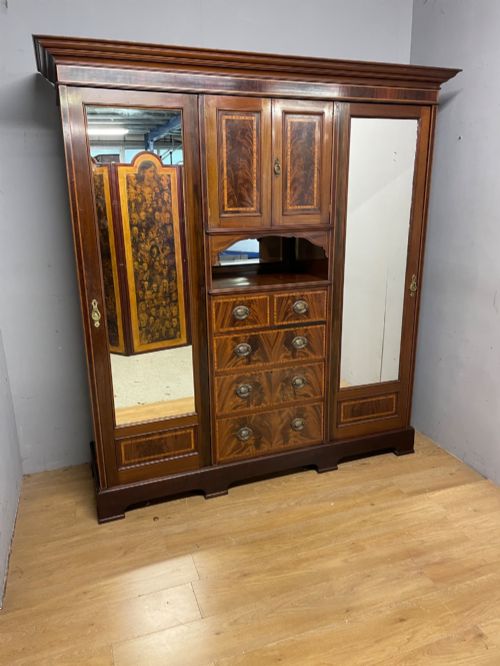
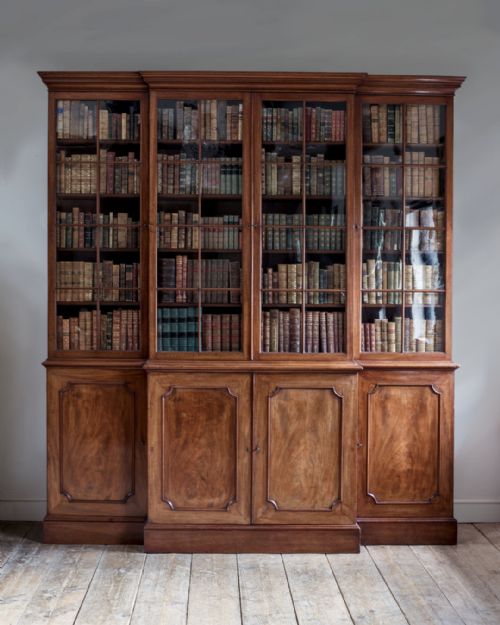
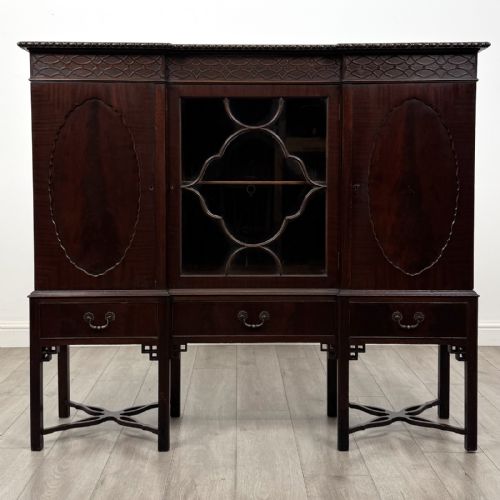
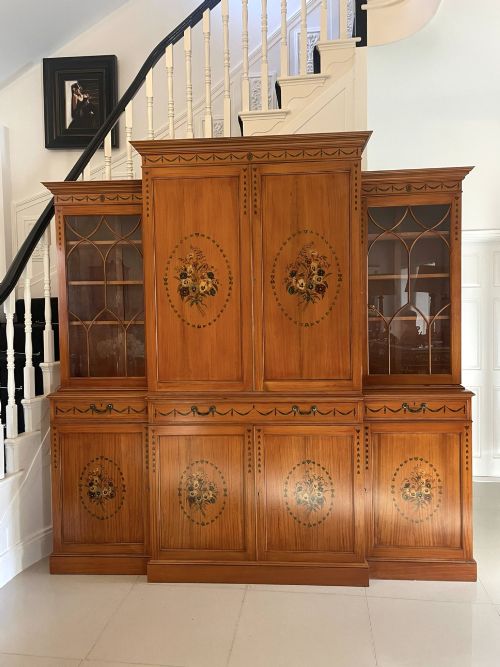
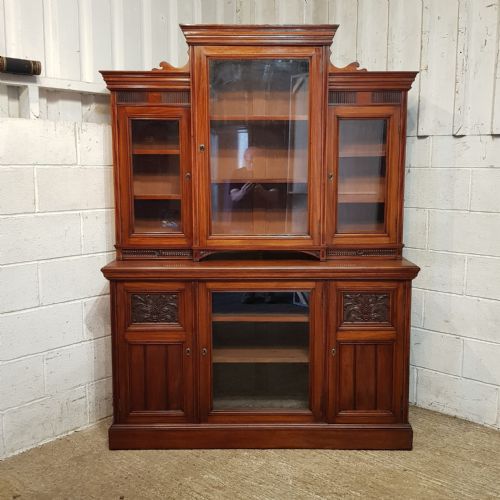


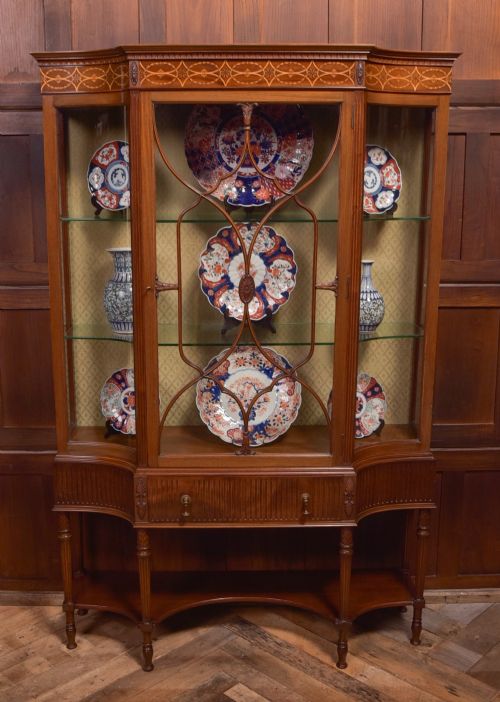


Edwardian Breakfront Cupboard
An edwardian breakfront cupboard offers architectural presence and practical storage, uniting the forward-projecting central section with period craftsmanship.
Edwardian Breakfront Cupboard
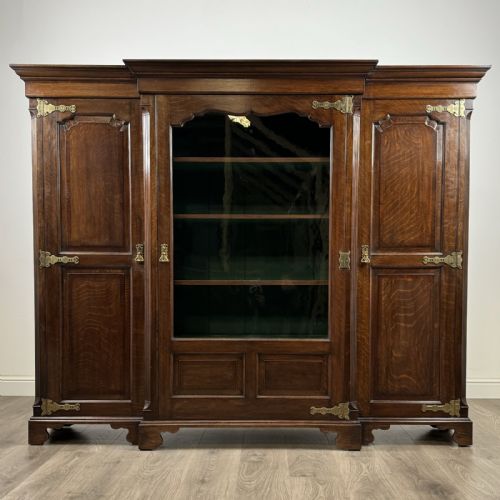
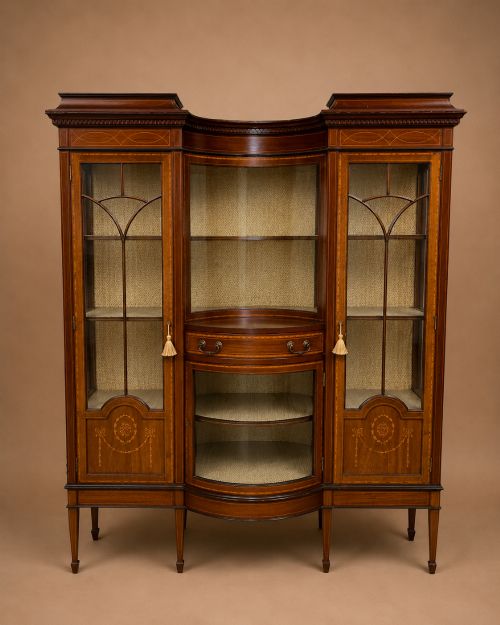
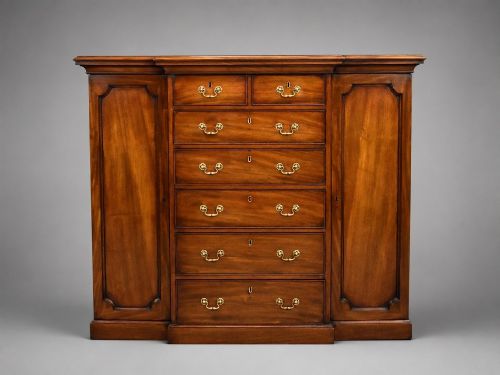
When you search for an edwardian breakfront cupboard, you encounter substantial furniture pieces designed with a projecting central section flanked by recessed wings. These forms appear across various periods and styles, including Victorian, Edwardian, and Sheraton Revival variations.
Bookcases, display cabinets, sideboards, and wardrobes dominate the available examples, constructed primarily from mahogany, satinwood, oak, and walnut. The most frequently met versions incorporate glazed doors, inlaid satinwood details, and original painted decoration.
Makers such as Maple & Co and Edwards & Roberts occasionally appear alongside pieces from the nineteenth and early twentieth centuries. The selection spans utilitarian linen cupboards to grand library bookcases and elaborate bedroom suites.
Materials and construction methods
Cabinet makers utilised dense hardwoods including mahogany, oak, rosewood, and walnut for the primary structural frames and carcasses. These timbers provide the strength necessary to support large glazed doors and tiered shelving.
Satinwood veneer and marquetry inlay provide decorative contrast, often combined with brass hardware and glass panels. Painted decoration and intricate carving appear on revival pieces from the Edwardian and late Victorian eras.
Edwardian Breakfront Cupboard Retail Price Guide 2026
Typical asking prices for edwardian breakfront cupboard among the pieces listed under this phrase on Sellingantiques today, from the lower quarter to the upper quarter. They describe what is for sale here now, not the wider market.
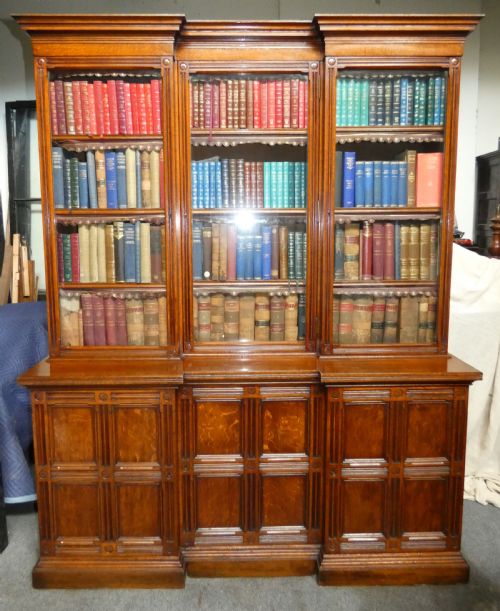
Green interiors peek out behind glazed Edwardian doors, offering a cheerful splash of colour to sober rows of heavy leather-bound volumes.
Assessing quality in breakfront furniture
The standard of a piece rests on the precision of the timber matching and the execution of the satinwood inlay or marquetry. Superior examples retain original glass, brass fittings, and painted decoration without modern replacements.
Structural integrity depends on the joinery within the projecting breakfront centre and the stability of the flanking sections. Finer pieces demonstrate careful attention to internal fitting, such as adjustable shelving and lined interiors.
Maple & Co·Edwards & Roberts
The Edwardian Breakfront Cupboard Glossary
- Breakfront
- A cabinet design where the central section projects forward from the flanking wings. This architectural arrangement creates depth and shadow across the front elevation.
- Satinwood
- A luminous hardwood native to Ceylon and India used extensively for veneers and stringing. It provides a pale, golden yellow contrast to darker timbers like mahogany and rosewood.
- Marquetry
- The art of forming decorative patterns using thin pieces of wood veneer. Craftsmen apply contrasting timbers to create intricate floral or geometric motifs.
- Sheraton Revival
- A late nineteenth and early twentieth century design movement inspired by the furniture of Thomas Sheraton. It relies on graceful proportions, satinwood, and painted ornamentation.
- Credenza
- A low cabinet or sideboard, frequently featuring glazed doors and fine marquetry. Originally used for serving food or displaying plate.
Edwardian Breakfront Cupboard: Frequently Asked Questions
How do I date an Edwardian piece?
Edwardian furniture dates from the reign of King Edward VII between 1901 and 1910, though the style often blends with late Victorian design.
Clues lie in the lighter timbers used, such as satinwood inlay, and the revival styles popular during this period.
Where were these cupboards used?
These large cabinets served primarily in libraries, formal dining rooms, and grand drawing rooms for the display and storage of books and china.
Wardrobes and linen cupboards fulfilled similar functions within Edwardian and Victorian bedrooms.
Are the glass doors original?
Original glass panes often display minor imperfections, slight ripples, and small bubbles characteristic of early manufacturing techniques.
Modern replacement glass appears uniformly flat and clear when examined under reflected light.