




Edwardian Bottle Cabinet
These Edwardian bottle cabinets and tantalus pieces bring secure storage and display to home socialising.
Edwardian Bottle Cabinet
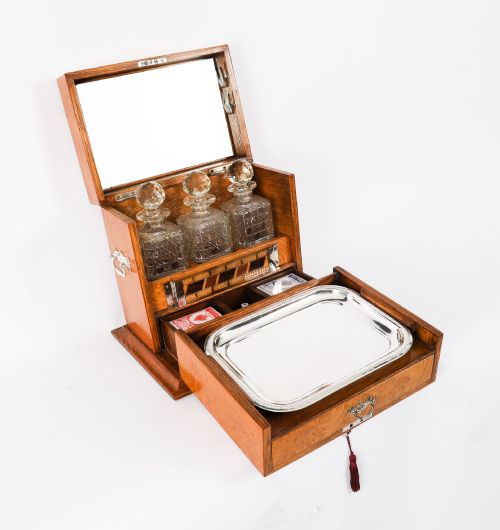
An edwardian bottle cabinet encompasses secure drinks storage, including tantalus frames, cellarettes, and wine coolers, designed to safeguard spirits from unauthorised consumption. The examples appearing here span the Edwardian era and the late Victorian period, reflecting the formal hospitality customs of those decades.
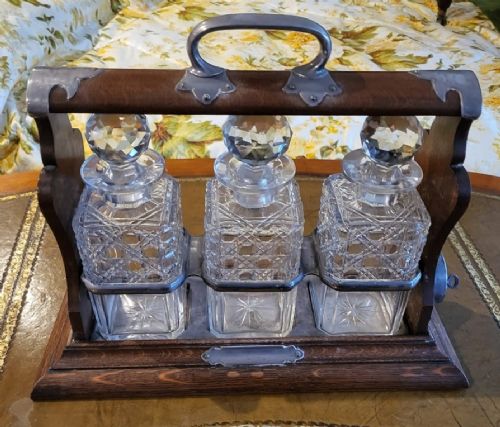
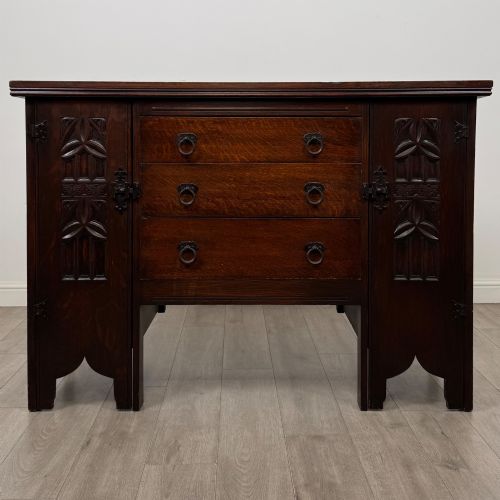
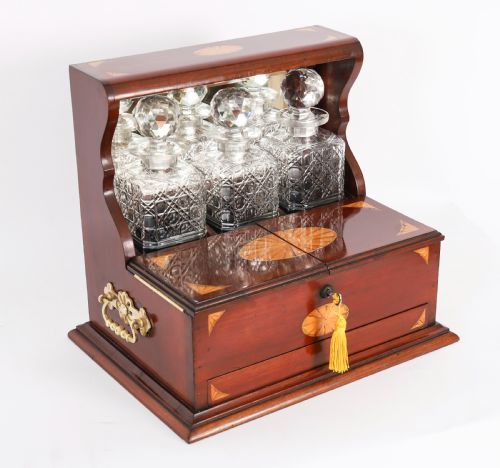
Most items you encounter are oak tantalus pieces fitted with silver-plated mounts and cut glass decanters, alongside satinwood-inlaid mahogany cellarettes. Sideboards with integrated bottle racks and brass-bound storage barrels also feature, showing the range of forms used for serving wine and spirits in the home.
Materials and construction
Cabinetmakers utilised solid oak and mahogany as the primary timber foundations, frequently enhancing surfaces with satinwood inlay, marquetry stringing, or brass mounts. These woods provided the necessary structural weight and durability required for housing heavy glass decanters.
Silver plating and cast brass hardware functioned as both functional locking mechanisms and decorative elements, securing the decanters within their wooden frames. Cut glass and crystal decanters completed the assemblies, ground and polished by hand to fit the locking framework precisely.
Edwardian Bottle Cabinet Retail Price Guide 2026
Typical asking prices for edwardian bottle cabinet among the pieces listed under this phrase on Sellingantiques today, from the lower quarter to the upper quarter. They describe what is for sale here now, not the wider market.
Listings feature oak and mahogany predominantly, complemented by brass mounts, silver plate, and cut crystal decanters across Edwardian and Victorian periods.
Judging quality
Quality reveals itself in the choice of timber and the precision of the joinery, particularly where brass mounts and locking mechanisms meet the wood. Pieces bearing maker attribution or exhibition quality show superior attention to secondary timbers and decorative stringing.
The sophistication of the locking mechanism and the integrity of the cut glass decanters dictate the upper tier of these pieces. Heavier gauge silver plating and substantial brass binding elevate an object above standard production versions.
Whytock & Reid
The Edwardian Bottle Cabinet Glossary
- Tantalus
- A locking drink container that holds decanters securely in a wooden frame so the contents remain visible yet inaccessible without a key. The name derives from the mythological figure whose punishment inspired the teasing design.
- Cellarette
- A lockable container or cabinet specifically designed for storing bottles of wine and spirits near the dining table. Earlier iterations were floor-standing, while later forms integrated into sideboards.
- Marquetry
- The art of applying small pieces of veneer to a structure to form decorative patterns and pictures. Craftsmen used contrasting woods such as satinwood and mahogany to create geometric or floral motifs.
- Silver plate
- A thin layer of silver applied to a base metal, typically copper or brass, to give the appearance of solid silver. Manufacturers utilised this technique for handles, lock plates, and bottle collars.
Edwardian Bottle Cabinet: Frequently Asked Questions
What is an Edwardian bottle cabinet?
It is a secure storage piece designed to hold wine bottles, spirits, and decanters safely within the home.
These items range from lockable tantalus frames and cellarettes to sideboards fitted with specialised bottle storage.
How did people use a tantalus?
Hosts used a tantalus to keep expensive spirits locked away from household staff while still displaying the decanters.
The locking mechanism engages the necks of the decanters, preventing removal until the key turns.
Are these cabinets made of solid wood?
The listings show primary structures built from solid oak and mahogany, often enhanced with decorative veneer details.
Craftsmen selected these sturdy hardwoods to support the heavy weight of glass decanters and liquor bottles.
How do I distinguish Edwardian from Victorian pieces?
Edwardian examples tend to display lighter timber tones and more restrained inlay work compared to earlier Victorian designs.
Victorian pieces often feature heavier brass mounts and darker, highly figured oak construction.
Can I use modern decanters in an antique tantalus?
Original tantalus frames require decanters that match the exact height and neck dimensions of the locking bar.
Replacement decanters must be measured carefully to ensure they fit beneath the security mechanism.