

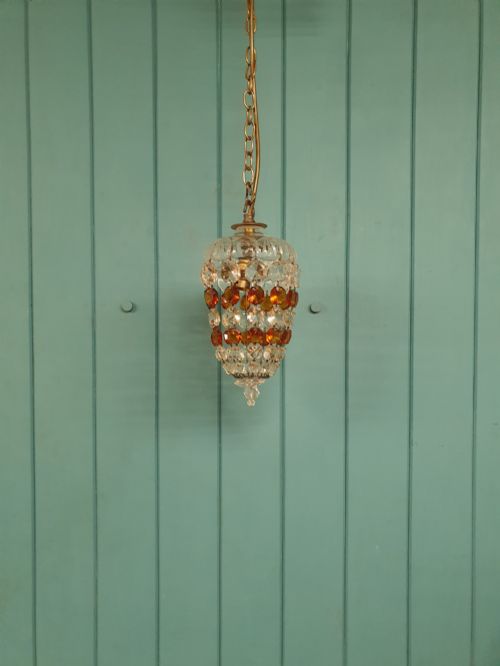
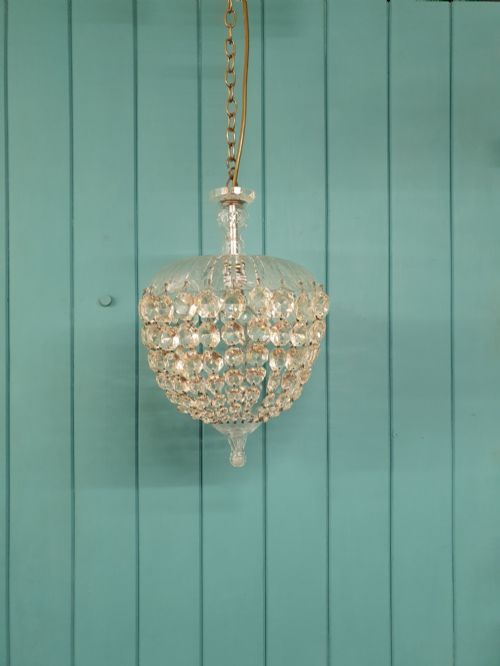
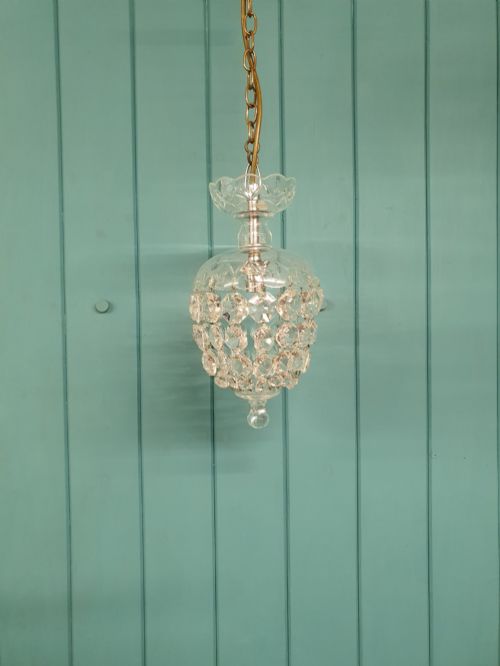
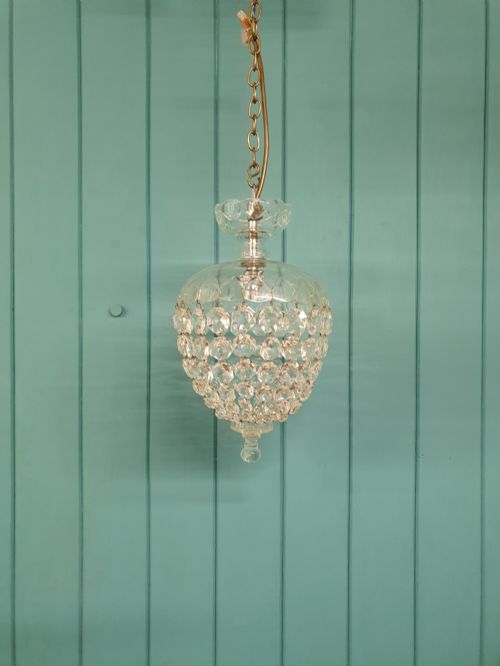
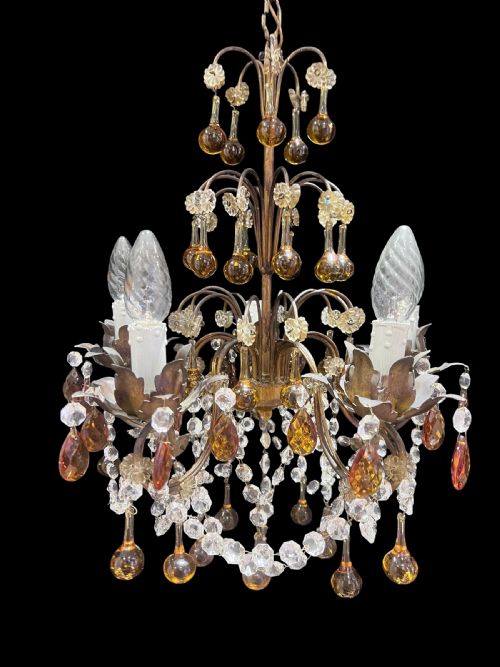
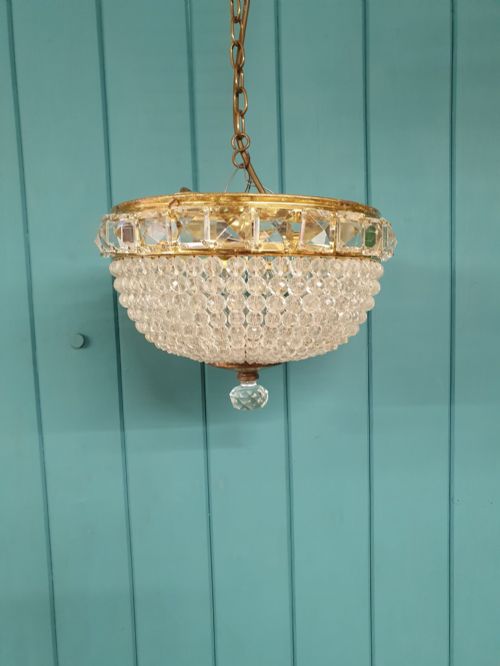


Edwardian Beaded Chandelier
An edwardian beaded chandelier brings brilliant crystal refraction and fine brass framing to low ceilings, offering the exact shimmer that characterises early twentieth-century interior lighting.
Edwardian Beaded Chandelier
The edwardian beaded chandelier encompasses compact dome tops, tapered bags, and basket forms produced during the early twentieth century. These ceiling light fixtures combine structured metal framing with dense arrangements of small glass beads.
Most examples originate from the Edwardian era through to the nineteen thirties, drawing upon Neoclassical, Regency, and French Chateau styles. Buyers will frequently encounter smaller scaled pieces measuring between six and thirteen inches across.
Basket chandeliers and dome top designs dominate the current selection, often incorporating cut glass drops and prisms. These configurations provide focused illumination while dispersing light through multifaceted crystal components.
Construction and materials
Makers constructed the primary framework using brass and gilt metal, forming structural baskets, rings, and hanging mounts. These metallic structures support the considerable weight of the suspended glass elements.
Individual glass and crystal beads are wired together to form continuous nets, swags, and beaded arms that envelop the metal frame. Cut glass drops and prisms hang from the lower borders to complete the assembly.
Edwardian Beaded Chandelier Retail Price Guide 2026
Typical asking prices for edwardian beaded chandelier among the pieces listed under this phrase on Sellingantiques today, from the lower quarter to the upper quarter. They describe what is for sale here now, not the wider market.
The listings span the Edwardian period through to nineteen thirty, predominantly featuring brass and cut glass.
Assessing the workmanship
Quality rests upon the precision of the glass cutting and the clarity of the crystal components. Superior examples feature sharp facets that refract light cleanly, whereas lesser pieces use softer moulded glass.
The integrity of the brass frame and the density of the bead wiring dictate the structural longevity of the fixture. Tightly strung beadwork and substantial metal gauge distinguish finer pieces from simpler production.
The Edwardian Beaded Chandelier Glossary
- Bag chandelier
- A lighting fixture shaped like a tapered bag or basket where glass beads form a conical body ending in a fringe of drops. This form maximises crystal density while maintaining a modest profile.
- Dome top
- A ceiling light featuring a rounded upper section from which beaded strands cascade downwards. This profile was common in early twentieth-century domestic interiors.
- Prism
- A cut glass pendant suspended from the lighting frame to refract light into spectral colours. These elements hang from borders and arms to enhance the visual display.
- Cut glass
- Glass that has been ground and polished on a wheel to create geometric facets. This technique increases the sparkle and brilliance of the chandelier.
Edwardian Beaded Chandelier: Frequently Asked Questions
How do I clean an edwardian beaded chandelier?
Maintenance requires gentle hand wiping of each glass bead and drop using a mild cleaning solution and a soft cloth. Technicians advise against submerging the entire frame, as moisture can damage the internal wiring.
Taking time to clean individual components preserves the optical clarity of the crystal. Careful handling prevents strain on the historical wire connections holding the bead strands together.
What ceiling height suits a basket chandelier?
These compact early twentieth-century fixtures generally measure between six and thirteen inches, making them suitable for standard domestic ceiling heights. Their shallow profile allows placement in hallways, bedrooms, or smaller reception rooms.
Buyers should measure the drop distance from the ceiling rose to ensure adequate clearance below. Positioning the fixture above head height prevents accidental contact with the hanging glass drops.
Are these lights suitable for modern electrical systems?
Most surviving examples retain their historical brass and metal frames while accepting updated internal wiring to meet current safety standards. Professional electricians can adapt the original lamp holders for contemporary bulbs without altering the exterior appearance.
Consulting a specialist ensures the mounting hardware safely supports the combined weight of the metal and glass. Proper installation protects both the ceiling structure and the antique fixture.
How do I distinguish Edwardian lighting from later reproductions?
Genuine early twentieth-century pieces display period manufacturing traits such as hand-cut crystal drops, patinated brass framing, and traditional wire-wrapping techniques for the beads. Examining the construction reveals the age of the metalwork and the specific type of glass used.
Comparing the materials against documented pieces from the nineteen hundreds to nineteen thirties confirms the period origin. Subtle variations in the hand-assembled bead strands point away from modern machine-made replicas.