



Edwardian Bankers Light
An Edwardian bankers light brings focused illumination and functional elegance to a desk, crafted in brass and glass to suit a traditional study.
Edwardian Bankers Light
An Edwardian bankers light provides task illumination for a desk or workspace, appearing in forms such as adjustable desk lamps, table lamps, and swing arm reading lights. These pieces originate primarily from the early twentieth century, spanning the Edwardian period alongside Art Nouveau and Art Deco movements.
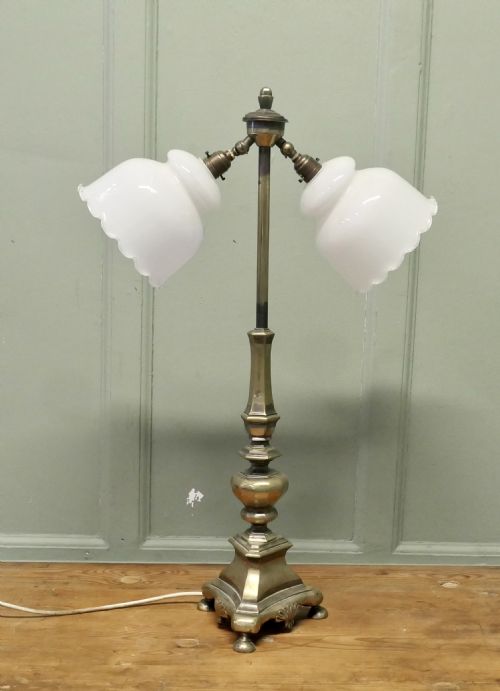
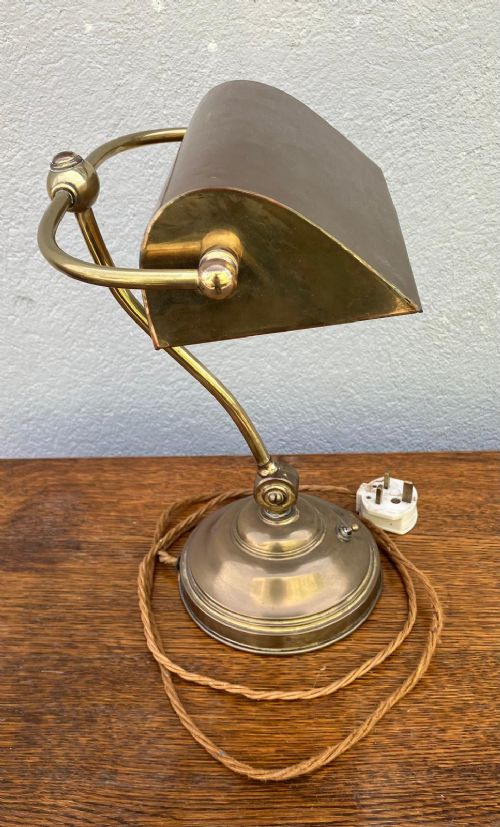
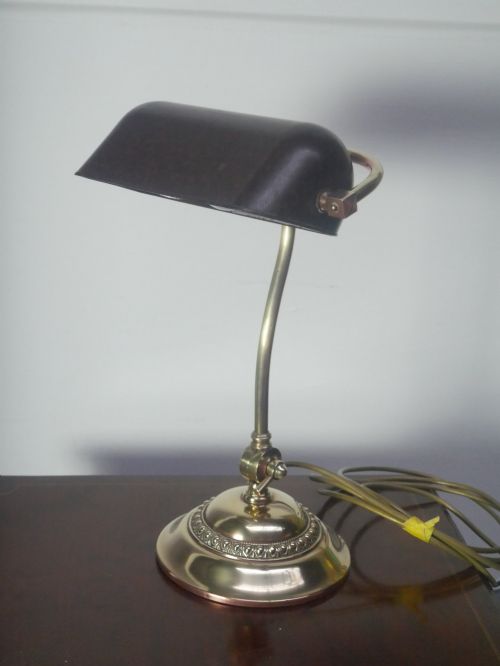
The version most commonly met on this page is the brass desk lamp featuring an adjustable angle or swan neck mechanism. Such fixtures combine metal frames with glass shades to direct light where it is needed most.
Materials and construction methods
Makers utilised brass and bronze as primary structural metals, often finished with a patinated or gilt surface. These materials provided the necessary rigidity for adjustable arms and weighted bases.
Shades were formed from glass, including frosted, etched, and opaline varieties, sometimes accented with cabochons. This combination of cast metal and translucent glass created both direct task lighting and diffused ambient glow.
Edwardian Bankers Light Retail Price Guide 2026
Typical asking prices for edwardian bankers light among the pieces listed under this phrase on Sellingantiques today, from the lower quarter to the upper quarter. They describe what is for sale here now, not the wider market.
Listings feature desk lamps and table lamps spanning from the late Victorian era through the Edwardian period into Art Deco and the 1930s.
Distinguishing quality in desk illumination
Superior examples demonstrate precision in their mechanical joints and weighted bases, ensuring smooth adjustment without sagging. Finer pieces also display crisp casting work in the bronze or brass framework.
The integrity of the glass shade and the nuance of the metal patina differentiate standard utility pieces from higher grade examples. Original surface treatments and well-preserved glass components hold greater appeal.
The Edwardian Bankers Light Glossary
- Swan neck
- A curved metal arm that allows the lamp head to be positioned over a workspace. This flexible design directs light downwards onto documents.
- Opaline glass
- A milky, semi-translucent glass used for shades to diffuse light evenly. It softens the glare from the bulb while maintaining brightness.
- Patinated metal
- A surface finish resulting from age or chemical treatment that darkens the metal. This mellowed appearance adds depth to brass and bronze fixtures.
- Art Nouveau
- A decorative style characterised by flowing, organic lines inspired by natural forms. Lamps from this period often incorporate floral motifs and cabochons.
- Gilt bronze
- Bronze coated with a thin layer of gold or gold-coloured finish. This technique provides a rich, lustrous appearance to decorative desk accessories.
Edwardian Bankers Light: Frequently Asked Questions
What is an Edwardian bankers light?
An Edwardian bankers light is a task lamp designed for office desks and reading tables during the early twentieth century. These fixtures typically combine metal frames with adjustable arms and glass shades.
They were built to provide direct illumination for paperwork and administrative tasks. Today, they serve both functional workspace lighting and decorative roles in traditional interiors.
How do I adjust the desk lamp?
Most antique desk lamps utilise swivel joints, counterweights, or swan neck stems to modify the height and angle of the light. Users simply loosen the pivot or gently reposition the arm to direct the beam.
Care should be taken when adjusting older brass mechanisms to avoid straining the metal or wiring. Regular, gentle handling preserves the original joints and keeps the shade secure.
How do I date an antique desk lamp?
Dating involves examining the manufacturing techniques, electrical fittings, and stylistic markers such as Art Nouveau curves or Art Deco geometry. The presence of specific metals and patination also indicates the period of origin.
Comparison with documented designs from the Edwardian era helps narrow down the timeframe. Makers often utilised construction methods characteristic of the early twentieth century.