




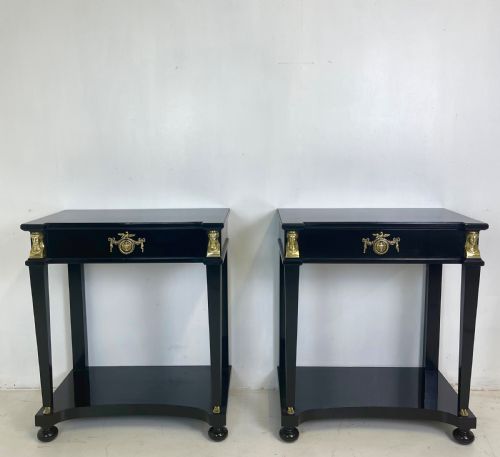
Ebonised Nightstand
An ebonised nightstand gives a bedroom dark, sharp contrast, bringing together rich period timber and a deep, polished black finish.
Ebonised Nightstand
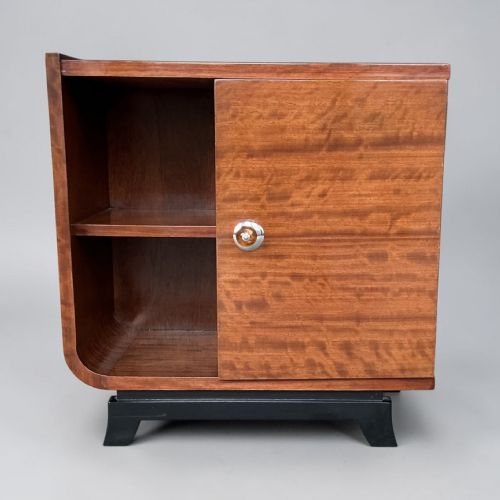
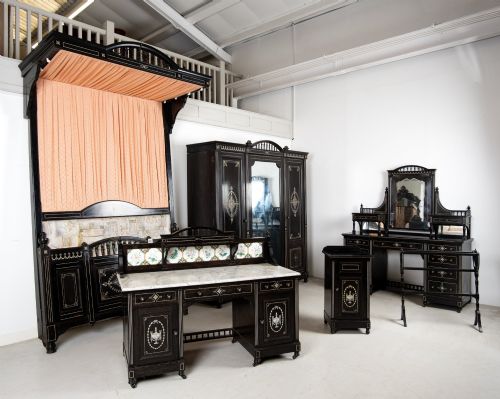
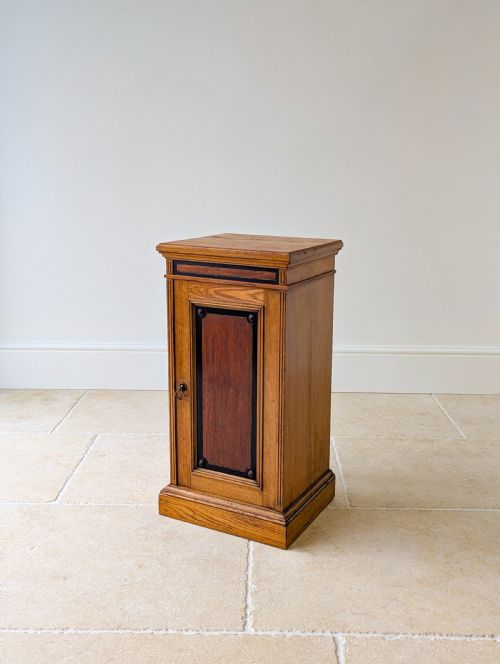
When you search for an ebonised nightstand, you are looking at small bedside storage and display surfaces treated to resemble dense ebony, spanning periods from the eighteenth century to the twentieth. The pieces on this page appear primarily as nineteenth-century Victorian and Aesthetic Movement designs alongside French Art Deco and Empire styles.
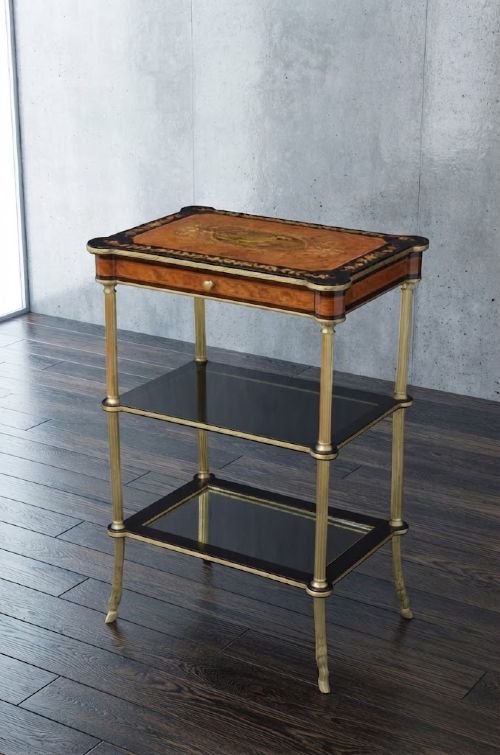
The forms vary from simple bedside tables and side cabinets to mirrored tiers, poudreuses, and serpentine chests. You are most likely to meet French and English examples featuring inlaid marquetry, brass details, and marble tops alongside walnut and mahogany structures.
How they were made
Cabinet makers utilised secondary woods such as walnut, mahogany, and oak, applying a dark stain or finish to create the desired ebonised appearance. This surface treatment was frequently paired with contrasting materials including burr walnut veneer, blonde birdseye maple, and polished marble.
Decoration relied heavily on intricate marquetry inlay, brass mounts, and mirrored tiers, particularly within French nineteenth-century and Art Deco workshops. Structural support was occasionally enhanced with casters or tiered shelving to balance utility and decorative presence.
Ebonised Nightstand Retail Price Guide 2026
Typical asking prices for ebonised nightstand among the pieces listed under this phrase on Sellingantiques today, from the lower quarter to the upper quarter. They describe what is for sale here now, not the wider market.
Listings feature ebonised wood combined with materials such as burr walnut, mahogany, brass, and marble across Victorian and Art Deco periods.
What varies in quality
Quality rests in the crispness of the ebonised finish and the precision of the underlying timber work, whether dealing with solid walnut or fine veneer. Superior examples show careful integration of brass mounts, marquetry, and stone tops without masking inferior secondary woods.
The distinction between standard utility items and finer decorative pieces lies in the subtlety of the proportions and the condition of the inlaid details. A well-preserved surface retains its depth of tone and integrates harmoniously with the chosen hardware.
Liberty & Co
The Ebonised Nightstand Glossary
- Ebonised wood
- Timber treated with a dark stain, dye, or polish to imitate genuine ebony. This technique gained particular popularity during the Victorian and Aesthetic Movement periods.
- Marquetry
- Decorative patterns formed by inserting pieces of wood, brass, or other materials into a veneered surface. It appears frequently on nineteenth-century French and English cabinets.
- P poudreuse
- A French dressing table equipped with compartments, drawers, and often a folding mirror. These versatile small tables frequently double as bedside surfaces.
- Serpentine chest
- A piece of furniture featuring a convex-concave-convex curving front line. This contour requires skilled carpentry and adds considerable elegance to small bedside chests.
- Aesthetic Movement
- A late nineteenth-century design style emphasising visual and compositional beauty over narrative content. Pieces from this movement often incorporate ebonised finishes and Japanese-inspired details.
Ebonised Nightstand: Frequently Asked Questions
What periods do these nightstands come from?
The pieces span from the eighteenth century through the Victorian era and into the Art Deco period of the nineteen-thirties. Victorian and late nineteenth-century French examples form a significant portion of the available selection.
Earlier eighteenth-century pieces also appear alongside twentieth-century Modernist and Empire Revival designs, offering a wide chronological spread.
How do I clean an ebonised finish?
Maintenance requires a soft, dry cloth to remove dust without abrasive polishes that might cloud the dark surface. Avoid excessive moisture, particularly on pieces with inlaid marquetry or delicate brass mounts.
Preserving the finish depends on keeping the wood away from direct heat sources and strong sunlight that could fade the deep tone.
Are these bedside cabinets sold as pairs?
Many listings include matched pairs of lamp tables and bedside cabinets, particularly among the Art Deco and twentieth-century selections. Single side cabinets and bespoke stands also feature prominently across the inventory.
Buyers seeking symmetrical bedside placement will find several coordinated sets alongside individual nineteenth-century pieces.
What materials are used besides ebonised wood?
Underlying structures frequently incorporate walnut, mahogany, and oak beneath the dark ebonised coating. Surfaces often showcase contrasting burr walnut veneer, birdseye maple, and inset marble tops.
Decorative elements introduce brass hardware, mirrored glass tiers, and multi-timber marquetry inlay to enrich the visual texture.
How were nineteenth-century bedside cabinets used?
These small tables and cabinets provided concealed storage for night-time essentials alongside a sturdy surface for a chamber lamp or glass of water. Poudreuses and work tables offered specialised compartments for personal grooming and correspondence.
Their compact footprints allowed them to fit neatly beside period bedframes while serving as decorative display stands during the day.