
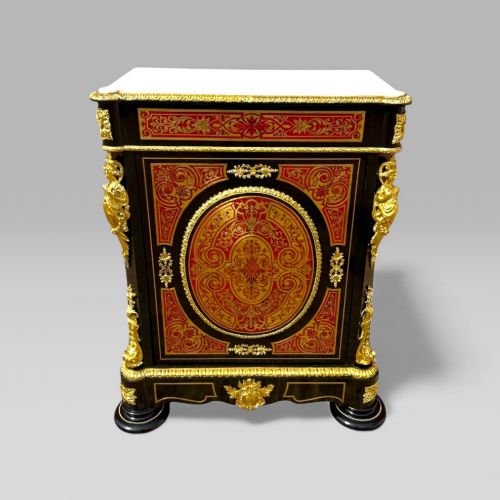


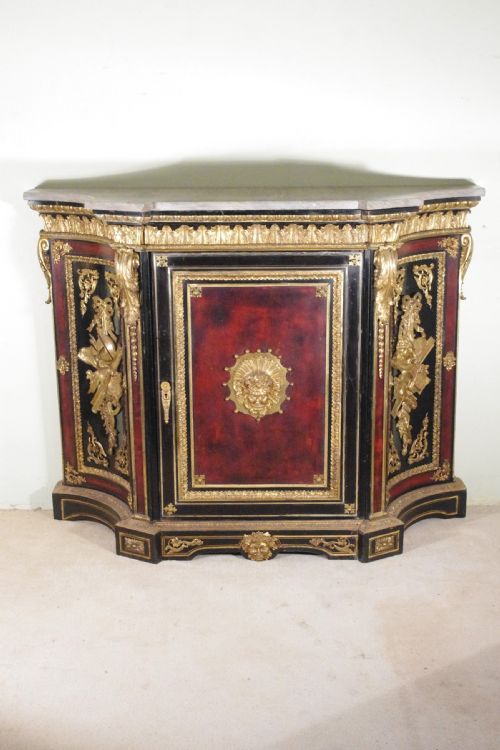

Ebonised Marble Side Cabinet
These ebonised marble side cabinets combine dark timber surfaces with heavy stone tops, offering striking contrast and formal display space.
Ebonised Marble Side Cabinet
An ebonised marble side cabinet brings together a dark, darkened timber carcase and a heavy stone top, designed to sit flush against a wall in a principal room. They appear in forms such as pier cabinets, side tables, and larger freestanding cabinets originating from the nineteenth century. These pieces serve both as decorative focal points and as functional surfaces for displaying ornaments or holding objects.
The versions most commonly met on this page date from the Victorian era and the French Napoleon III period, often displaying continental influence through styles like Louis XVI or French Rococo Revival. French examples frequently incorporate intricate marquetry or metal mounts alongside the characteristic stone top and darkened wood. Buyers encounter a mix of single cabinets, grand monumental pairs, and serpentine-fronted designs that showcase the breadth of nineteenth-century cabinet making.
How they were made
Makers constructed these cabinets using a timber carcase, frequently walnut, rosewood, or kingwood, which was subsequently treated to achieve a deep ebonised finish resembling ebony. Ormolu, brass, and tortoiseshell were frequently inlaid into the surfaces or applied as mounts, creating sharp geometric patterns and decorative borders. Some examples incorporate elaborate marquetry or floral designs directly into the wooden panels.
Heavy marble tops, including pietra dura in certain instances, were cut and polished to fit precisely over the wooden framework, providing a durable and cool surface. Gilt metal mounts and cast brass elements were secured to corners and door frames to accent the dark timber. These varied materials required different specialist crafts working in concert to complete a single cabinet.
Cabinet makers occasionally hid secret compartments behind decorative brass mounts to store small valuables.
What varies in quality
The distinction between ordinary and exceptional examples lies in the precision of the brass inlay and the crispness of the gilt metal mounts. Finer pieces display seamless integration between the ebonised wood and the applied tortoise-shell or marquetry panels, whereas lesser examples show uneven flushness or simpler surface decoration. The weight, thickness, and mineral patterning of the marble top also signal the ambition of the original commission.
Construction methods within the carcase define the longevity and structural integrity of the piece, particularly in serpentine-fronted or curved formats. Cabinets boasting hand-chased ormolu mounts and complex pietra dura work represent the upper tier of production from this period. The overall harmony of proportion between the stone top and the darkened base determines the visual impact of the cabinet.
The Ebonised Marble Side Cabinet Glossary
- Ebonised wood
- Timber treated with stain or polish to imitate the deep black appearance of genuine ebony. This finish was widely utilised across nineteenth-century cabinet making to create stark visual contrast.
- Ormolu
- Gilt bronze mounts applied to furniture for decorative effect. The metal is cast and then treated with gold to achieve a bright metallic lustre.
- Pietra dura
- Inlay technique using cut and fitted polished coloured stones to create pictorial designs. It appears on the most elaborate cabinet panels.
- Boulle
- A style of marquetry utilising brass and tortoiseshell inlaid together in intricate patterns. It is frequently seen on French Napoleon III pieces.
- Pier cabinet
- A narrow cabinet designed to stand against a wall between windows or architectural pillars. These forms often feature a marble top and a glazed or panelled door.
Ebonised Marble Side Cabinet: Frequently Asked Questions
Where did they put them?
These cabinets were placed against drawing room walls, often between tall windows where light caught the polished stone and metal mounts. They provided a flat surface for decorative urns or clocks while keeping the floor plan open.
In larger rooms, matched pairs anchored opposite sides of a fireplace or framed a doorway, creating a balanced interior arrangement typical of the period.
How do I clean the marble?
Dust the stone regularly with a soft, dry cloth to prevent grit from scratching the polished surface. Avoid acidic cleaners, vinegar, or harsh detergents which etch the marble.
For stubborn marks, use a damp cloth with mild soap followed immediately by thorough drying. Applying a specialised stone wax helps protect the finish over time.
Are the brass mounts original?
Original mounts show consistent age, tarnishing, and wear patterns that match the surrounding ebonised timber. They are typically secured with traditional fixings rather than modern screws.
Close inspection of the reverse side and mounting points reveals the casting quality and hand-finished details characteristic of nineteenth-century workshops.
How do I date an ebonised cabinet?
Dating relies on combining the stylistic evidence of the mounts, the timber species used in the carcase, and the framing construction. Nineteenth-century pieces often reflect specific reigns or design revivals like Napoleon III or Louis XVI style.
Interior construction details, such as drawer linings and backboards, provide further clues to the manufacturing decade.
Can they hold heavy items?
The thick marble tops provide a sturdy platform for substantial decorative objects, lamps, or books. The structural strength comes from the solid timber carcase beneath.
While the stone easily supports weight, care should be taken with placement to protect both the polished marble surface and the delicate brass inlay.