




Eastern Carved Table
An eastern carved table brings dense surface texture and intricate woodwork into a room.
Eastern Carved Table
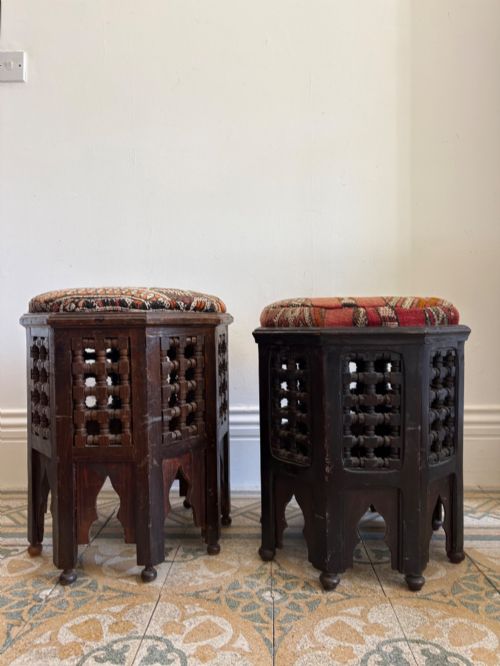
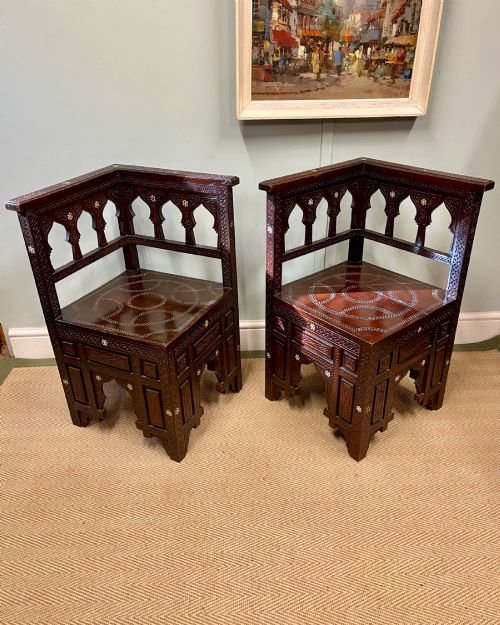
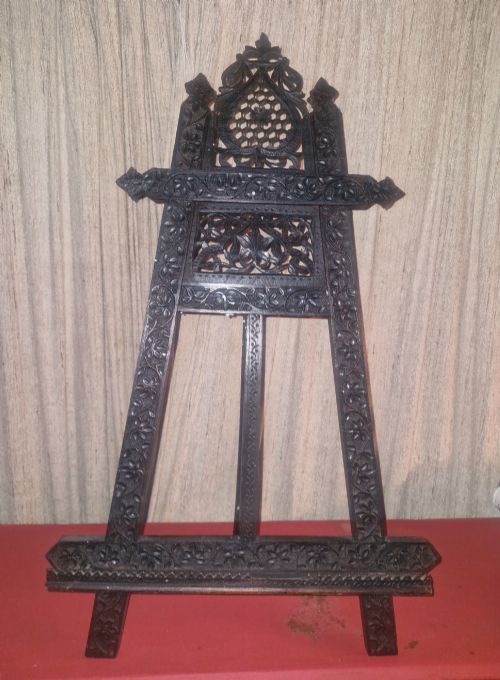
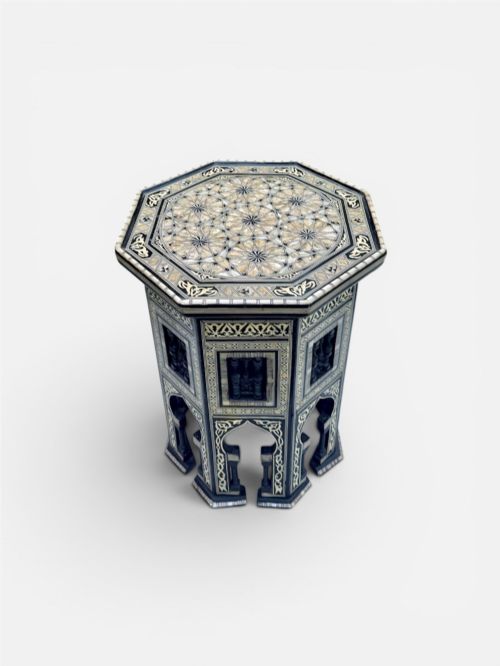
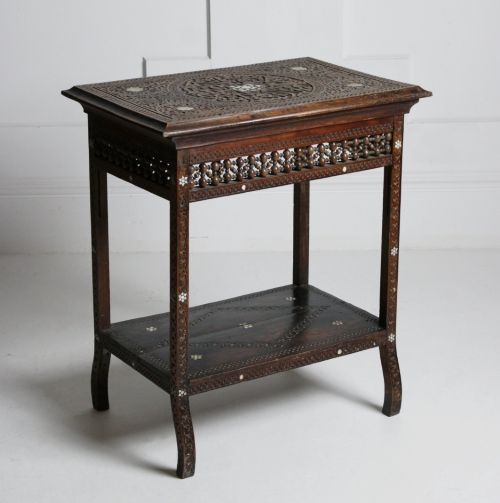
An eastern carved table encompasses low stools, folding occasional pieces, and octagonal side tables originating from traditions spanning the nineteenth and early twentieth centuries. These objects combine complex geometric or floral woodcarving with distinct regional forms such as the Damascus or Syrian folding base.
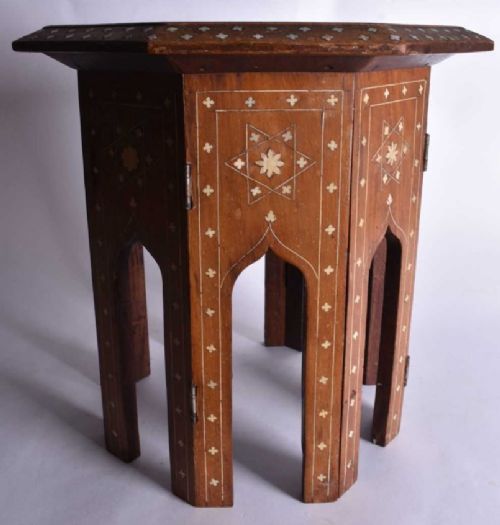
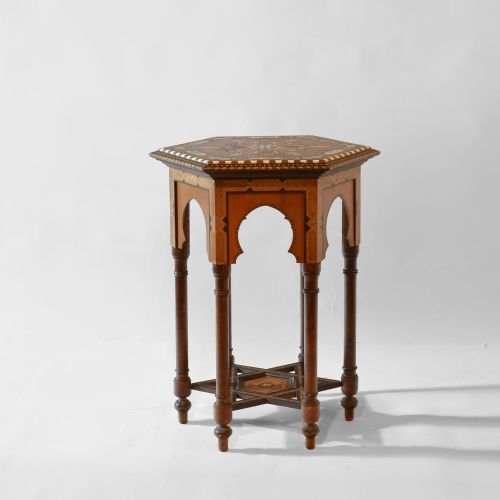
The version most commonly met on this page is the octagonal side table or coffee table, often inlaid with mother of pearl or brass. They appear across styles including Moorish Revival, Anglo-Indian, and Persian, reflecting diverse cultural aesthetics of the Victorian and Edwardian eras.
How they were made
Makers utilised dense hardwoods, teak, and walnut as structural foundations for intensive hand carving and relief work. Pierced fretwork panels and folding frames demonstrate traditional joinery that allowed tables to collapse flat for storage or transport.
Surface ornamentation relies on contrasting materials pressed or pinned into the timber core. Mother of pearl, bone, and engraved brass sheets form elaborate geometric tessellations across the tops and aprons of the pieces.
Eastern Carved Table Retail Price Guide 2026
Typical asking prices for eastern carved table among the pieces listed under this phrase on Sellingantiques today, from the lower quarter to the upper quarter. They describe what is for sale here now, not the wider market.
The listings demonstrate a strong presence of nineteenth-century pieces alongside early twentieth-century examples up to the nineteen-thirties.
What varies in quality
The distinction between tiers rests upon the precision of the joinery and the density of the surface inlay. Complete mother of pearl coverage and deeply undercut woodcarving demonstrate higher skill than printed decoration or shallow surface scoring.
Structural integrity of the folding bases and the preservation of original metalwork or shell elements dictate the enduring character of each piece. Tables retaining their complete brass trays or unblemished inlay display superior craftsmanship.
Liberty and Co
The Eastern Carved Table Glossary
- Octagonal
- An eight-sided geometric form frequently utilised for the tops of Syrian and Damascus tables.
- Inlay
- A decorative technique where small pieces of mother of pearl, bone, or brass are flush-fitted into carved recesses within the wood.
- Mamluk Revival
- A nineteenth-century design movement drawing inspiration from the art and metalwork of the medieval Mamluk Sultanate.
- Fretwork
- Ornamental perforated woodwork created by cutting intricate patterns through the panel.
- Cairoware
- Metalwork objects, typically brass, decorated with silver and copper inlay originating from workshops in Cairo.
Eastern Carved Table: Frequently Asked Questions
How do I care for mother of pearl inlay?
Clean the surface gently using a dry or barely damp soft cloth to remove dust without disturbing the shell fragments. Avoid liquid polishes and excessive moisture which can loosen the historical glue beds holding the inlay in place.
Keep the wood and shell away from direct heat sources and dramatic humidity shifts to prevent the timber from warping and releasing the delicate mosaic pieces.
Are these folding tables structurally stable?
The clever concertina or lattice folding bases were designed to support everyday objects like tea services and lamps while remaining portable. Ensure the interlocking wooden joints rest evenly on the floor to maintain steady balance.
Avoid dragging the tables across the floor while loaded with heavy items, as lateral pressure can weaken the traditional wooden hinges.
How do I distinguish regional styles?
Syrian and Damascus pieces frequently feature dense mother of pearl mosaic patterns on octagonal frames. Persian and Moorish examples often integrate engraved brass trays and pierced arches into their designs.
Examining the specific motifs and secondary materials helps connect the piece to its geographical and cultural origin within the nineteenth or early twentieth century.
Where should I place an occasional table?
These compact tables function well beside seating as lamp stands or display surfaces where their detailed carving remains visible. Their rich textures contrast effectively against plain modern upholstery and neutral interiors.
Position them away from damp exterior walls and prolonged direct sunlight to preserve the natural red lacquer, teak, and walnut finishes.