


Early Wooden Shelves
Early wooden shelves bring functional storage and rich timber grain into a room, spanning centuries of cabinet-making traditions.
Early Wooden Shelves
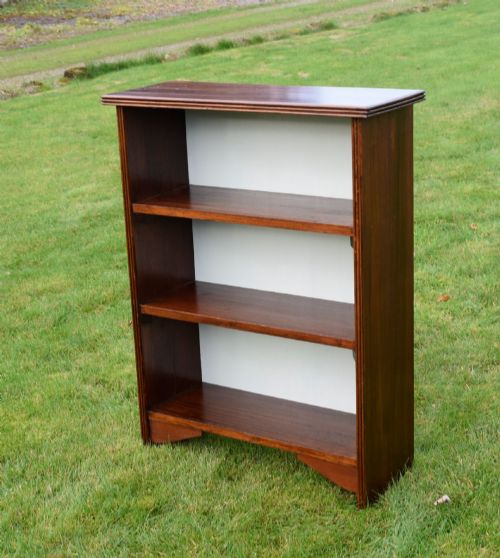
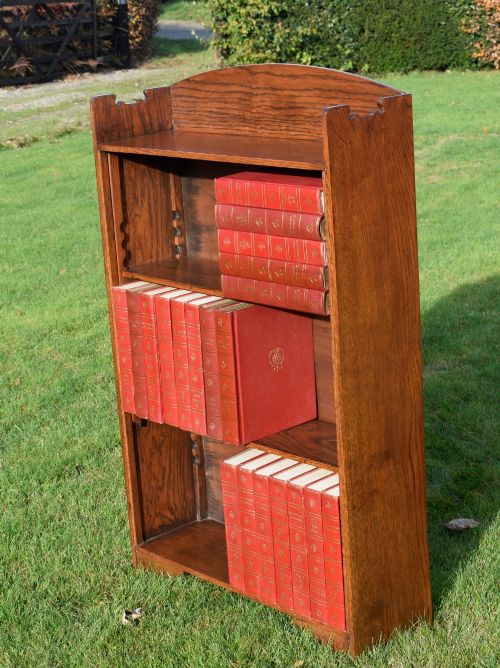
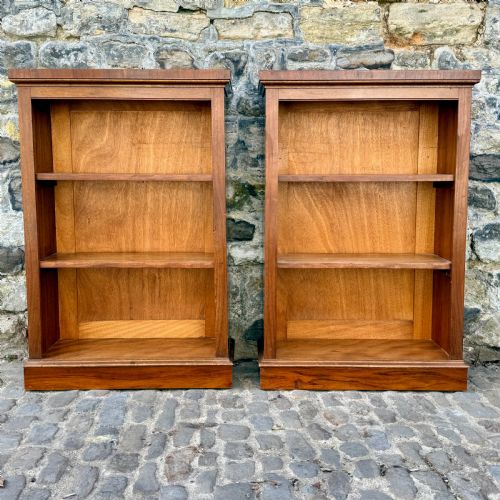
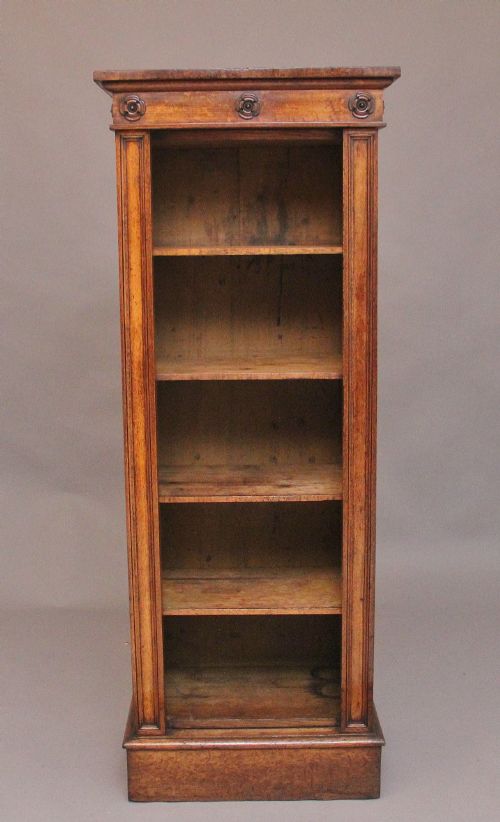
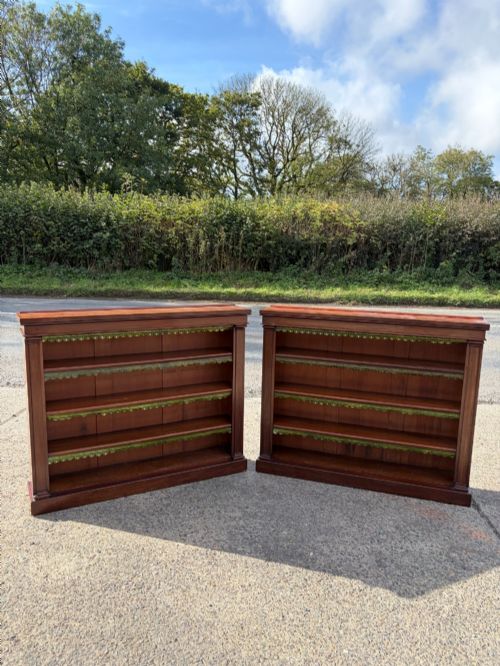
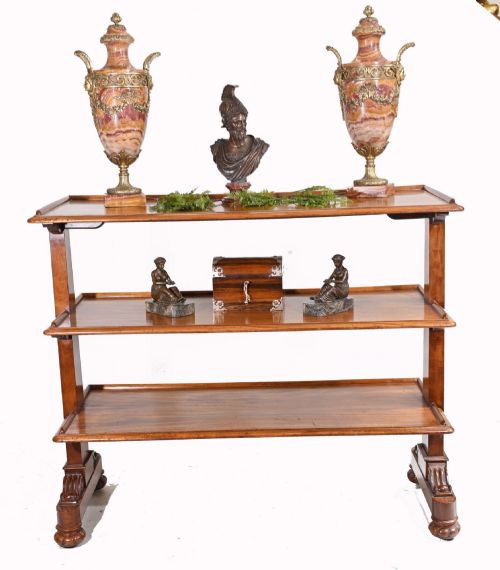
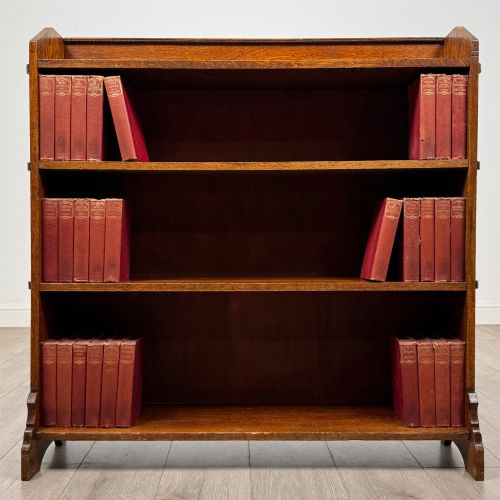
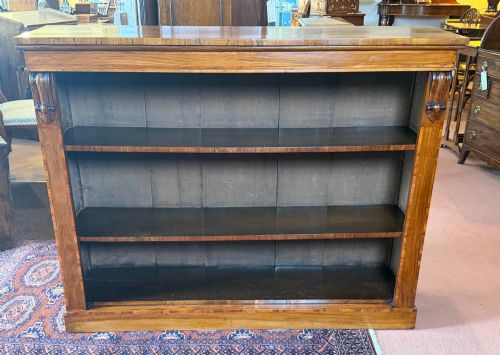
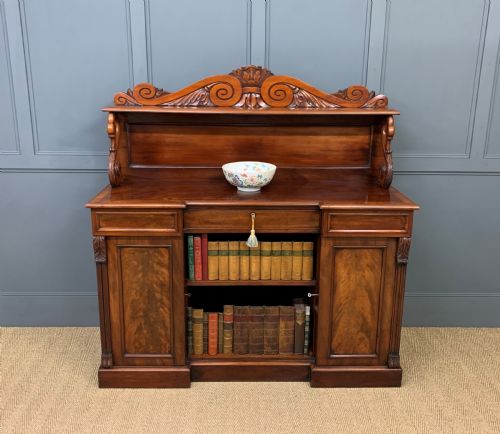
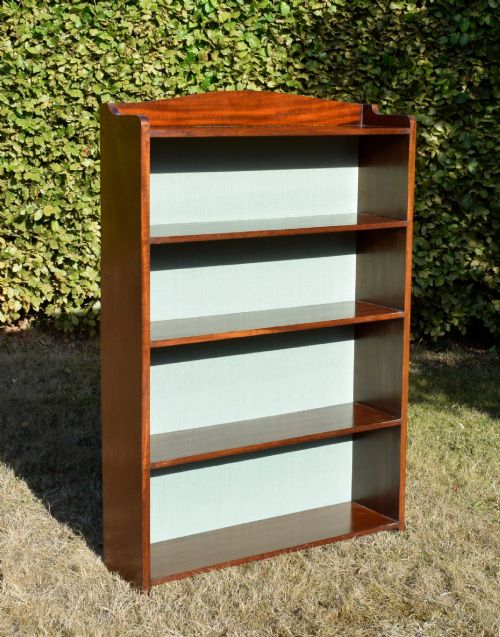
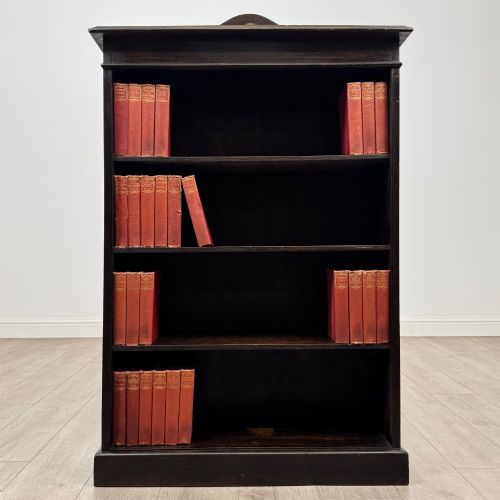
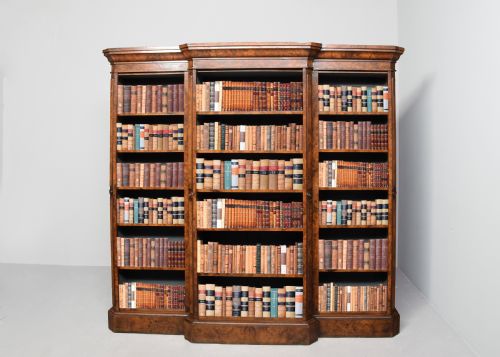
The selections available here lean heavily into open bookcases and multi-tiered stands from the Georgian, Victorian, and early twentieth-century periods. Buyers will frequently encounter mahogany, oak, and rosewood configurations ranging from compact bedside or wall-mounted units to large breakfront libraries.
Originating from British workshops as well as international sources like India and China, these wooden fixtures reflect shifting domestic habits across different eras. Whether searching for a simple plate rack or a tiered reading table, collectors find functional antiques shaped by the needs of past households.
How they were made
Cabinet-makers relied on dense hardwoods such as mahogany, oak, walnut, and rosewood, often enhanced by secondary timbers like pine. Construction techniques involved solid timber framing, dovetail joints, and occasional cross-banding or boxwood stringing to articulate shelves and panels.
Surface treatments depended on the period, utilising natural wax finishes to protect the wood grain while developing a deep patina over time. Decorative touches range from raised galleries and carved cut-outs to brass fittings and ebonised detailing.
Early Wooden Shelves Retail Price Guide 2026
Typical asking prices for early wooden shelves among the pieces listed under this phrase on Sellingantiques today, from the lower quarter to the upper quarter. They describe what is for sale here now, not the wider market.
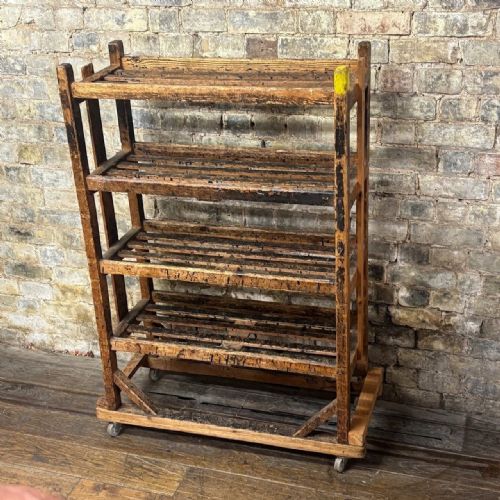
Industrial shoe trolleys from the early twentieth century cross over into this category, trading boots for books in modern homes.
What varies in quality
The calibre of early wooden shelves rests primarily on the choice of timber and the precision of its construction. Pieces featuring figured veneers, burr walnut, flame mahogany, or dense rosewood sit at the upper end of the craft, displaying deliberate grain matching and careful proportion.
Structural integrity and the retention of original elements define the distinction between everyday utility pieces and finer examples. Adjustable shelving mechanisms, crisp edge mouldings, and intact galleries indicate a higher standard of original workshop production.
Gillows and Co·Wm Gilbert
The Early Wooden Shelves Glossary
- Étagère
- A set of open shelves for displaying small objects or ornaments, typically consisting of multiple tiers supported by slender columns.
- Breakfront
- A piece of furniture whose central section projects forward from the flanking sections, creating architectural depth.
- Stringing
- A narrow inlay of contrasting wood used to create fine decorative lines around borders and drawer fronts.
- Pigeon holes
- Small compartments grouped within a larger framework for sorting papers, letters, or documents.
- Cross-banding
- A border strip of veneer laid with the grain running perpendicular to the main surface to frame a panel.
Early Wooden Shelves: Frequently Asked Questions
What are early wooden shelves used for?
These pieces serve as practical storage and display units for books, ceramics, and decorative objects in modern interiors. Their open formats allow for accessible placement in studies, hallways, and living spaces.
Historically, specific variants like plate racks and étagères held specific domestic functions, whereas modern owners frequently utilise them for books and general display.
How do I identify the period of wooden shelves?
Dating relies on observing timber choices, construction joinery, and stylistic markers associated with specific centuries or reigns. Georgian and Regency pieces often feature specific mahogany veneers and stringing, while Edwardian examples introduce lighter oak treatments.
Cross-referencing the object type, such as a waterfall bookcase or a tiered buffet, helps narrow down the probable decade of origin alongside any internal clues.
Are these shelves sturdy enough for heavy books?
Many solid mahogany and oak bookcases were built specifically to bear heavy volumes, featuring thick timber shelves and robust upright supports. Some larger pieces even incorporate adjustable shelving systems.
Evaluating the thickness of the wood and the condition of the structural joins will indicate how much weight a particular unit can comfortably hold.
How should I care for antique wooden shelves?
Maintenance involves keeping timber furniture away from direct heat sources and dramatic humidity fluctuations to prevent wood splitting. Regular dusting with a soft, dry cloth preserves the finish.
Applying a traditional beeswax polish periodically helps nourish hardwoods like mahogany and oak without building up artificial residues.