


Early Victorian Hall Table
An early victorian hall table anchors a narrow space with timber weight and proportion.
Early Victorian Hall Table
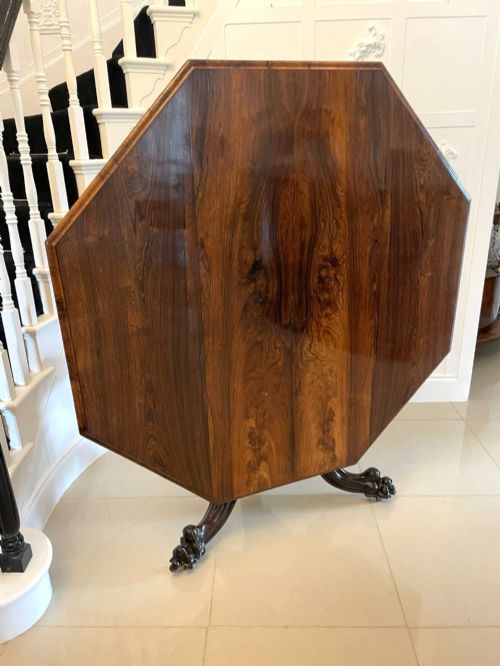
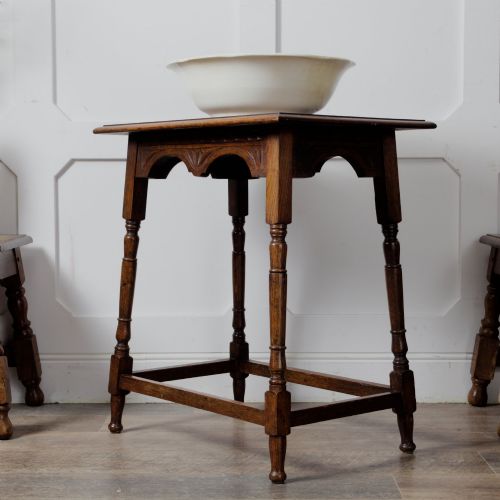
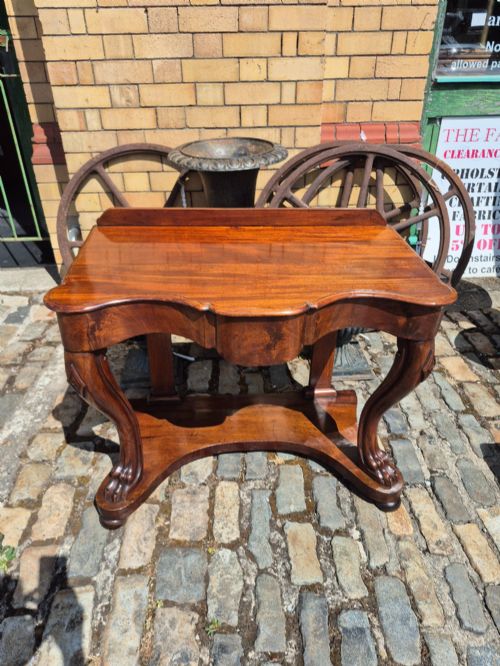
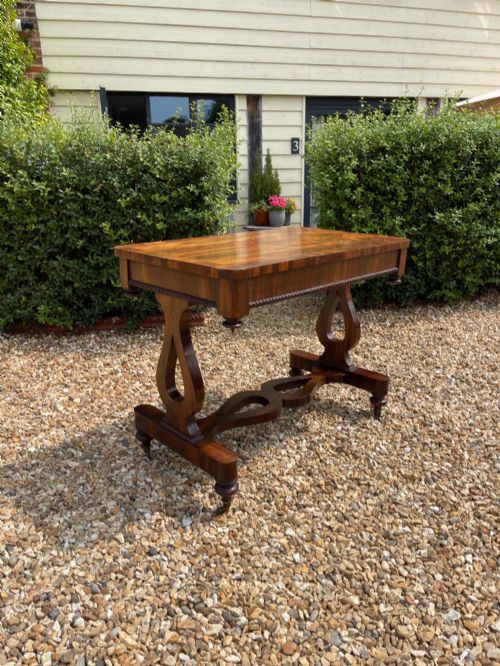
The pieces appearing here lean heavily on mahogany, oak, and rosewood constructions from the nineteenth century. These items were designed to handle domestic traffic while projecting solid nineteenth-century domestic substance.
Construction and Materials
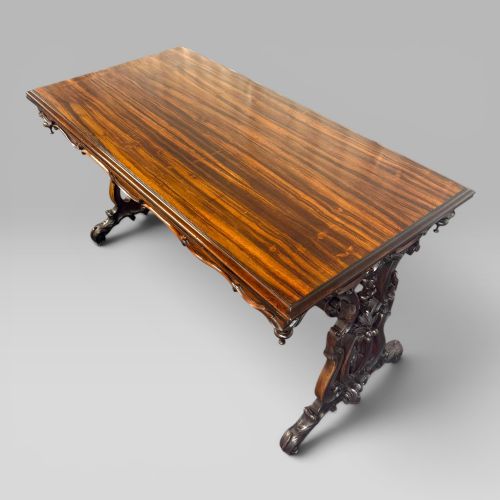
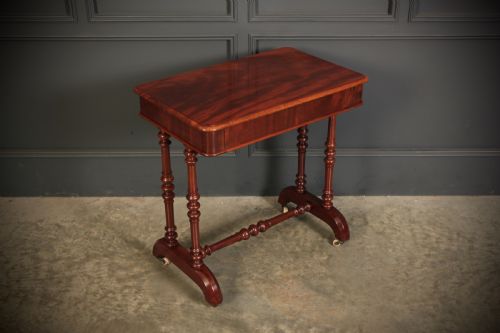
Cabinet makers built these tables primarily from solid and veneered mahogany, rosewood, and pine, frequently pairing dense timbers with turned or carved supports. Surfaces often display figured grain patterns finished with traditional polishing methods.
Marble tops appear alongside timber panels, while structural joints rely on traditional joinery techniques such as dovetailed drawers and pegged frames. Secondary woods like oak provide internal support for drawers and framing.
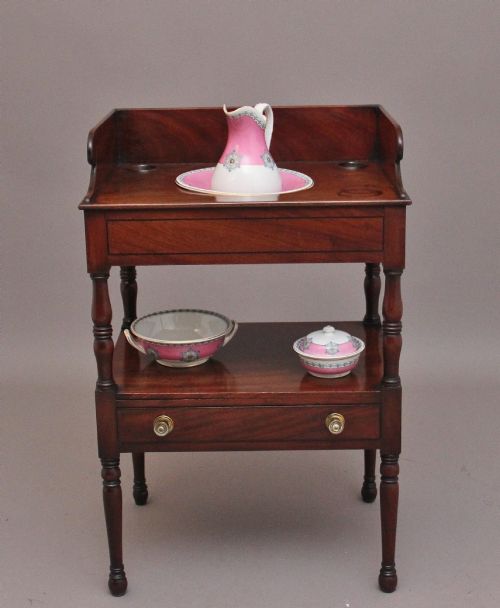
Some pine washstands sport a painted faux marble top for homeowners who fancied stone on a budget.
Markers of Quality
The distinction between ordinary and exceptional pieces lies in the selection of timber veneers and the crispness of carved details. Superior examples display carefully matched grain patterns and substantial structural weight without clumsy proportions.
Makers known for high-grade output distinguish their furniture through refined drawer construction and intact original mounts. Lesser examples show simpler secondary woods and heavier, less harmonious turnings.
Gillows·Heal And Son·Holland And Sons
The Early Victorian Hall Table Glossary
- Console table
- A table designed to stand against a wall, frequently secured to it for stability.
- Demi-lune
- A half-moon shape common in tables intended to sit flush against an entrance wall.
- Sofa table
- A rectangular occasional table traditionally placed before a sofa, featuring drop leaves and twin pedestals.
- Washstand
- A utilitarian piece featuring a hard top, often marble, designed for washing apparatus.
- Dovetail
- A interlocking joint used in drawer construction to ensure durable corners.
Early Victorian Hall Table: Frequently Asked Questions
Where should I place an early victorian hall table?
These tables suit entrance halls, narrow corridors, or reception spaces where surface space is required without blocking passage. Their shallow depths allow them to sit flush against walls.
Position them beneath a mirror or coat rack to create a functional drop zone for daily items while establishing period character.
Did these tables always have drawers?
Not all examples include storage; many survive as simple side tables or console formats with open frames. Those with drawers typically housed keys, correspondence, or gloves.
Drawers range from single central compartments to twin configurations beneath the main top surface.
How do I spot a replacement marble top?
Examine the rebate where the stone rests against the wooden frame to check for clean seating and appropriate thickness. Later replacements often sit slightly higher or show different edge profiling.
Original marble tops match the exact perimeter dimensions and wear patterns expected from nineteenth-century use.