




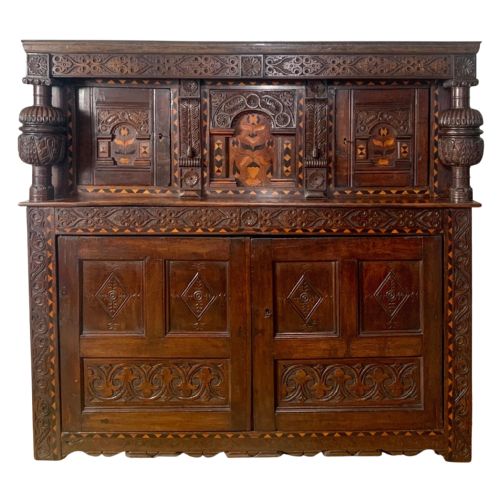


Early Oak Buffet
An early oak buffet represents solid timber utility from centuries past, offering substantial storage and rich grain that anchors a traditional room.
Early Oak Buffet
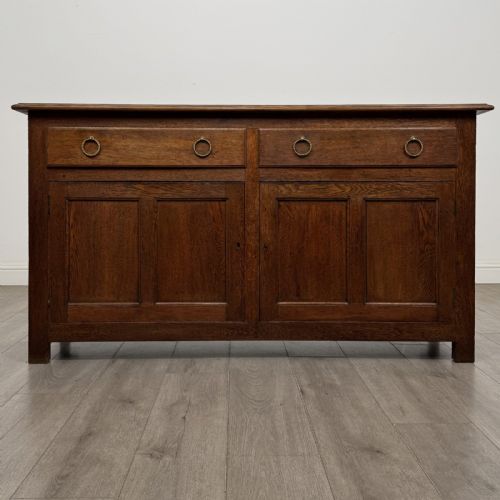
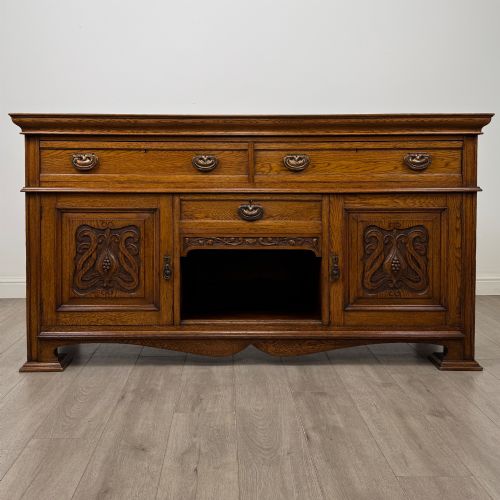
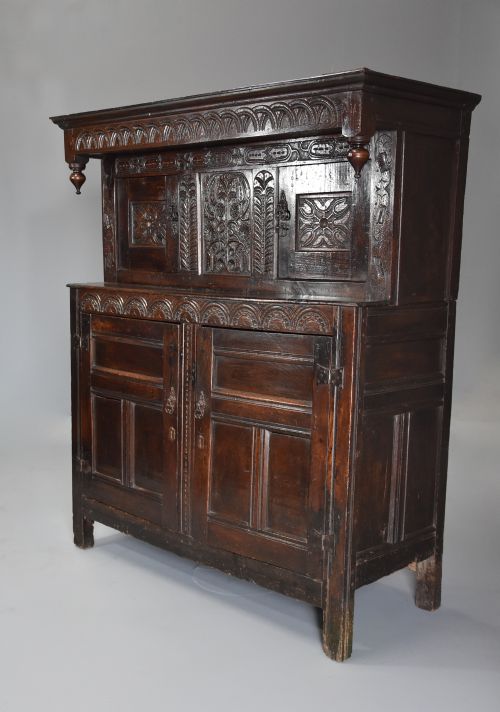
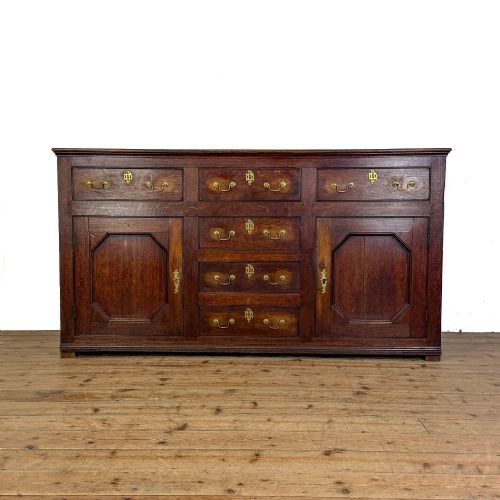
An early oak buffet encompasses substantial timber furniture designed for storage and display, appearing primarily in formats such as cupboards, press cupboards, court cupboards, and dresser bases. The examples seen span several centuries, reaching back to pre-16th century origins through the Elizabethan, Jacobean, and 17th century periods, alongside later 19th century and Edwardian interpretations.
The version most commonly met on this page is the 17th century oak cupboard or court cupboard, alongside robust dresser bases and Arts & Crafts sideboards. These forms serve practical household storage needs while displaying period characteristics like carved panels and heavy timber construction.
How they were made
The construction relies heavily on solid oak timbers, frequently augmented with secondary materials like iron, brass, glass, and copper for hinges, handles, and glazing. Artisans also utilised pollard oak, burr elm, and mixed wood inlay to create contrasting decorative panels and surface patterns.
Joinery techniques from earlier periods rely on pegged mortise and tenon joints to build rigid frames that withstand heavy use over centuries. Later revivals employ period-appropriate carving and panel construction to emulate historic styles.
Early Oak Buffet Retail Price Guide 2026
Typical asking prices for early oak buffet among the pieces listed under this phrase on Sellingantiques today, from the lower quarter to the upper quarter. They describe what is for sale here now, not the wider market.
Listings span from pre-16th century origins through Elizabethan, Jacobean, and Georgian eras up to Edwardian Arts & Crafts and Renaissance Revival styles.
What varies in quality
The depth of carved detail and the crispness of execution separate standard utility pieces from high-status examples commissioned for wealthy households. Original surface patination and untouched timber condition command greater interest among collectors compared to heavily restored or altered surfaces.
The selection of secondary timbers, such as burr elm or pollard oak inlay, introduces significant variation in visual richness across the pieces. The integrity of the original construction and the survival of period brass or iron hardware also elevate the standing of individual examples.
The Early Oak Buffet Glossary
- Court cupboard
- A heavy timber storage piece featuring an upper and lower section, often with an open recessed upper tier supported by columns. These items served prominent display functions in great halls during the 16th and 17th centuries.
- Press cupboard
- A large enclosed storage furniture type featuring multiple doors and internal compartments designed for linen and garments. The 17th century examples demonstrate robust frame and panel construction.
- Pollard oak
- Timber taken from trees that have been pollarded, producing wood with a dense, highly figured cluster of growth rings. This material appears in decorative veneers on later 19th century furniture.
- Marquetry
- The art of applying pieces of veneer to a structure to form decorative patterns and pictures. Examples in this inventory combine oak and burr elm to create contrasting surfaces.
- Patina
- The surface sheen and colour developed by timber through age, handling, and light exposure over many decades. Original patination is valued for showing the true history of the piece.
Early Oak Buffet: Frequently Asked Questions
What is an early oak buffet used for?
These pieces provide heavy-duty storage for dining rooms, hallways, and living spaces, functioning as cupboards, sideboards, or serving tables. Historically they held food, plate, and household textiles.
Today they serve similar practical storage roles while acting as focal points in period or traditional interiors, offering wide flat surfaces for display.
How do I date an early oak piece?
Dating relies on examining construction methods, tool marks, timber selection, and stylistic details such as carved strapwork or linenfold panels. Earlier 16th and 17th century items typically use pegged joints and heavy solid oak.
Later 19th century revival pieces often combine historical styles with machine-sawn timber or different secondary woods, reflecting the manufacturing techniques of their actual period of production.
Are these pieces made entirely of solid oak?
While solid oak forms the primary structural framework and main panels for the majority of these listings, secondary materials do appear. Items frequently incorporate iron or brass hardware, while specific pieces use pollard oak or burr elm for decorative inlay.
Mixed wood elements and glass components also appear in later Arts & Crafts or Edwardian interpretations, broadening the visual variety within the category.
How should I care for an antique oak buffet?
Maintain these timber items by keeping them away from direct heat sources and drastic humidity changes, which can cause wood to split or warp. Regular dusting with a soft, dry cloth preserves the finish.
Apply traditional beeswaxes sparingly if the wood appears dry, avoiding modern silicone-based polishes that can permanently alter the historic surface patination.