



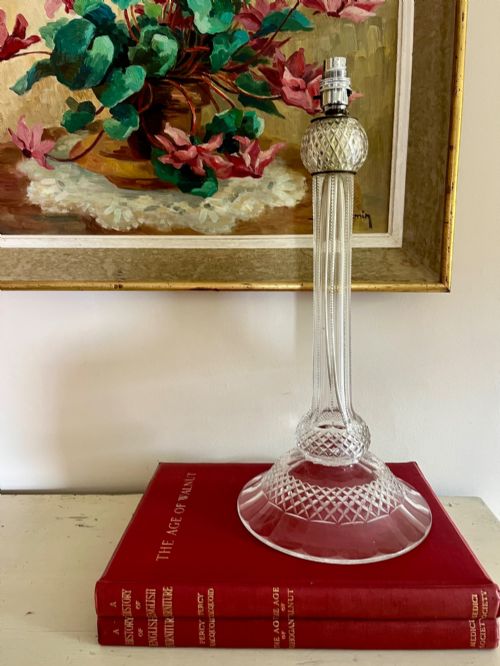


Early 20th Century Desk Lamp
An early 20th century desk lamp brings period weight and industrial character to a workspace, combining brass and bronze with adjustable forms.
Early 20th Century Desk Lamp
An early 20th century desk lamp encompasses task lighting, adjustable armatures, and column-style fixtures designed for writing tables and workspaces across the Edwardian and Art Deco decades. Buyers searching this phrase encounter heavy brass bankers models, articulated metal designs, and ornate cast columns spanning the 1900s to the 1930s.
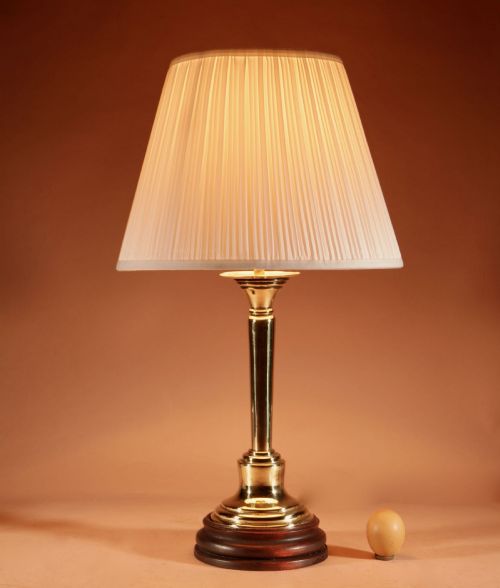
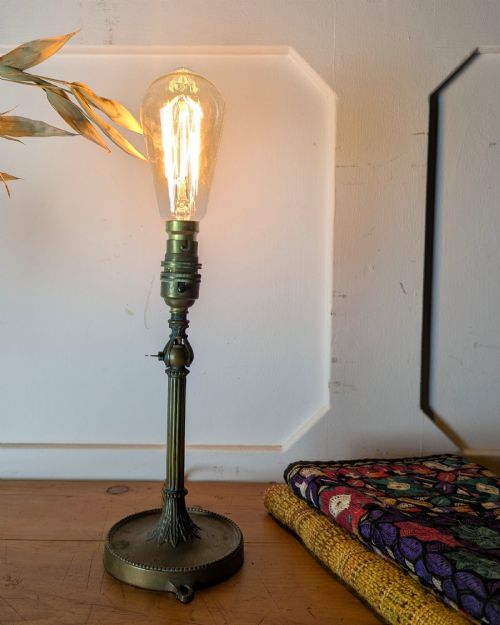
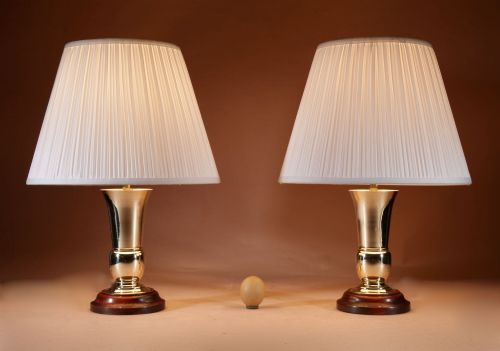
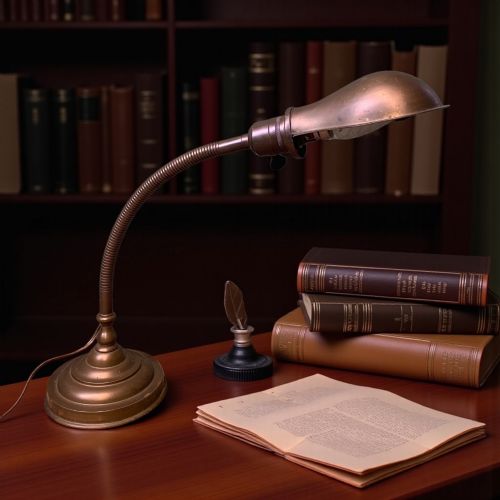
The most common examples on this page are constructed from solid brass, featuring adjustable swan necks, heavy weighted bases, and classic banker or Pullman configurations intended for focused illumination. These utilitarian desk pieces often share aesthetic territory with table lamps and candle lamps from the same manufacturing eras.
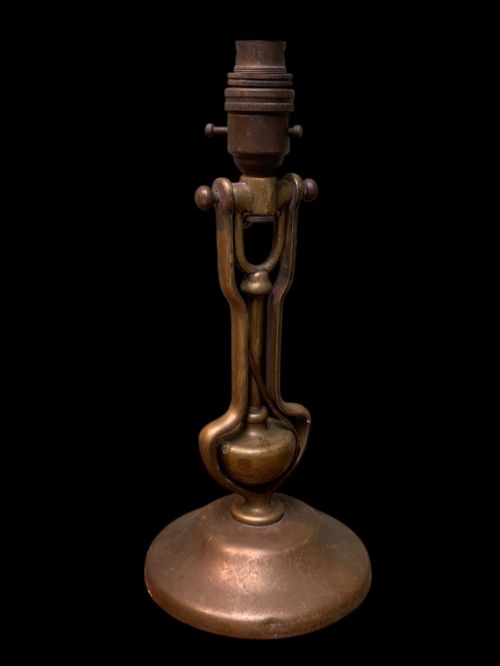
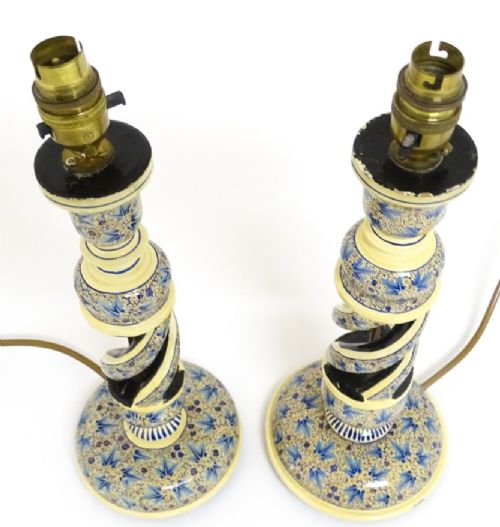
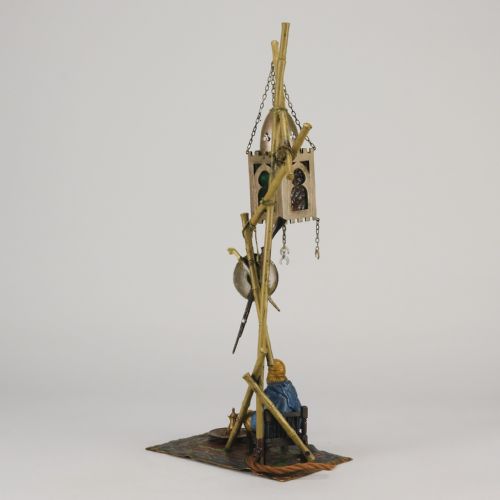
Stylistic diversity ranges from plain industrial brass and nickel plating to decorative manifestations such as Neoclassical revival columns, Jugendstil curves, and cold-painted bronze figures. Regional variations include English Arts and Crafts brasswork, French ormolu, and Kashmiri hand-painted designs.
How they were made
Makers utilised heavy casting, pressing, and turning methods to shape structural brass, bronze, and copper components into articulating arms and solid weighted bases. Metal surfaces received various finishes including cold-painting, silver plating, and patination, while paired elements incorporated moulded glass, crystal, onyx, and hand-painted fabric shades.
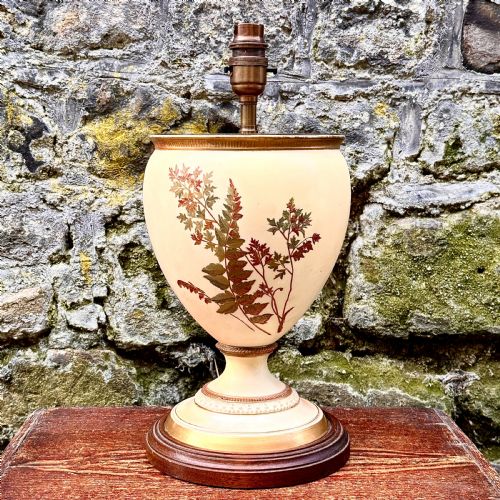
Assembly relied on threaded brass fittings, articulated joints, and structural rivets designed to sustain daily mechanical movement in office and domestic environments. Decorative models integrated carved wood, porcelain bodies, and frosted glass figures such as Baccarat components into the primary metal skeleton.
Early 20th Century Desk Lamp Retail Price Guide 2026
Typical asking prices for early 20th century desk lamp among the pieces listed under this phrase on Sellingantiques today, from the lower quarter to the upper quarter. They describe what is for sale here now, not the wider market.
Listings span the Edwardian period, the 1900s, 1910s, 1920s, and 1930s, utilising brass, bronze, crystal, wood, porcelain, and fabric.
What varies in quality
The distinction between ordinary production and superior execution lies in the weight of the cast metal, the precision of the mechanical joints, and the integrity of the surface finish. Top-tier examples demonstrate substantial brass thickness, smooth articulation without loose play, and crisp chased or cold-painted detail.
Workmanship also shows in the integration of secondary materials, where high-grade lamps use heavy crystal, selected onyx, or substantial porcelain rather than lighter substitutes. The refinement of stylistic motifs, from Corinthian column fluting to Jugendstil curves, separates standard commercial items from master workshop output.
Franz Bergman·Royal Worcester·WAS Benson·Baccarat
The Early 20th Century Desk Lamp Glossary
- Articulated
- Having joints or hinged sections that allow the lamp arm to adjust its angle and reach.
- Ormolu
- Gilded bronze or brass applied as a decorative surface finish to metal bases and columns.
- Pullman
- A utilitarian lamp design originally manufactured for railway carriages and writing desks, featuring a compact adjustable metal shade.
- Jugendstil
- The continental European manifestation of the Art Nouveau movement, characterised by flowing organic lines.
- Cold-painted
- A finishing technique where pigment is applied to bronze without heat firing, susceptible to flaking over time.
Early 20th Century Desk Lamp: Frequently Asked Questions
How do I identify an adjustable desk lamp?
Adjustable models feature mechanical hinges, ball joints, or counterbalanced swan necks designed to reposition the light source.
Examine the joints for threaded thumbscrews or internal springs that control movement and hold tension.
Were these lamps originally electric?
Many early 20th century examples were manufactured for electricity, while others adapted existing gas or oil standards.
Conversion fittings and period brass lamp holders often indicate whether the wiring is a later replacement.
How do I care for brass and bronze?
Maintain metal surfaces with a dry microfibre cloth to remove dust without disturbing the historic patination.
Avoid abrasive metal polishes that strip away original factory finishes and aged surface colour.
What defines an Arts and Crafts lamp?
Arts and Crafts pieces prioritise honest construction, visible hand-hammered textures, and straightforward functional forms.
Decoration remains structural rather than superfluous, often highlighting the natural properties of the brass or copper.