





Early 1900s Painting
An early 1900s painting brings domestic character and period atmosphere into a room, offering genuine historical charm through watercolours and oils on canvas.
Early 1900s Painting
An early 1900s painting encompasses works created during the Edwardian period and subsequent decades up to the mid twentieth century. These pieces capture landscape views, maritime scenes, and cityscapes created by artists working across Europe and America.
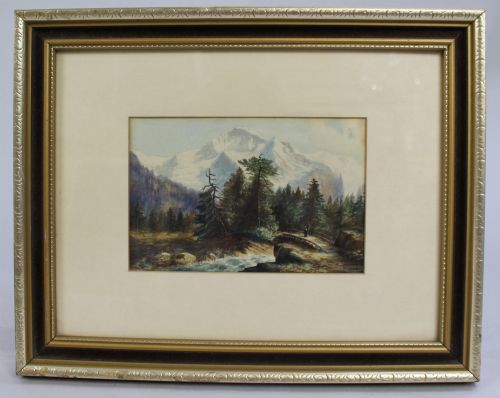
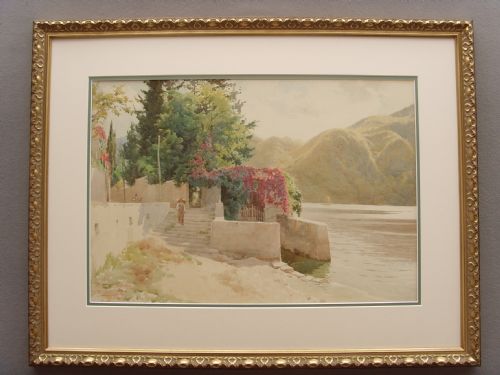
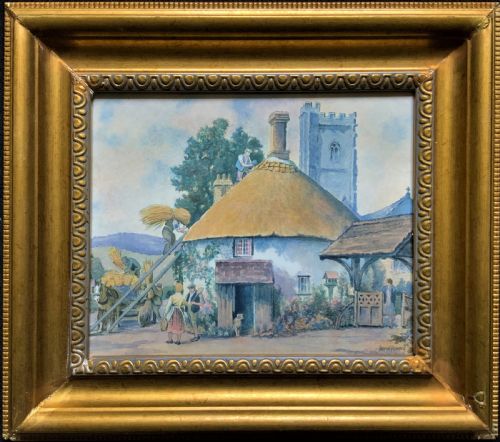
The works most commonly encountered on this page include watercolours on paper and oil paintings on canvas, often housed within their original gilt wood frames. Subjects range from serene pastoral scenes and lake views to detailed coastal and maritime compositions.
How they were made
These works rely on traditional application methods, utilising oil paint applied to stretched canvas or watercolour pigments worked onto paper. Supports are typically secured within wooden frames, sometimes accented with gilt surfaces.
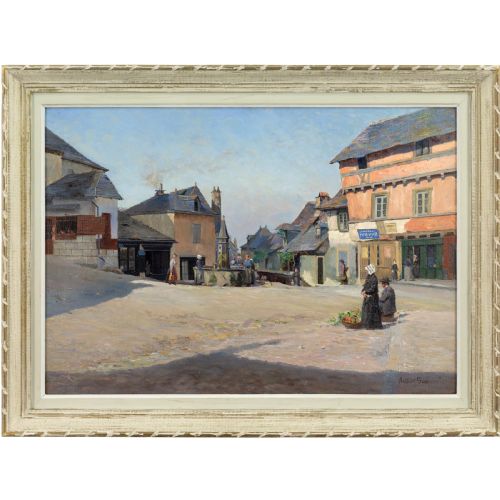
Artists of the period utilised defined brushwork to capture light and atmosphere, as seen in French impressionist and maritime realist approaches. Pigments were applied to create depth in both cityscapes and rural river landscapes.
Early 1900s Painting Retail Price Guide 2026
Typical asking prices for early 1900s painting among the pieces listed under this phrase on Sellingantiques today, from the lower quarter to the upper quarter. They describe what is for sale here now, not the wider market.
Some maritime paintings capture precise historical vessel movements, recording tall ships navigating past Gibraltar during the early years of the twentieth century.
What varies in quality
Quality in an early 1900s painting depends upon the confidence of the brushwork and the precision with which the artist captures light, form, and perspective. Stronger compositions demonstrate a clear command of tone and atmosphere, particularly in complex maritime and architectural subjects.
The condition of the canvas, paper support, and surrounding frame also influences the overall standard of the piece. Intact original glazing and well preserved gilt wood frames contribute to the integrity of the artwork.
Robert George Talbot Kelly·Arthur Gué·Rowland Henry Hill·William Grant Murray·David Heward
The Early 1900s Painting Glossary
- Watercolour
- A painting method in which the paints are made of pigments suspended in a water-based solution. These works are typically executed on paper supports and require protective glass framing.
- Gilt wood
- Wood that has been treated with a thin layer of gold leaf or metallic gilding. This material is frequently used for period picture frames.
- Post-Impressionism
- An art style that extended impressionism while rejecting its limitations. Artists focused on abstract qualities and symbolic content rather than purely visual representation.
- Maritime Realism
- A genre of art dedicated to depicting ships, coastal views, and marine environments with a high degree of visual accuracy. These works document naval vessels and coastal conditions of the era.
Early 1900s Painting: Frequently Asked Questions
How should I frame an early 1900s painting?
Many pieces retain their original gilt wood frames, which complement the age and style of the artwork. If framing an unmounted work, select materials that suit the Edwardian or early twentieth-century period.
Ensure that watercolours are framed behind glass with appropriate mounts to protect the paper support from moisture and direct contact.
Where were most early 1900s paintings created?
The works originate from various European and American studios, reflecting regional styles such as French impressionism and maritime realism. Artists travelled extensively to paint specific locations including Italian lakes and Hampshire country houses.
Subjects often document recognisable geographic views, from Venice canals to American tall ships off Gibraltar.
What is the difference between oil and watercolour paintings?
Oil paintings utilise pigments bound in drying oils on canvas or wood supports, offering a textured and robust surface. Watercolours use water-soluble pigments on paper, resulting in a lighter and more translucent finish.
Oils generally require sturdy wooden frames without glass, whereas watercolours need protective glazing to prevent damage.
How do I identify the period of a painting?
Dating relies on stylistic clues, artist signatures, and framing materials characteristic of the Edwardian era and the early decades of the twentieth century. Many works include dated signatures or inscriptions detailing the location and year of creation.
Subject matter and technique, such as post-impressionist brushwork, also help establish the chronological context of the piece.