




Drop Flap Coffee Table
A drop flap coffee table offers flexible surface space with hinged leaves that drop down when floor space is at a premium.
Drop Flap Coffee Table
A drop flap coffee table is a versatile low surface designed for living spaces, combining traditional drop leaf mechanisms with modern coffee table heights. Buyers searching this phrase will find pieces primarily originating from the Edwardian period and the early twentieth century, alongside nineteenth century examples.
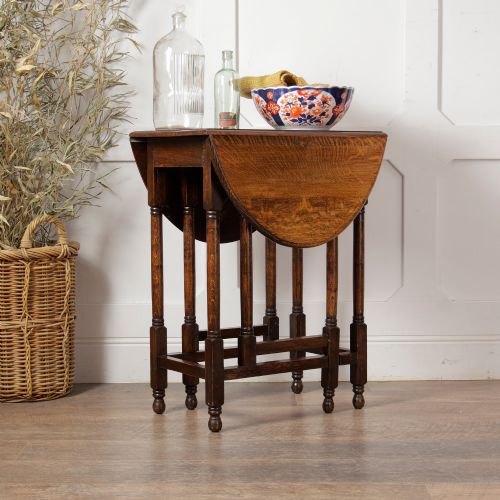
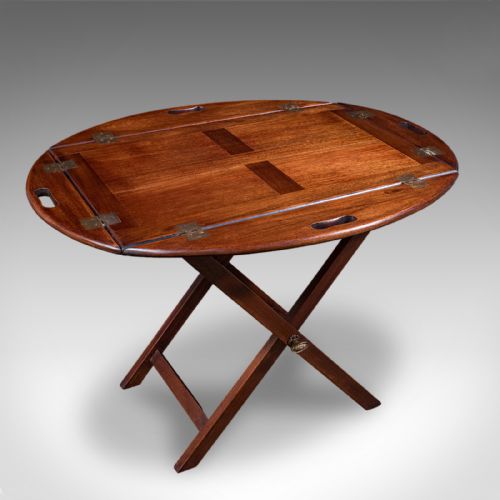
The most common form on this page is the oak gateleg or drop-leaf coffee table, often built with oval or swivel tops supported by swinging legs. Side tables, occasional tables, and butler's tray stands also appear, functioning effectively as adaptable coffee tables in compact rooms.
Stylistic influences span from Edwardian and Victorian designs to Jacobean Revival and French Country. These pieces adapt easily to contemporary domestic settings while retaining their historical character.
Materials and construction
Construction relies heavily on timbers such as oak and mahogany, complemented by walnut, burr walnut, cherrywood, and satinwood. Cabinet makers utilised these hardwoods for both durability and pleasing grain patterns, particularly on table tops.
Hinges and supports utilise brass hardware to allow smooth movement of the drop flaps and gatelegs. Inlaid details in select mahogany pieces demonstrate finer decorative techniques applied to the timber surfaces.
Drop Flap Coffee Table Retail Price Guide 2026
Typical asking prices for drop flap coffee table among the pieces listed under this phrase on Sellingantiques today, from the lower quarter to the upper quarter. They describe what is for sale here now, not the wider market.
Listings on this site feature timbers including mahogany, oak, burr walnut, cherrywood, and satinwood across the Edwardian and nineteenth century periods.
Assessing quality
Quality in these tables rests upon the selection of timber and the stability of the folding mechanism. Finer examples display figured veneers such as burr walnut or carefully matched oak boards across the drop flaps.
The engineering of the joints and the smooth operation of the gatelegs or drop leaves separate standard utility furniture from finer occasional pieces. Solid brass fittings and precise inlaid woodwork further distinguish the upper tier of the range.
The Drop Flap Coffee Table Glossary
- Drop-flap
- A hinged leaf attached to the main table top that lowers when not in use. This feature allows the furniture footprint to shrink or expand rapidly.
- Gateleg
- A table construction where hinged legs swing out like a gate to support the raised drop flaps. It provides sturdy structural reinforcement under extended leaves.
- Burr walnut
- A prized timber harvested from walnut tree growths, notable for its swirling and knotty grain patterns. It is typically applied as a veneer on high-status surfaces.
- Sutherland table
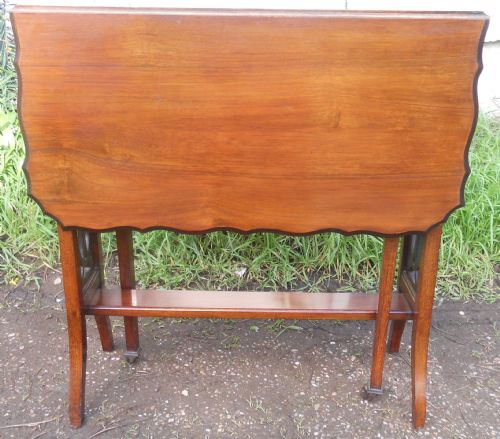
- A narrow table style featuring exceptionally slender drop flaps supported by swinging gate legs. It was designed to fold into a very compact profile.
- Inlaid
- A decorative technique where contrasting woods or brass are embedded into the primary timber surface to create patterns. This is frequently observed on Edwardian mahogany pieces.
Drop Flap Coffee Table: Frequently Asked Questions
How do I use a drop flap coffee table in a small room?
Keep the flaps dropped against the sides during daily routines to maintain open walkways around your seating area. Raise the leaves whenever you need extra surface space for drinks or books.
Position the table so the gatelegs swing clear of carpets or rugs without catching the fabric. This ensures smooth adjustment of the flaps whenever guests arrive.
What periods do these coffee tables come from?
The listings span from the nineteenth century through the Edwardian era and into the nineteen thirties. You will encounter Victorian, Edwardian, and Jacobean Revival aesthetic influences.
Earlier nineteenth century models often feature cherrywood or burr walnut, while nineteen twenties and thirties pieces frequently utilise solid oak.
How do I identify an Edwardian drop leaf table?
Edwardian examples commonly feature mahogany timber, sometimes enhanced with delicate inlaid borders or tapered legs. They reflect the lighter, more refined domestic tastes of the early twentieth century.
Compare the leg turnings and wood tones against standard Victorian heavy oak pieces to spot the characteristic Edwardian elegance.
Can these tables support heavy items on the flaps?
The drop flaps rely entirely on the integrity of the hinges and the support legs underneath. Gateleg designs offer robust support, whereas simpler folding brackets suit lighter items.
Avoid placing excessive weight near the outer unsupported edges of extended flaps to protect the historical joints from strain.