

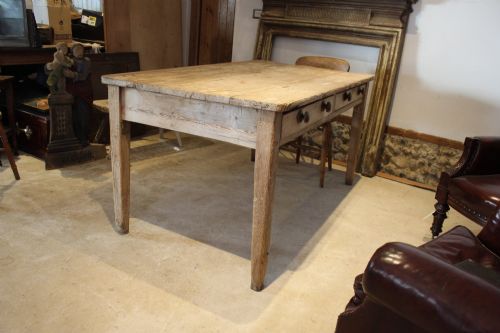
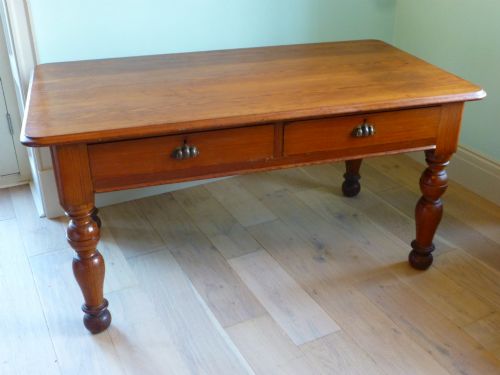
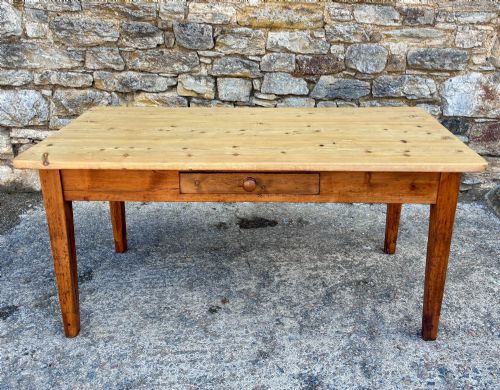
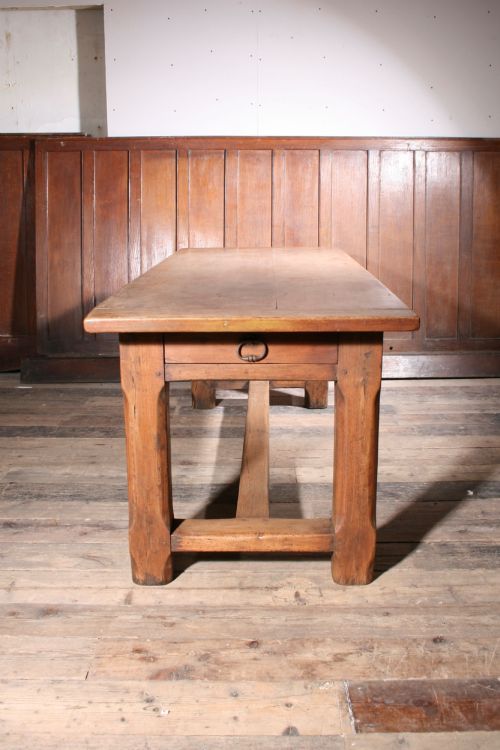
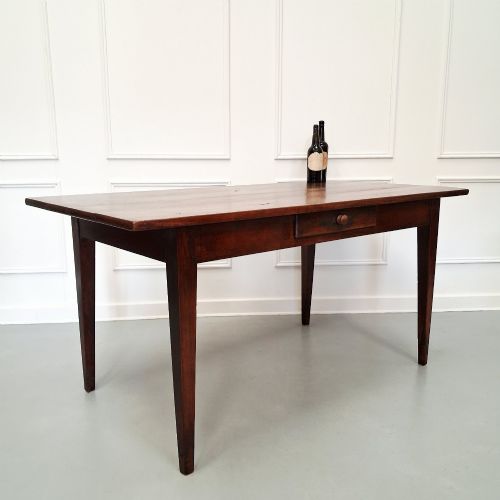
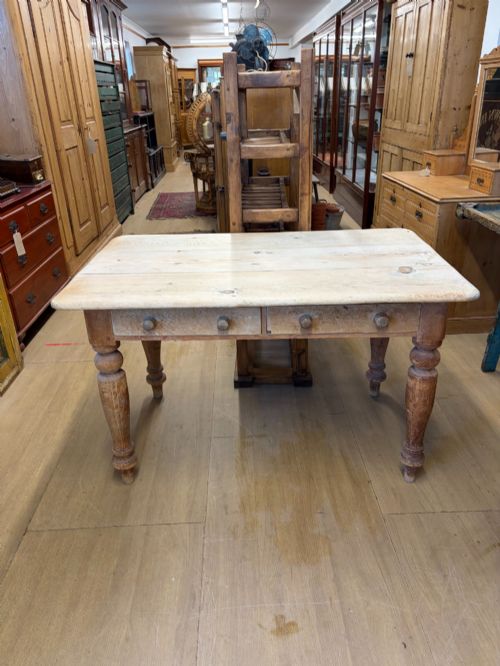
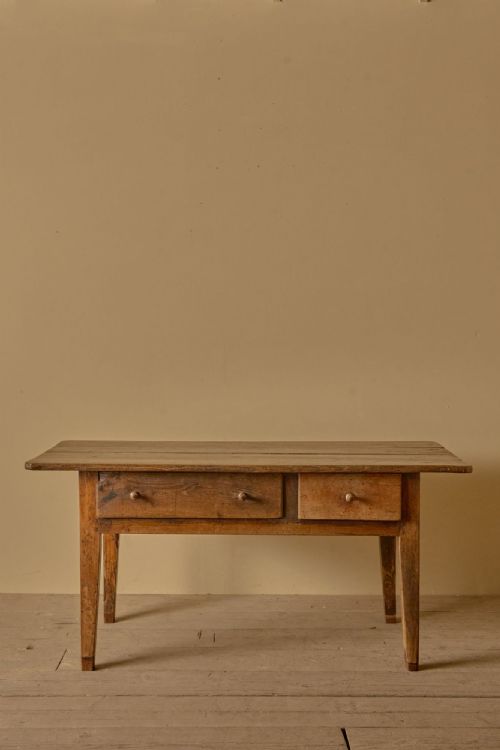
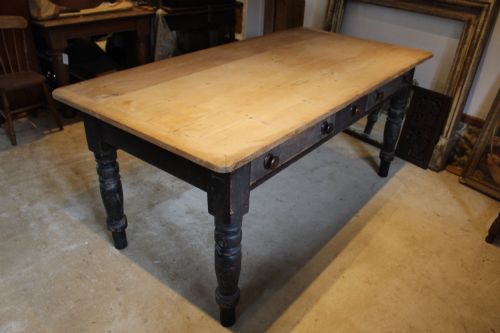
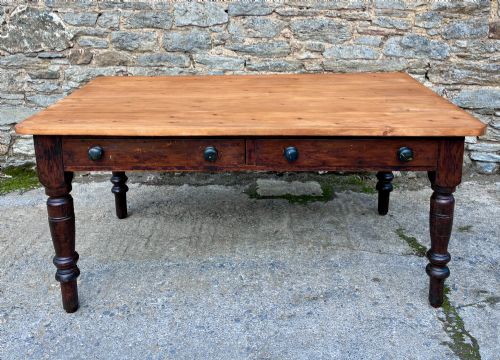
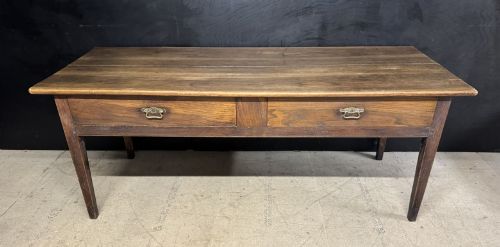
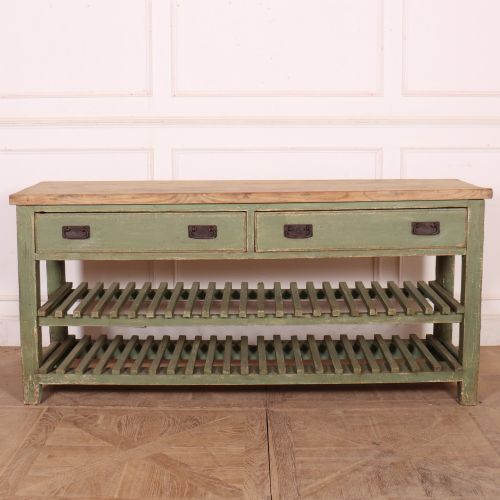
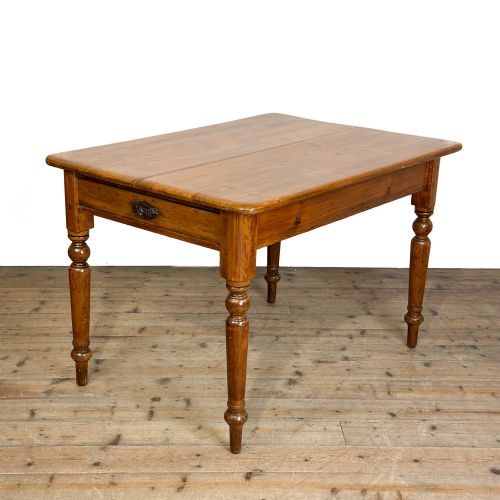
Drawer Kitchen Table
Drawer kitchen table options range from Georgian oak to Victorian pine, offering functional storage alongside solid timber surfaces.
Drawer Kitchen Table
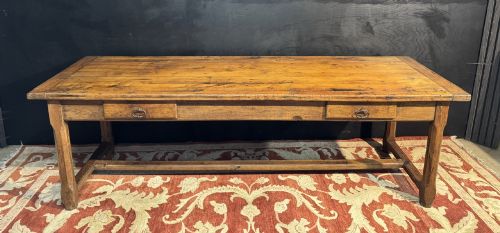
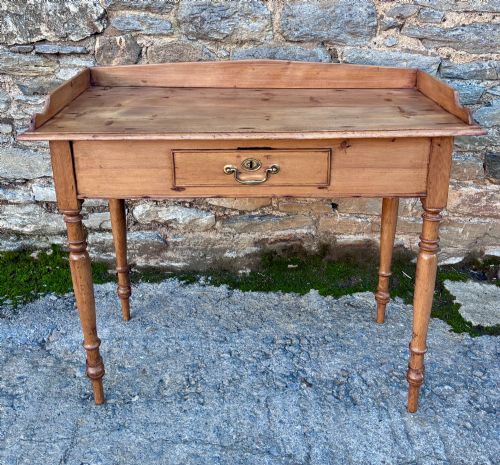
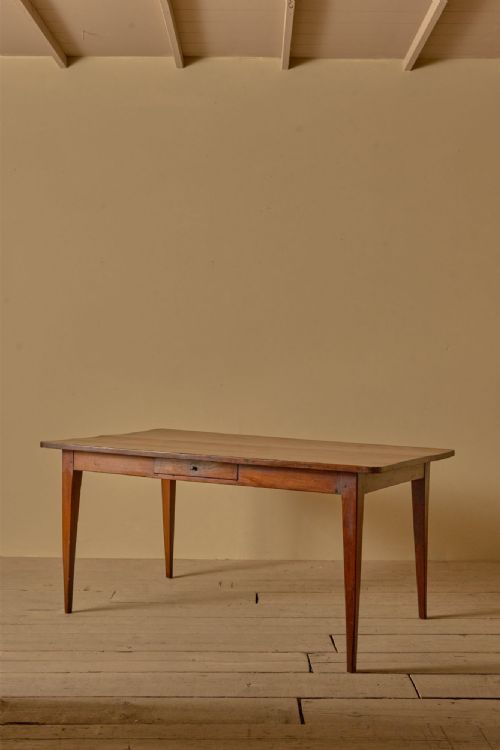
A drawer kitchen table serves as a robust workspace for food preparation and communal dining, appearing predominantly in pine, oak, and fruitwood across the 18th, 19th, and early 20th centuries. These practical items often feature single or multiple drawers set into the frieze to hold utensils or linens.
The selections here span regional English and Welsh pieces alongside French provincial formats like scrub top tables and drapers tables. Buyers encounter rustic farmhouse styles and Victorian country utilitarian designs that show honest wear from daily domestic use.
Materials and construction
Construction relies on solid timbers including pine, oak, walnut, chestnut, and fruitwood, joined with traditional framing methods suited to heavy daily toil. Tops often consist of thick planks, scrubbed clean in working kitchens or finished with period paint, wax, or later decorative coats.
Hardware incorporates brass pulls and iron fittings alongside wooden drawer runners built directly into the table structure. Secondary woods like sycamore or ash appear in internal framing and drawer construction.
Drawer Kitchen Table Retail Price Guide 2026
Typical asking prices for drawer kitchen table among the pieces listed under this phrase on Sellingantiques today, from the lower quarter to the upper quarter. They describe what is for sale here now, not the wider market.
Listings feature woods such as pine, oak, fruitwood, chestnut, and sycamore across 18th-century, Georgian, Victorian, and 1920 periods.
What separates the grades
Quality rests in the integrity of the timber, the depth of patina accumulated over centuries, and the original condition of the drawer framing. Tables retaining their unblemished scrub tops or original painted surfaces command greater attention than those stripped down or heavily altered.
Proportion and structural soundness distinguish superior examples, where the legs, stretchers, and frieze drawers remain tight and true without excessive timber replacement or structural sagging.
The Drawer Kitchen Table Glossary
- Frieze
- The horizontal band beneath the tabletop that houses the integrated storage drawers. It provides structural rigidity to the apron.
- Scrub top
- A bare wooden tabletop repeatedly scoured with water and abrasive stone to maintain hygiene. This process creates a pale, weathered surface texture.
- Drapers table
- A long utility table traditionally used in textile shops, distinguished by generous length and deep drawers. They function well as kitchen prep surfaces.
- Potboard
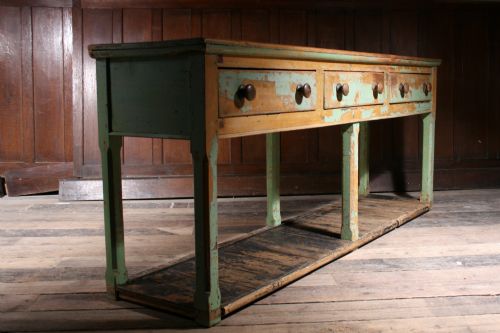
- An open lower shelf built between the legs of a dresser base or serving table. It stores heavy kitchen pots and storage crocks off the flagstone floor.
- Refectory table
- A long communal dining table historically designed for monastic dining halls. These examples utilise stretcher bases for added stability.
Drawer Kitchen Table: Frequently Asked Questions
How do I clean a scrub top table?
Scrub top tables respond best to traditional warm water washing and stiff bristle brushes. Avoid harsh chemical stripping agents that strip the historic bleached patina.
Allow the timber to dry naturally out of direct sunlight to prevent warping the wide boards.
Were these drawers used for cutlery?
Frieze drawers typically held small kitchen utensils, linens, or daily dry goods close to hand. Their shallow depth suits flatware and small implements rather than bulky cookware.
Many retain original divider partitions inside the timber box compartments.
Can I use an antique table daily?
Solid timber construction in pine, oak, and fruitwood makes these pieces durable for everyday meals and preparation. Use heat mats and coasters to protect aged wax or polished surfaces from moisture marks.
Occasional waxing maintains the moisture barrier on unpainted wood.
How do I date a pine table?
Hand-cut dovetails, forged iron nails, and timber shrinkage patterns indicate early manufacturing methods. Drawer construction details and fastener types reveal whether a piece originates in the Georgian or Victorian era.
Surface wear patterns also help establish the age of the primary timbers.