

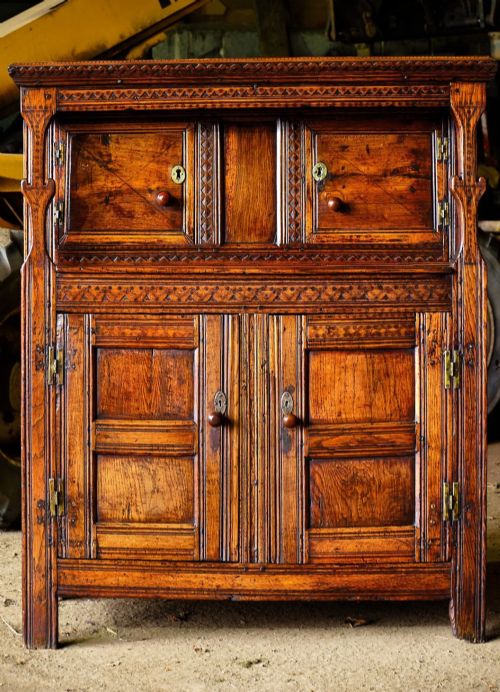
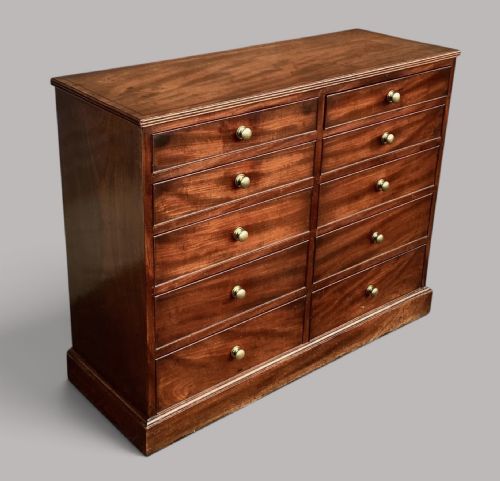
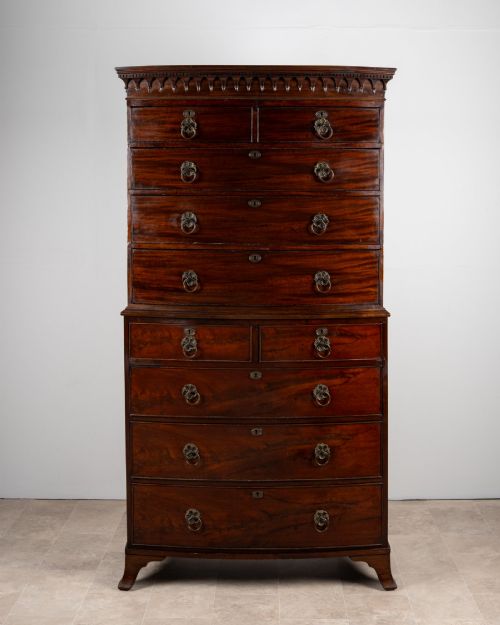
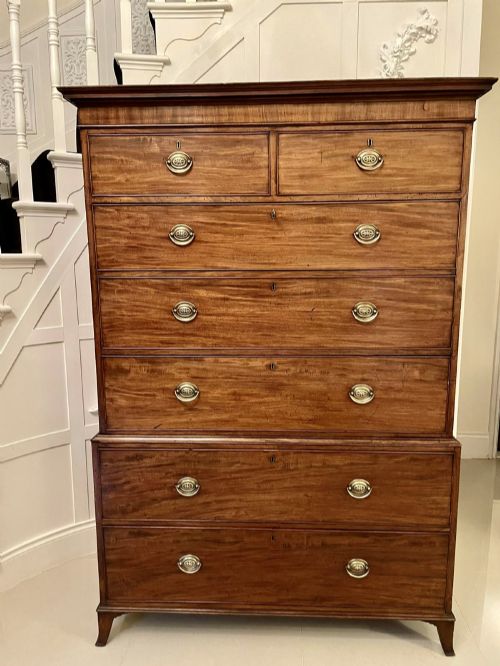
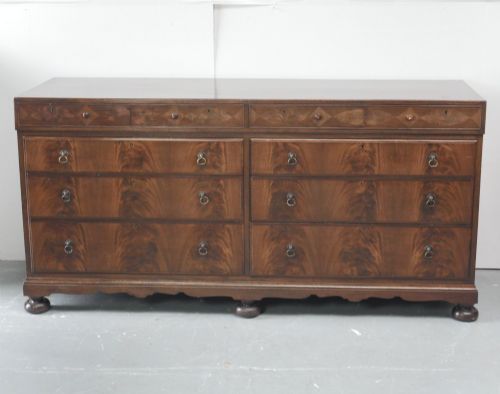
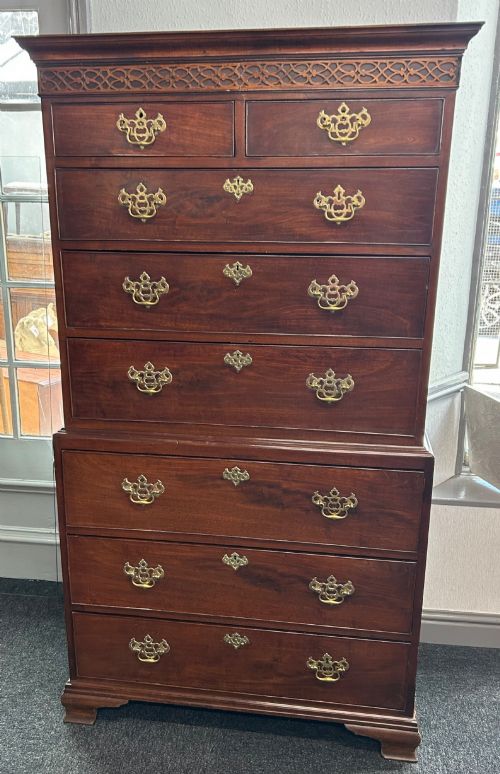


Double Chest Dresser
These double chest dresser pieces, known traditionally as tallboys or chests on chest, offer serious vertical storage built with architectural presence.
Double Chest Dresser
A double chest dresser, more commonly found in historical contexts as a chest on chest or tallboy, consists of one substantial chest of drawers stacked directly upon another. The top section is traditionally narrower than the base, creating a tiered silhouette that maximises storage space while maintaining a relatively small floor footprint.
Most examples encountered here span the 18th century and the broader Georgian period, though revival pieces from the early 20th century also appear. Makers built these tall forms to hold extensive wardrobes, utilising timber selections that ranged from native oak and walnut to highly figured imported mahogany.
How they were made
Cabinetmakers constructed these stacked forms using solid timbers and carefully selected veneers, primarily mahogany and walnut, mounted upon sturdy frame structures. Drawer construction relied on tight dovetail joints designed to withstand regular use, while carcase frames utilised secondary timbers to support the heavy internal loads.
Surface finishing involved hand-polishing and waxing to bring out the natural grain patterns of flame mahogany or figured ash. Brass hardware, including swing handles and escutcheons, was pinned or bolted through the drawer fronts to complement the darker wood tones.
Double Chest Dresser Retail Price Guide 2026
Typical asking prices for double chest dresser among the pieces listed under this phrase on Sellingantiques today, from the lower quarter to the upper quarter. They describe what is for sale here now, not the wider market.
The listings span multiple centuries, ranging from early walnut pieces of the 1700s through expansive Georgian mahogany designs to 1920s revival items.
What varies in quality
The distinction between standard and exceptional pieces rests upon the quality of the timber selection and the precision of the cabinetwork. Grain matching across stacked drawer fronts and the subtlety of carved details like bracket feet or dentil cornices signal superior workshop origin.
Structural integrity also separates grades, with finer pieces maintaining smooth drawer operation and original backing boards despite decades of shifting humidity. The sophistication of internal secondary woods and the retention of period brassware contribute significantly to the standing of an individual tallboy.
Whytock & Reid
The Double Chest Dresser Glossary
- Tallboy
- A tall storage unit formed by placing one chest of drawers directly on top of another. This configuration doubles vertical capacity without demanding extra floor space.
- Chest on chest
- An alternative term for a tallboy, denoting the two distinct sections that lock together to form a single towering piece of furniture.
- Figured mahogany
- Timber selected for its decorative, rippled grain patterns rather than straight lines. Cabinetmakers used these veneers on primary display surfaces.
- Bracket foot
- A simple, corner-supporting foot shaped like a bracket, commonly found on Georgian case furniture. It elevates the base slightly off the floor.
- Secretaire bookcase
- A tall storage form incorporating a fitted writing drawer with pigeonholes and small drawers behind a drop-front panel.
Double Chest Dresser: Frequently Asked Questions
What is a double chest dresser?
A double chest dresser is a traditional tall storage unit formed by stacking a slightly smaller chest of drawers directly onto a larger base chest.
This vertical format was developed to provide maximum drawer capacity within a compact floor footprint in period bedchambers.
How do I identify a Georgian tallboy?
Georgian tallboys are distinguished by their 18th-century proportions, architectural cornices, and construction in timbers like mahogany or walnut.
They often feature bracket feet, hand-cut dovetail joints, and brass swing handles that reflect the cabinetmaking styles of the period.
Where should I place a tallboy?
Because of their significant height, tallboys suit rooms with high ceilings where they can anchor a wall space without feeling cramped.
They function primarily in bedrooms or dressing rooms as substantial wardrobes for folded garments and linens.
How do the top and bottom sections join?
The upper chest simply rests upon the lower base section, held in place by its own weight and alignment mouldings.
This two-part construction allowed historical craftsmen to transport the massive furniture pieces up staircases more easily.