





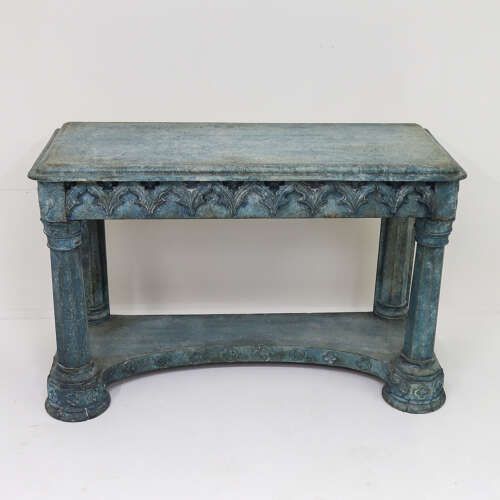


Distressed Wood Console
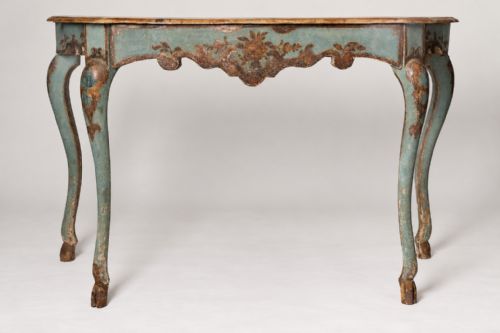
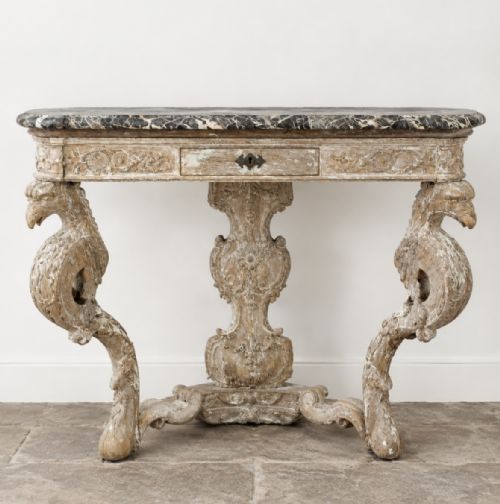
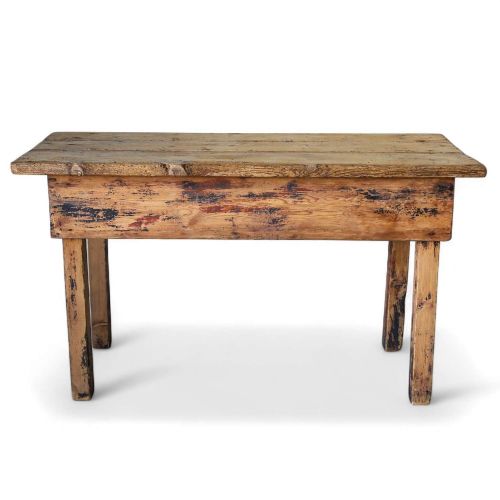
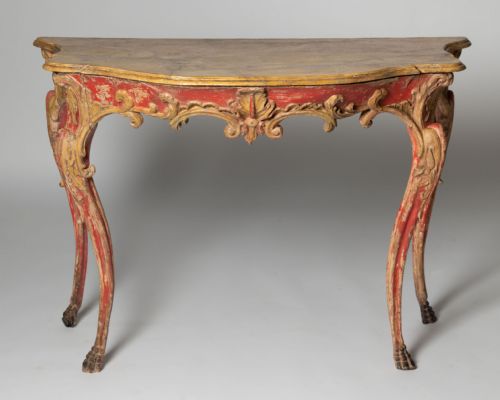
A distressed wood console brings surface texture and continental proportion to an entrance hall or living space.
Distressed Wood Console
A distressed wood console provides a narrow surface suited to hallways, drawing rooms and dining spaces where floor space is measured. These pieces take the form of console tables, side tables, demi-lune designs and dresser bases originating from English, French, Italian, Swedish and Spanish workshops.
The version met most often on this page is the painted wooden console table from the nineteenth century, often showing French provincial, Louis style or country house characteristics. Pieces span from eighteenth-century baroque examples up to early twentieth-century farmhouse and rustic tables.
Builders constructed these tables to sit flat against a wall, sometimes paired with marble tops or matching overmantel mirrors. Their silhouettes range from simple rectangular pine boards to serpentine fronts and carved woodwork.
How they were made
Cabinet makers built these tables using timber such as pine, walnut and general wood, applying gesso and layers of paint that have aged and distressed over generations. Carved wood details appear on frames and brackets, whilst certain tables incorporate marble tops for heavier use.
Construction methods rely on traditional joinery suited to the period, from eighteenth-century country house bases to nineteenth-century continental frames. Surfaces show the marks of hand carving, painted finishes and natural wear to the timber underneath.
Distressed Wood Console Retail Price Guide 2026
Typical asking prices for distressed wood console among the pieces listed under this phrase on Sellingantiques today, from the lower quarter to the upper quarter. They describe what is for sale here now, not the wider market.
Materials recorded across the inventory include painted wood, marble, pine, gesso, timber and carved wood.
What varies in quality
The standard of a distressed wood console rests on the integrity of its original timber frame and the authenticity of its surface finish. Pieces retaining their early paint layers and hand-carved details stand apart from later interpretations.
Proportion and regional character dictate desirability, with well-balanced serpentine fronts, demi-lune shapes and integrated marble tops showing superior workshop origins. The depth of the carved work and the harmony of the painted surface define the better examples.
The Distressed Wood Console Glossary
- Demi-lune
- A half-moon shape used for console tables designed to sit flush against a wall. This format allows the table to occupy minimal depth in a hallway or narrow room.
- Overmantel mirror
- A large mirror designed to hang above a fireplace mantel, frequently matching the style and period of an associated console table.
- Potboard dresser base
- A low sideboard or serving table featuring an open lower shelf for storing pots and kitchen wares. These pieces originate from country house and farmhouse traditions.
- Serpentine
- A wave-like curving line found on the front edge of tabletops and cabinet facades. This contour requires skilled carpentry to shape from solid timber.
- Gesso
- A plaster-based mixture applied to wood surfaces as a smooth base for painting and gilding. It provides the white ground beneath historical painted finishes.
Distressed Wood Console: Frequently Asked Questions
Where should I place a console table?
A console table sits best against a hallway wall, behind a sofa, or beneath a large mirror in a dining room. Its shallow depth prevents it from blocking walkways while offering a surface for lamps and decorative objects.
In period settings, these tables anchor an entranceway and establish the decorative tone of the interior spaces beyond.
How do I identify eighteenth-century pieces?
Eighteenth-century consoles display hand-cut joinery, aged timber patination, and traditional construction methods specific to English, French or Italian workshops. The wear on the wood and paint layers develops naturally through centuries of domestic use.
Examining the underside and drawer construction reveals the hand tools and methods used by period cabinet makers.
How do I care for painted wooden tables?
Maintain painted and distressed wooden surfaces by dusting with a dry cloth and avoiding modern chemical polishes. Protect the aged finish from excessive moisture and direct heat sources.
Keeping the room at a stable humidity level preserves the underlying timber and prevents further cracking in the gesso and paint layers.