

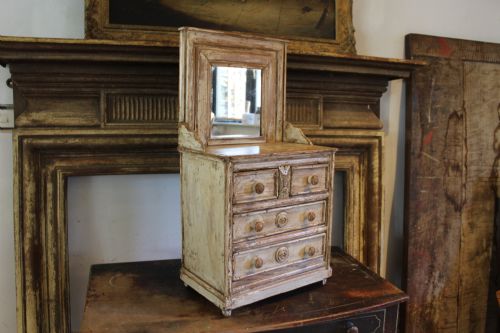
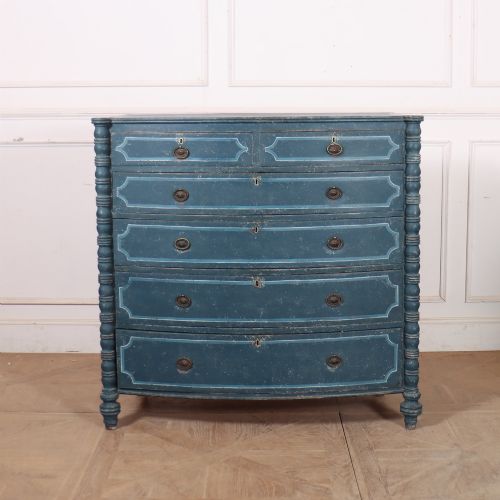
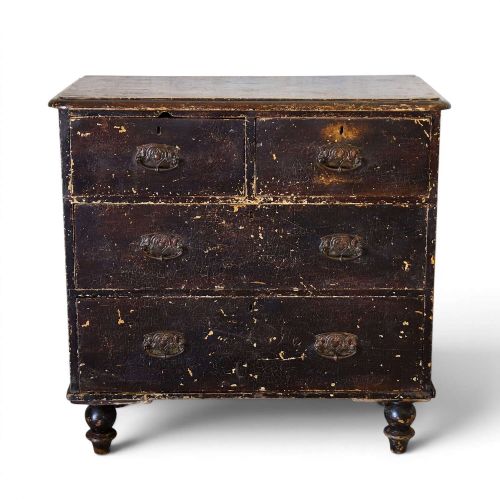

Distressed Paint Commode
A distressed paint commode brings layered colour and practical storage into a room, drawn mostly from nineteenth-century European provincial workshops.
Distressed Paint Commode
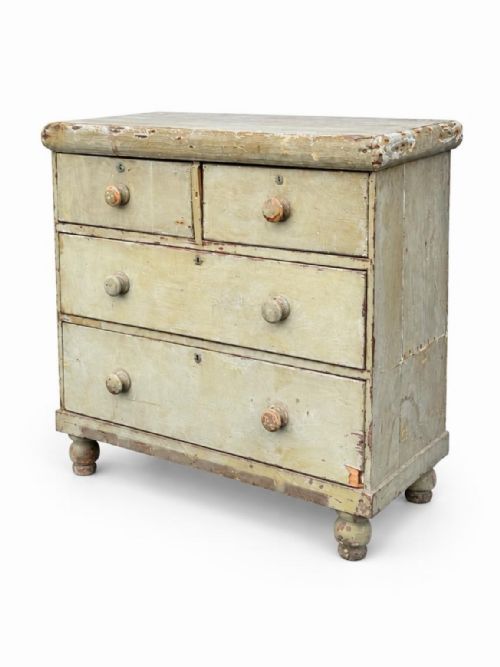
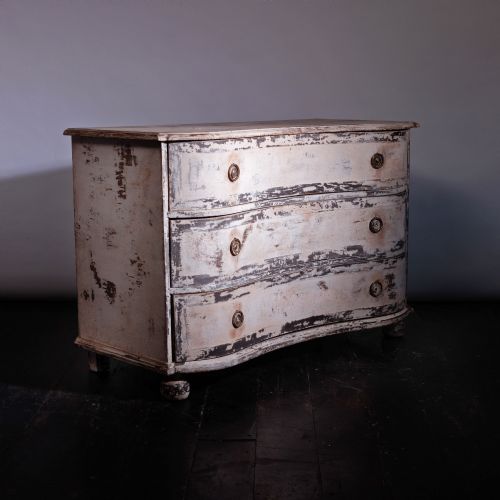
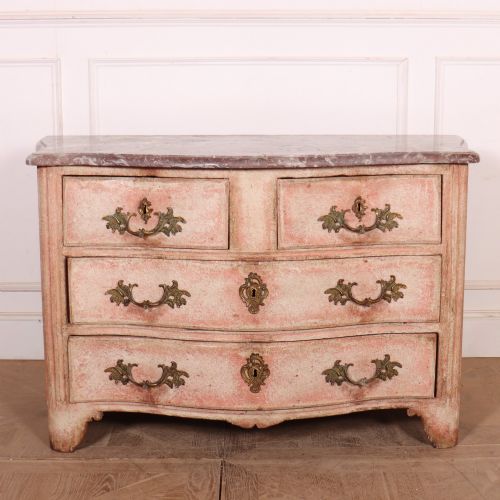
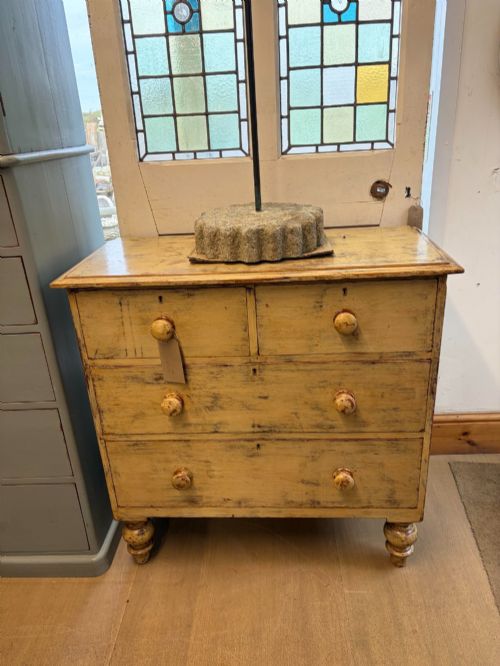
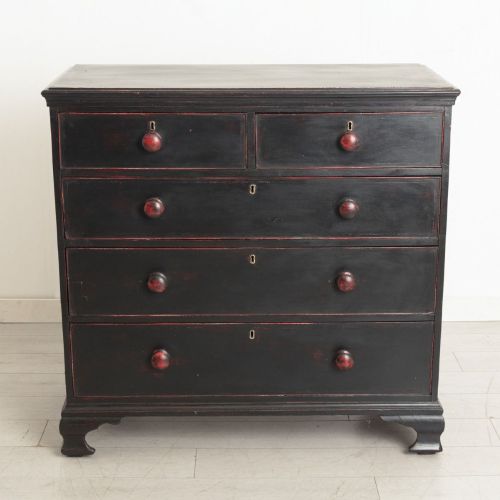
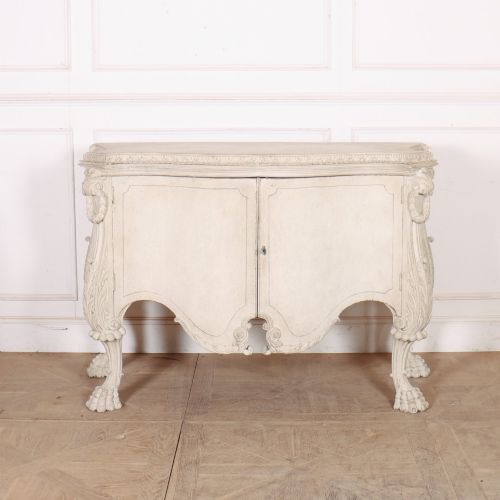
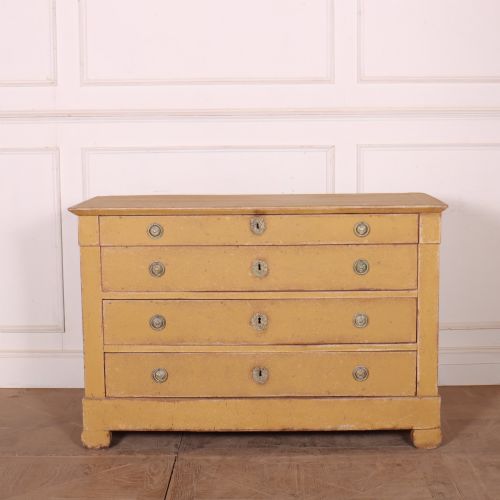
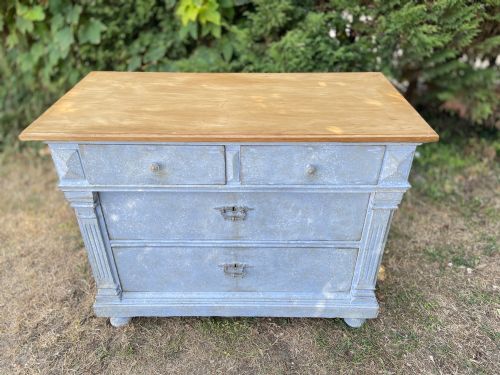
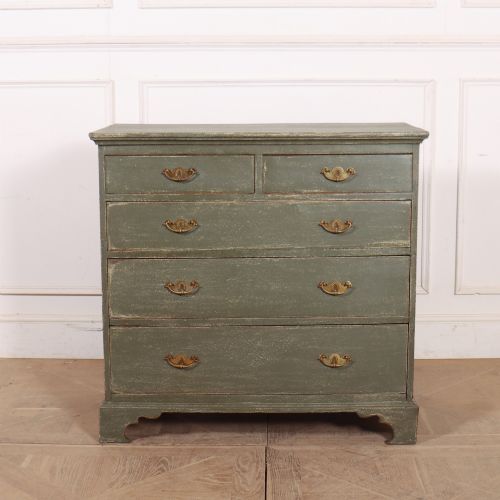
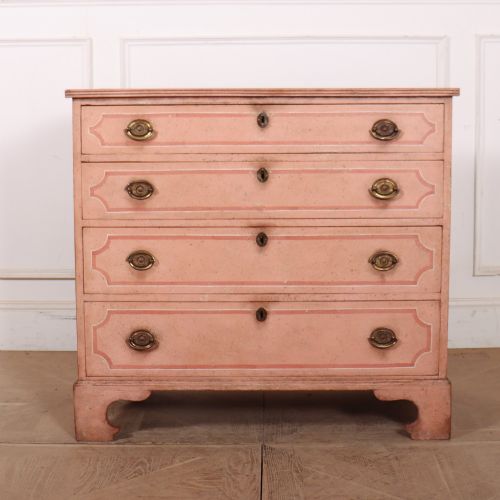
A distressed paint commode sits somewhere between formal cabinet-making and rustic utility, taking the form of chests of drawers and side cabinets originating across England, France, Sweden, Italy and Germany. The pieces you encounter most often on this page date from the nineteenth century, though eighteenth-century examples and early twentieth-century interpretations also appear regularly.
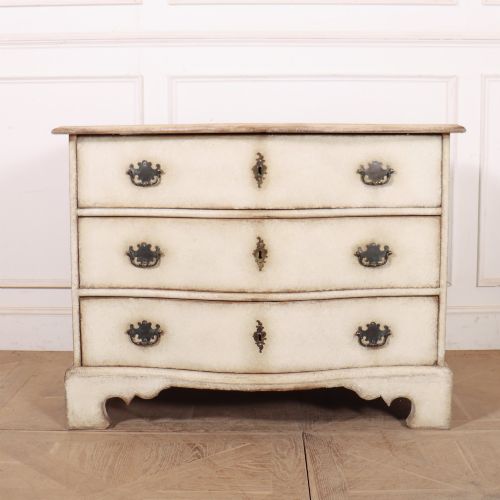
The physical form varies from compact two-drawer bedside tables and miniature apprentice pieces to substantial serpentine or bowfront chests and breakfront cupboards. Makers utilised pine, oak and mixed hardwoods as carcase materials, finished with accumulated layers of paint that show varying degrees of natural wear, scumble glazing or intentional ageing over time.
Materials and construction
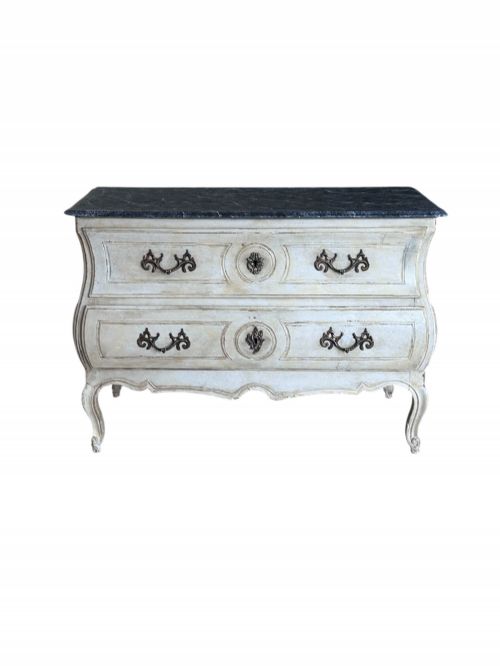
Carpenters constructed the carcases using solid timbers such as pine, oak and regional softwoods, joined with traditional methods suited to domestic utility rather than court furniture. Drawer construction often reveals hand-cut dovetails, while carcase frames support heavy tops made of wood, painted surfaces or occasionally faux marble.
The painted finishes applied to these pieces rely on traditional mediums, from original oil paints and scumble glazes to later decorative layers or modern paint treatments. Surfaces accumulated patination through decades of household use, sometimes retaining traces of earlier polychrome schemes beneath later coats.
Distressed Paint Commode Retail Price Guide 2026
Typical asking prices for distressed paint commode among the pieces listed under this phrase on Sellingantiques today, from the lower quarter to the upper quarter. They describe what is for sale here now, not the wider market.
Listings feature pieces spanning the 18th century, 19th century, and early 20th century, constructed from pine, oak, brass, and marble.
Factors of quality
Quality in a distressed paint commode rests in the integrity of the underlying timber carcase and the historical honesty of the surface finish. Pieces retaining their original scumble glaze or early layered paint display a depth of tone that distinguishes them from later decorative interventions.
Proportion and regional detailing set superior pieces apart, visible in the sweep of a serpentine front, the crispness of carved mouldings on Italian or French provincial examples, and the stability of the drawer construction.
Edwards and Roberts
The Distressed Paint Commode Glossary
- Scumble paint
- A translucent glaze manipulated over a lighter base coat to create mottled, aged effects mimicking grain. It appears frequently on nineteenth-century country pieces.
- Bowfront
- A convex, outward-curving front profile common on English and continental chests of drawers. It softens the rigidity of standard rectangular cabinet forms.
- Breakfront
- A cabinet facade where the central section projects forward from the flanking sides. This architectural arrangement adds visual weight to larger side cabinets.
Distressed Paint Commode: Frequently Asked Questions
What is a distressed paint commode?
A distressed paint commode is a set of drawers or side cabinet finished in paint that exhibits natural wear, ageing or decorative glazing from periods spanning the eighteenth to early twentieth centuries.
These pieces served as practical storage furniture in domestic settings across Britain and continental Europe, valued today for their decorative surface texture and utility.
How were these commodes used?
Historically, these cabinets functioned as primary bedroom storage for clothing, linens or personal items, placed against walls in chambers and parlours.
Today, buyers utilise them in hallways, living rooms and bedrooms where surface character and compact drawer storage suit contemporary interiors.
How do I tell regional styles apart?
Regional origin reveals itself through timber choice, moulding profiles and paint palettes, such as the pale Gustavian tones of Sweden versus the rich serpentine curves of Italy.
English pieces tend toward rectilinear pine or oak carcases, while French provincial and German examples often employ more pronounced decorative carving and shaped aprons.
Are painted finishes original?
Paint histories vary widely, with some pieces retaining genuine eighteenth or nineteenth-century scumble and oil finishes while others carry later decorative layers or modern treatments.
Examining the paint cross-section and wear patterns helps determine whether the surface has evolved through generations of use or received intentional ageing.