





Dinner Table Bell
A dinner table bell summons households to meals, appearing here as polished brass gongs, oak stands, and chiming sets from the Victorian and Edwardian eras.
Dinner Table Bell
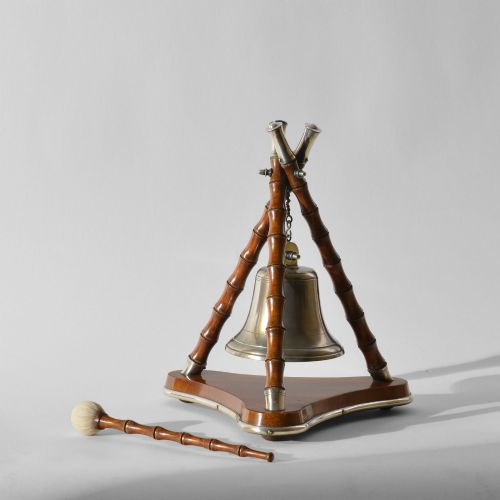
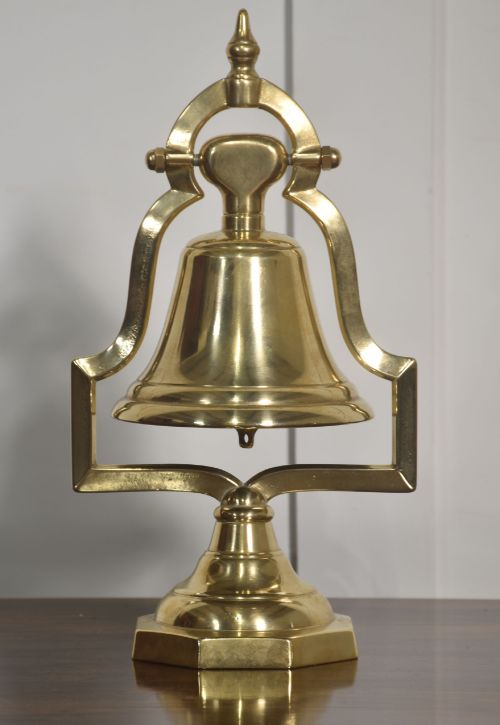
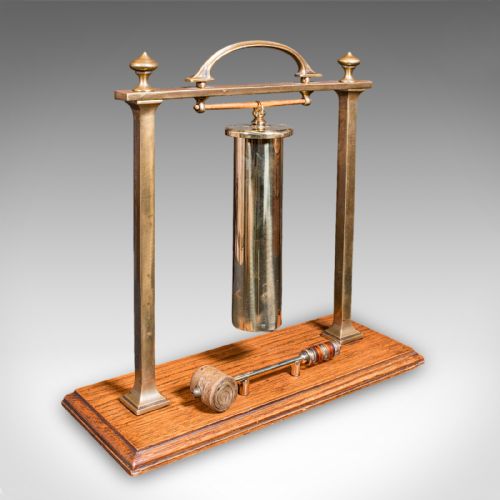
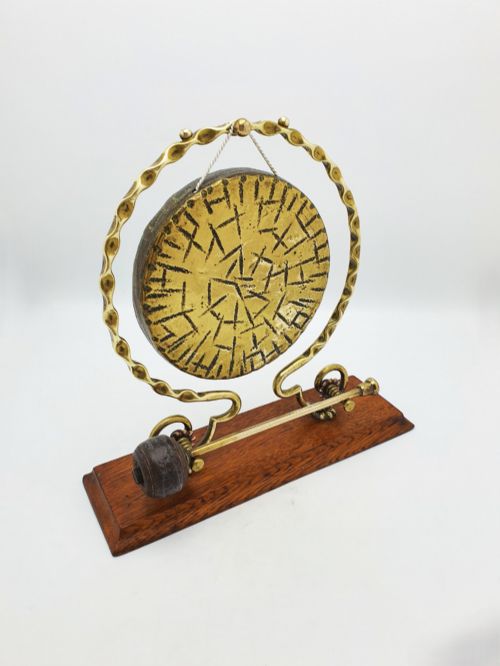
A dinner table bell encompasses tabletop gongs, framed chimes, and handheld ringers designed to announce meals in domestic settings. The pieces gathered under this phrase span the nineteenth century into the twentieth, with Edwardian and Victorian examples appearing most frequently.
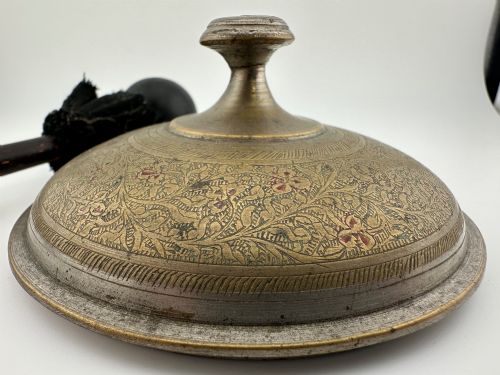
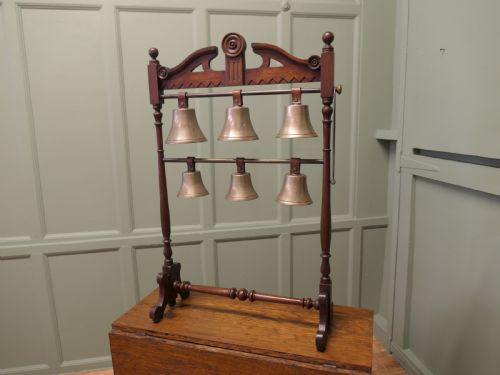
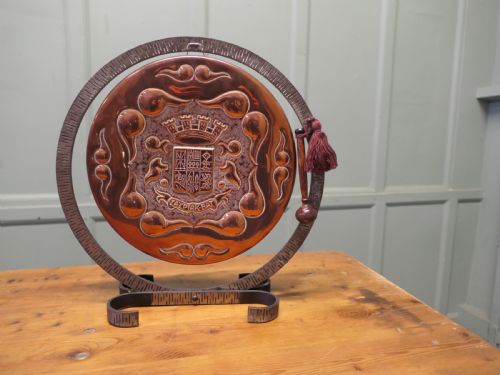
Forms vary from simple brass bells mounted on wooden stands to elaborate carved oak frames holding suspended metal gongs with strikers. Collectors encounter varied regional influences including Anglo-Indian engraving, Basque copperwork, Japanese bronze, and Chinese carving alongside traditional British designs.
How they were made
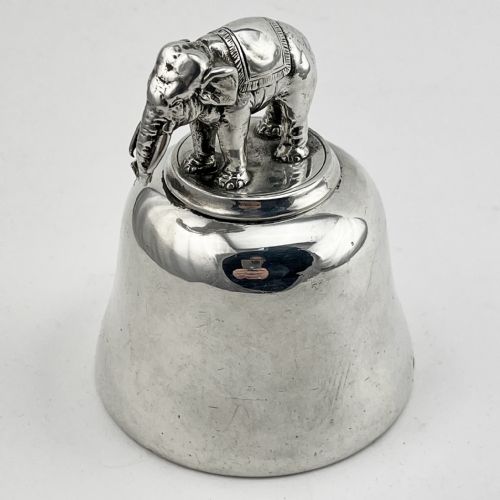
Makers utilised cast and hand-hammered metals such as brass, bronze, copper, iron, and sterling silver for the sounding elements, often pairing them with wooden bases or stands of oak, walnut, hardwood, and mango wood. Cord suspension or metal hanging loops support many of the suspended gongs, accompanied by dedicated wooden or metal handheld strikers.
Decorative techniques recorded across the pieces include fine surface engraving, cast Art Nouveau floral motifs, and intricate oriental wood carving. Tuned musical arrangements utilise multiple bells or glockenspiel bars mounted within fitted wooden racks.
Dinner Table Bell Retail Price Guide 2026
Typical asking prices for dinner table bell among the pieces listed under this phrase on Sellingantiques today, from the lower quarter to the upper quarter. They describe what is for sale here now, not the wider market.
Some Victorian households deployed tuned musical bell racks to chime entire melodies before roast beef.
What varies in quality
Quality rests in the resonance of the metal and the precision of the frame joinery, distinguishing melodic gongs from dull-sounding pieces. Superior examples feature heavier gauge brass, bronze, or silver paired with substantial hardwood stands that sustain vibration.
The degree of hand craftsmanship separates standard production items from finer decorative pieces, visible in deeply carved stands, detailed metal engraving, and matching original strikers. Well-preserved finishes on both the timber and the polished metal maintain the integrity of the design.
The Dinner Table Bell Glossary
- Gong
- A broad circular metal disc or bowl that produces a resonant tone when struck with a mallet. They are typically suspended within a supportive wooden or metal frame for table use.
- Striker
- A small mallet or handheld rod used to hit a bell or gong. These often feature matching wooden handles or metal shafts designed to rest alongside the stand.
- Japonisme
- The influence of Japanese art and design on Western decorative objects, prominent during the late nineteenth century. This aesthetic appears in oriental motifs and bronze casting styles.
- Glockenspiel
- A set of tuned metal bars played with handheld mallets to produce musical chimes. Enclosed wooden rack variations bring orchestral tones to domestic tabletop settings.
Dinner Table Bell: Frequently Asked Questions
How were dinner gongs used?
Servants or hosts struck the suspended metal disc with a wooden mallet to create a resonant chime that carried across the house. This signaled that afternoon tea or dinner was served.
The deep tone provided a polite alternative to shouting through the corridors of large Victorian homes.
How do I date a table bell?
Dating relies on stylistic clues such as Art Nouveau floral casting, Victorian proportions, or Edwardian oak framing techniques. Materials and engraving styles also point to specific manufacturing periods between the nineteenth and early twentieth centuries.
Examining the fixings, wood types, and mounting hardware helps distinguish nineteenth-century examples from later twentieth-century reproductions.
How do I care for antique brass gongs?
Dust wooden stands regularly with a soft cloth and avoid harsh chemical cleaners that strip period patinas. Unlacquered brass and bronze naturally darken over time, so gentle polishing preserves the metal surface without removing fine engraving.
Keep suspended gongs secure on their cords and store strikers safely alongside the stand to prevent accidental damage.