
Dining Room Seating
Dining room seating covers the essential wooden chairs and carvers that gather people around a table, spanning styles from Georgian elegance to Victorian solidity.
Dining Room Seating
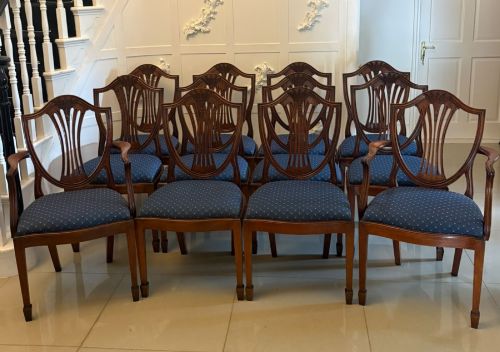
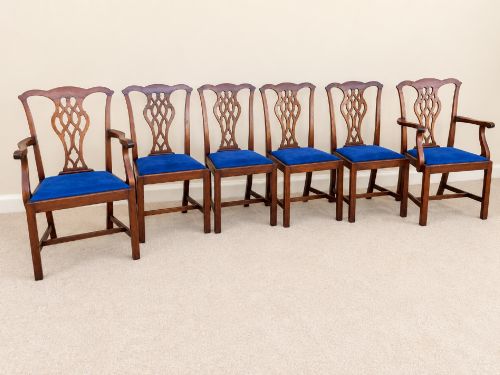
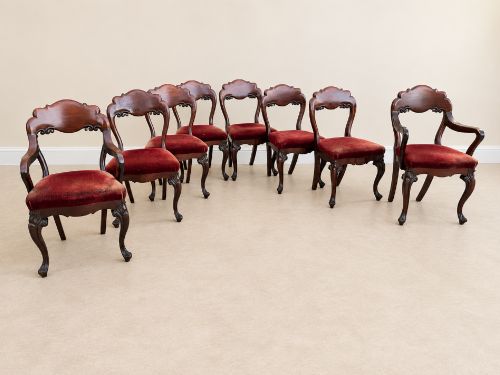
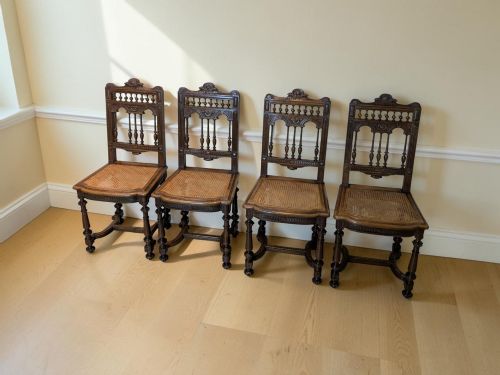
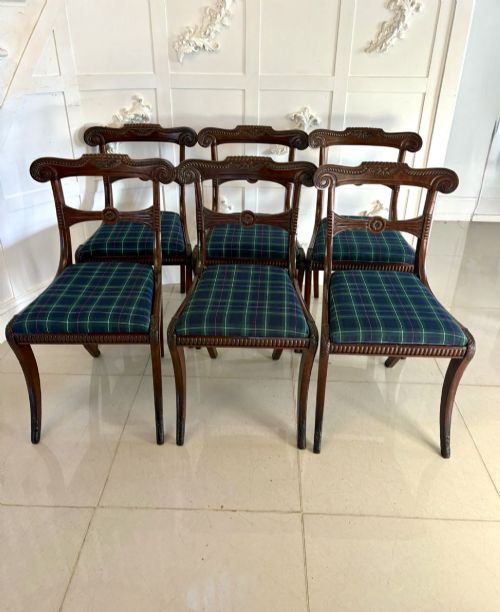
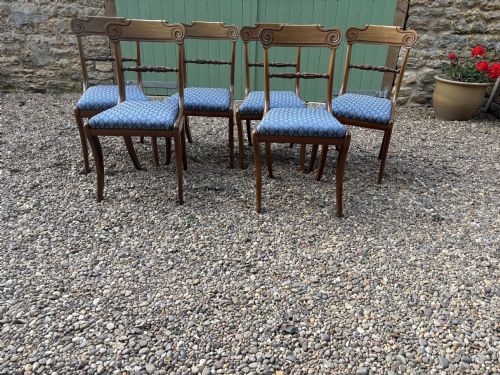
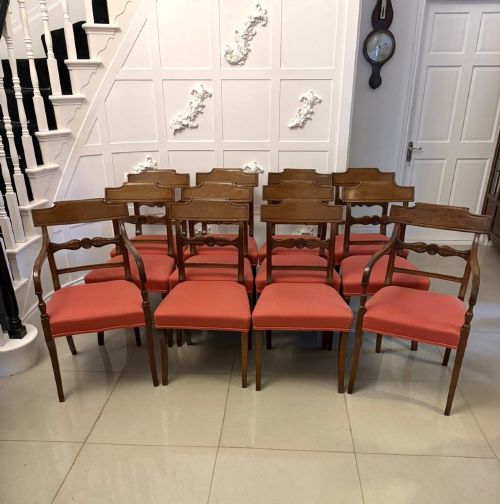
Dining room seating encompasses an array of forms designed for meals, including dining chairs, armchairs, side chairs, and complete dining furniture sets. The selection ranges from modest country examples to large sets numbering a dozen or more matching pieces.
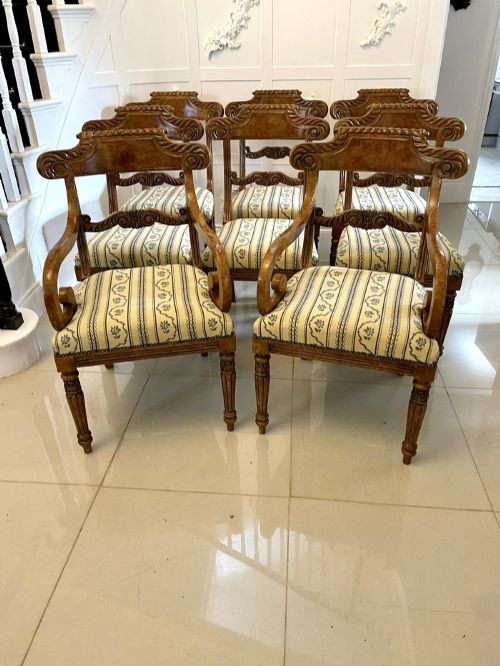
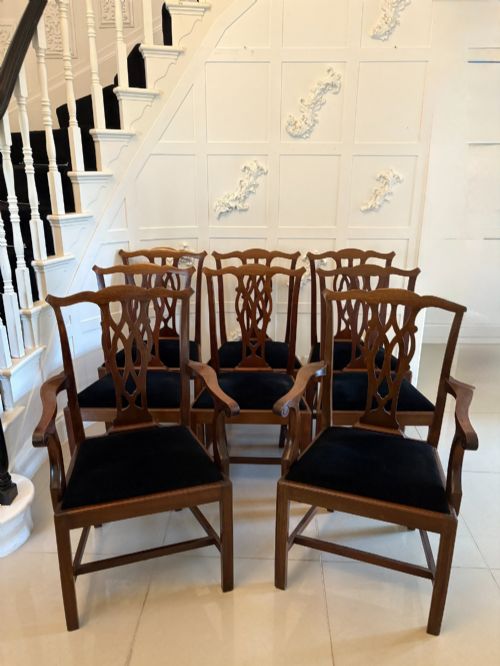
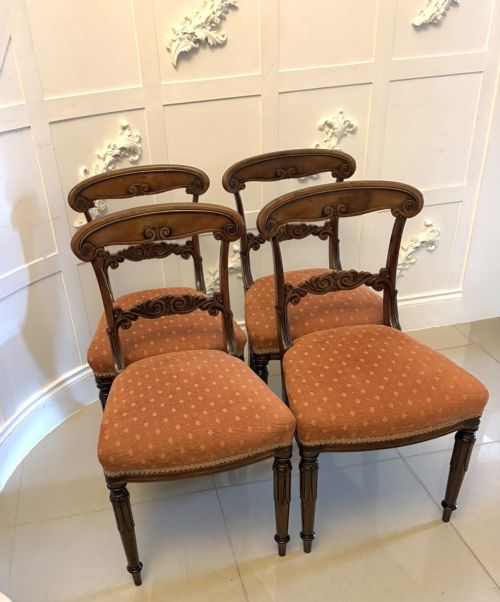
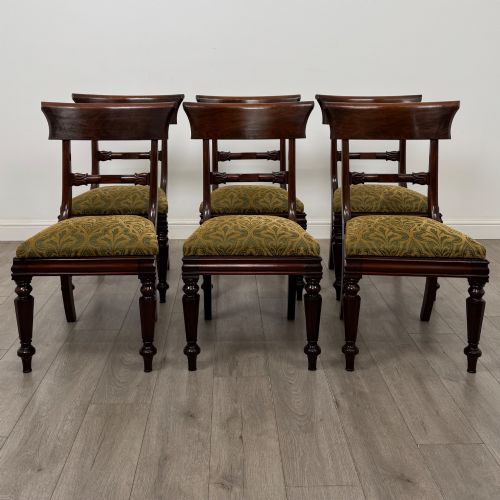
Buyers most frequently encounter mahogany sets dating from the Georgian, Regency, and Victorian periods, often arranged as a combination of single chairs and carvers with arms. Alternative woods such as oak and elm also appear alongside playful interpretations like faux birds-eye maple.
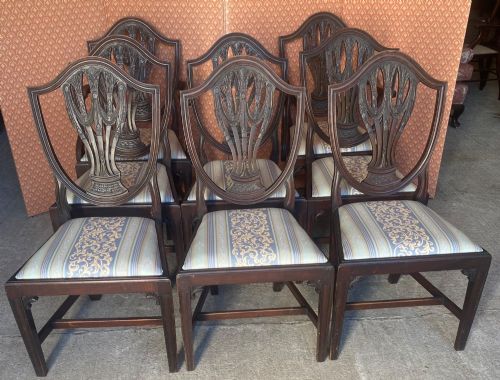
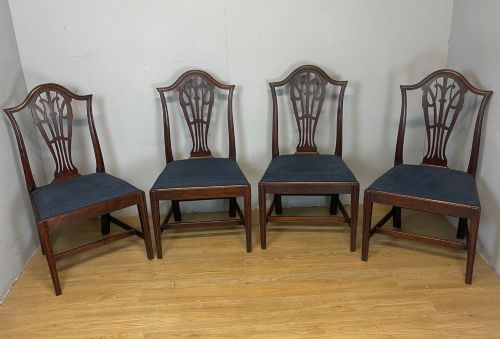
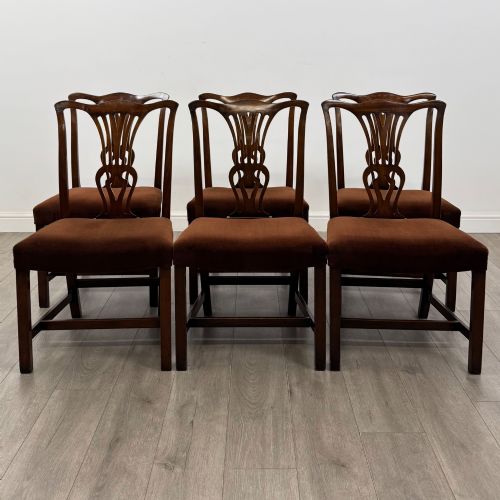
The aesthetic vocabulary stretches from Chippendale style and Hepplewhite proportions to balloon backs, shield backs, and pierced splat designs. Sets often arrive in matching groups suited for formal dining spaces.
How they were made
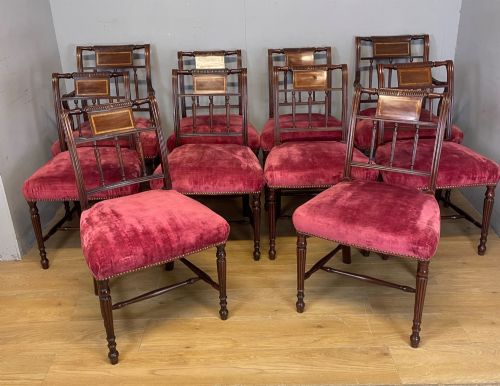
Makers relied primarily on dense hardwoods, predominantly mahogany and oak, supplemented by elm, beech, and rosewood for specific regional or decorative tastes. Brass inlay, carved details, and turned legs provided decorative enrichment to structural frames.
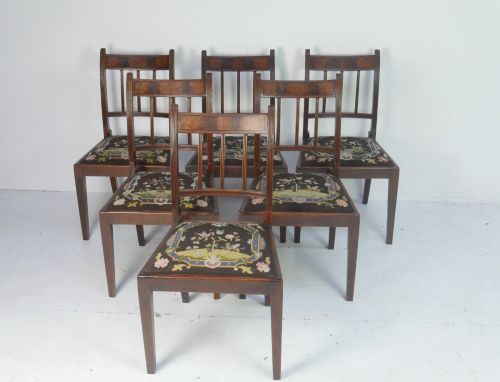
Upholstery played a central role, utilising fabric, velvet, and various textile coverings over padded seat foundations. Joinery methods relied on traditional techniques to ensure stability across repeated daily use.
Mahogany and oak dominate the available seating, with styles spanning Georgian proportions through to Victorian and Edwardian interpretations.
What varies in quality
Quality reveals itself in the crispness of carved details, such as pierced splats or brass inlay work, where skilled hands achieved sharper lines and better proportions. The selection of timber grain, whether figured mahogany or quarter-sawn oak, sets finer examples apart from utilitarian ones.
The integrity of matching sets and the retention of original components determine the standing of a group. Uniformity across a large suite of chairs requires consistent craftsmanship during manufacture.
Maple and Co
The Dining Room Seating Glossary
- Carver
- An armchair designed with armrests, traditionally placed at the head of a dining table and matched with smaller side chairs.
- Shield back
- A chair back shape resembling the outline of a heraldic shield, popularised during the late eighteenth century.
- Pierced splat
- The central vertical slat of a chair back that has been cut through to create an openwork decorative pattern.
- Balloon back
- A rounded, oval-shaped chair back profile that became widely produced during the Victorian period.
- Barley twist
- A decorative turning technique resembling a twisted rope, commonly found on oak chair legs and stretchers.
Dining Room Seating: Frequently Asked Questions
What is a carver chair?
A carver is an armchair designed to match a set of dining chairs, typically positioned at the head and foot of the table. These seats offer armrests for added comfort during long meals.
Historically, larger sets included two carvers and a number of single side chairs. They share the decorative style and timber of the accompanying chairs.
How do I care for antique wood?
Maintain antique wooden frames by keeping them away from direct heat sources and fluctuating humidity. Gentle dusting with a dry cloth preserves the polished surface.
A light application of appropriate wax polish occasionally helps nourish the timber. Avoid modern chemical sprays that can damage older finishes.
Can I mix different chair styles?
Mixing different styles creates a layered interior look, provided the scale and wood tones complement each other. Pairing country chairs with formal tables introduces visual contrast.
Matching sets remain popular for formal spaces, but eclectic dining arrangements offer flexibility. Ensure seat heights align comfortably with standard table clearances.
How do I identify a period?
Period identification relies on observing the combination of timber, construction methods, and stylistic ornament. Georgian pieces often show lighter mahogany proportions, while Victorian chairs tend to be heavier.
Details like turned legs, splat designs, and upholstery styles provide clues to the era of manufacture. Comparing proportions helps distinguish original period work from later revivals.