
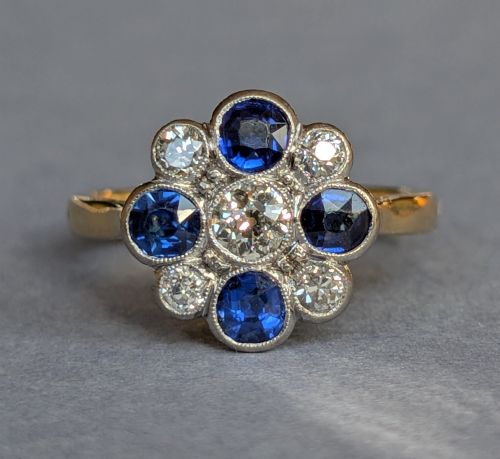


Diamond Sapphire Flower Ring
A diamond sapphire flower ring brings together bright blue stones and sparkling diamonds in a botanical form.
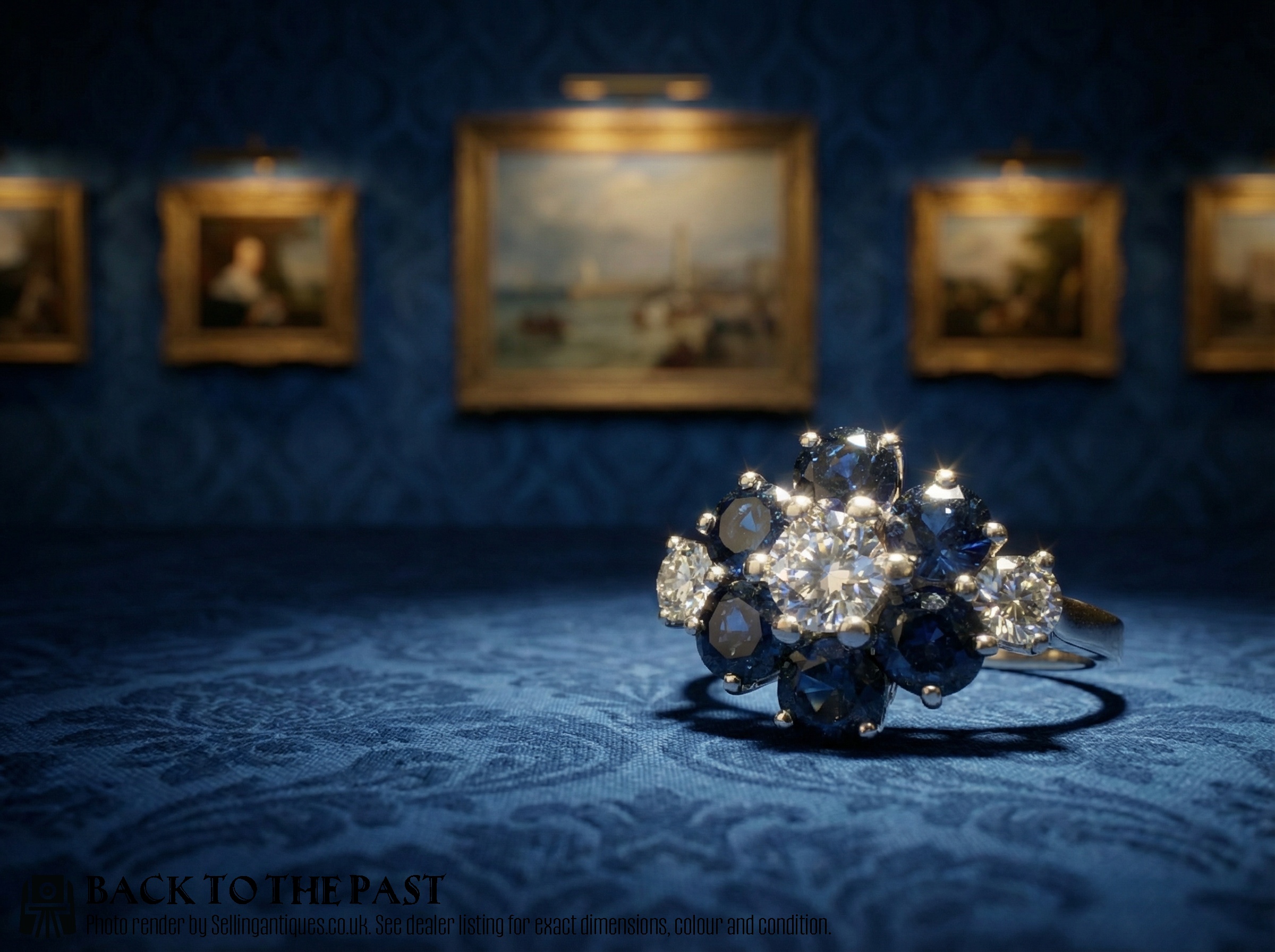
Diamond Sapphire Flower Ring
A diamond sapphire flower ring uses a central blue sapphire surrounded by diamonds to form a floral or daisy silhouette on the finger. The pieces seen here span from the late nineteenth century through the Edwardian period and the Art Deco era into mid-century modern designs.
Most examples rely on a cluster construction where a rich blue sapphire sits at the heart with smaller diamonds radiating outwards like petals. These configurations appear in various gold purities and platinum, reflecting the changing tastes of each decade.
How they were made
Goldsmiths utilised 18ct yellow gold, 18ct white gold, 9ct gold, and platinum to set the precious stones. Platinum gained favour in Edwardian workshops for its strength in delicate, lace-like renderings of floral petals.
Cluster settings require precise claw or bezel work to secure the central sapphire while maintaining the illusion of a blooming flower. Artisans combined brilliant-cut, old European-cut, and oval-cut stones to capture light across the face of the ring.
Listings span from the 1890s through Edwardian, Art Deco, and mid-century periods, utilising sapphire, diamond, 18ct gold, and platinum.
What varies in quality
The intensity of the cornflower blue in the sapphire and the clarity of the surrounding diamonds define the visual impact of the piece. Saturation and evenness of colour across the central stone dictate its desirability among collectors.
Proportion matters significantly in floral cluster designs; a well-balanced piece maintains harmony between the central sapphire and the surrounding diamond petals without bulky metalwork overpowering the stones.
The Diamond Sapphire Flower Ring Glossary
- Cluster ring
- A ring design featuring a central stone surrounded by a border of smaller gems. This layout maximises the overall presence on the hand.
- Cornflower sapphire
- A medium-blue sapphire variety prized for a specific velvety hue reminiscent of the flower. It appears frequently in Edwardian and Art Deco pieces.
- Daisy ring
- A specific floral cluster configuration with a round central stone encircled by white stones representing petals. Examples span from the Victorian era into the mid-twentieth century.
- Old European cut
- An early form of brilliant-cut diamond with a small table, high crown, and open culet. Common in pieces predating the mid-twentieth century.
Diamond Sapphire Flower Ring: Frequently Asked Questions
How do I date a diamond sapphire flower ring?
Dating relies on stylistic clues, such as the delicate platinum work typical of the Edwardian period or the geometric lines of Art Deco pieces. Hallmarks and metal choices also provide clear indicators of the decade of manufacture.
Yellow gold often signals Victorian, Edwardian, or retro mid-century phases, while white gold and platinum dominate earlier twentieth-century workshops.
What is a cornflower sapphire?
A cornflower sapphire exhibits a distinct, vivid cornflower blue colour that collectors seek out in antique jewellery. This specific shade appears across numerous nineteenth and twentieth-century cluster rings.
The tone balances deep saturation with a bright, luminous quality that catches light effectively within a diamond surround.
Can I wear a flower ring daily?
Wearing a vintage cluster ring every day is common, provided the settings are checked regularly by a professional jeweller. Platinum and 18ct gold offer sufficient durability for daily wear.
Care should be taken during physical tasks to protect the softer sapphire and the delicate prongs holding the stones.
What gold purities do these rings use?
These rings appear in 18ct yellow gold, 18ct white gold, and 9ct gold, frequently paired with platinum mountings. The choice of metal shifted according to prevailing fashions across different decades.
White metals became popular during the Edwardian and Art Deco eras to enhance the icy brilliance of the diamonds.