

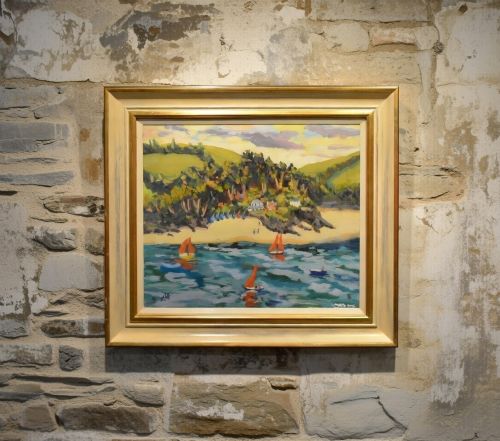


Devon Coastal Painting
A devon coastal painting captures the maritime character and dramatic shores of the West Country through the hands of period artists.
Devon Coastal Painting
A devon coastal painting brings together maritime scenes, sandy shores, and harbour views executed across the nineteenth and twentieth centuries. These works record local landmarks such as Brixham, Lynmouth, Salcombe, and Sidmouth through varied artistic lenses.
The physical form is predominantly framed artwork on paper or canvas, alongside occasional related objects like Devon pottery. Each piece preserves a distinct slice of West Country maritime history and coastal topography.
Materials and Technique
Artists working on a devon coastal painting utilised oil paint on canvas or watercolour applied to paper, framed beneath glass with wood and gesso moulding. These traditional materials capture the changing light and atmospheric conditions of the south-west coast.
Techniques range from detailed Victorian maritime realism and British Impressionism to contemporary brushwork. The handling of medium reflects the specific period of execution, from nineteenth-century academic approaches to twentieth-century interpretations.
Devon Coastal Painting Retail Price Guide 2026
Typical asking prices for devon coastal painting among the pieces listed under this phrase on Sellingantiques today, from the lower quarter to the upper quarter. They describe what is for sale here now, not the wider market.
Standards of Quality
Quality in a devon coastal painting rests upon the artist's ability to render light, water, and atmosphere with conviction and skill. Stronger examples demonstrate confident brushwork, accurate maritime detail, and a well-composed relationship between sea, shore, and sky.
The distinction between standard works and superior pieces lies in the strength of provenance, the reputation of the named hand, and the preservation of the original framing and surface condition. Works by documented practitioners command greater interest than anonymous sketches.
Charles William Adderton·Richard Harry Carter·Walter Henry Sweet·Edmund Gouldsmith·William Shayer Snr·George Marks·Alfred Egerton Cooper·Lucy Pratt
The Devon Coastal Painting Glossary
- Watercolour Painting
- A work executed with water-soluble pigments on paper. This medium allows for transparent washes and delicate atmospheric effects particularly suited to marine scenes.
- Oil on Canvas
- Pigment suspended in drying oil applied to a stretched fabric support. This technique provides rich colour saturation and textured impasto suited to maritime subjects.
- Maritime Realism
- An artistic style focused on accurate depiction of ships, coastal topography, and marine activity. It prioritises precise observation of nautical detail.
- Gesso
- A plaster-like mixture applied to wood frames to create a smooth surface for gilding or moulding. It provides the decorative border enclosing many period works.
Devon Coastal Painting: Frequently Asked Questions
What subjects appear in these paintings?
These works depict West Country locations including Brixham harbour, Lynmouth, and Sidmouth, featuring fishing trawlers, luggers, pebble beaches, and chalk cliffs.
Artists focused on the daily maritime life and distinct geography of the Devon and Dorset coastline during the nineteenth and twentieth centuries.
How do I date a maritime painting?
Dating relies on the artist's working period, costume details of figures on the shore, and stylistic conventions of the framing materials.
Victorian watercolours often exhibit tighter detail, while later twentieth-century canvases show looser handling and modernist influences.
Are these works framed?
Many examples retain their period wood and gesso frames, which complement the era in which the artwork was created.
Original framing provides useful context regarding the history and presentation of the piece.
How should I care for watercolour and oil works?
Watercolour paintings require protection from direct sunlight to prevent fading of the pigments on paper behind glass.
Oil paintings on canvas benefit from stable indoor humidity and occasional gentle dusting of the frame and surface.