


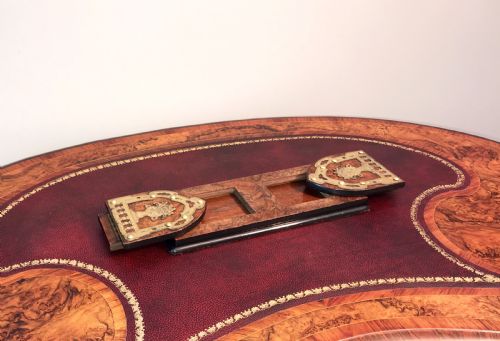
Desk Book Organiser
These desk book organiser pieces range from Victorian extending slides to Georgian mahogany troughs, built to keep works orderly on writing tables.
Desk Book Organiser
When you search for a desk book organiser, you are looking at practical accessories designed for library and writing tables. The selection spans the Georgian, Regency, and Victorian periods, extending into Edwardian designs.
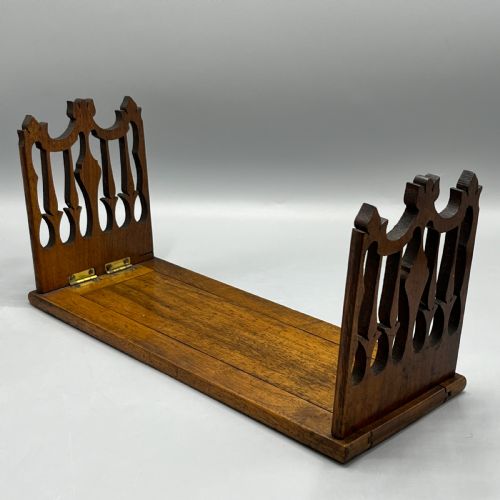
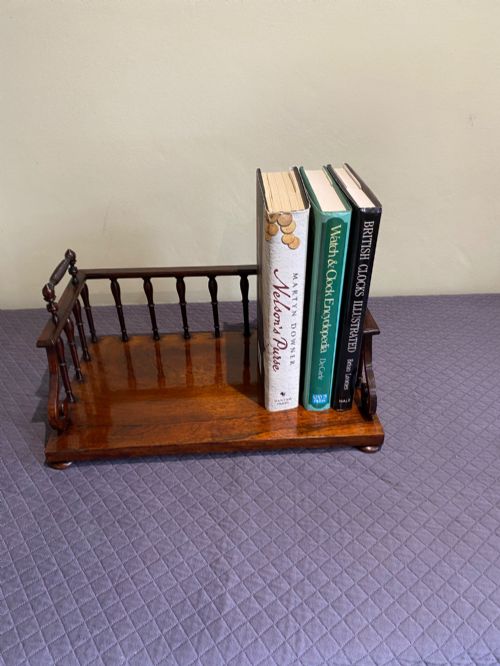
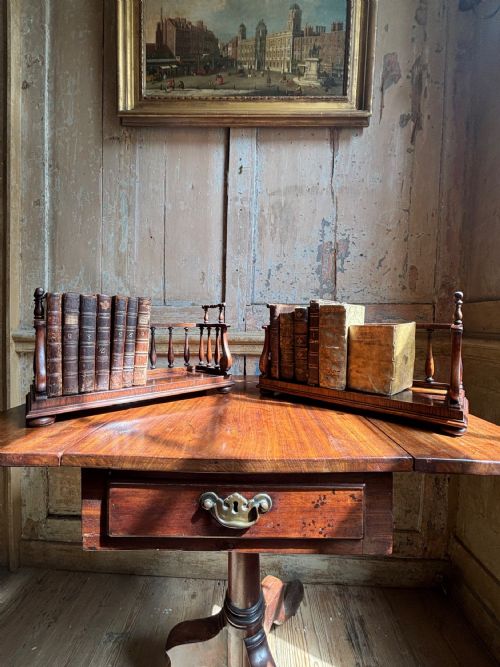
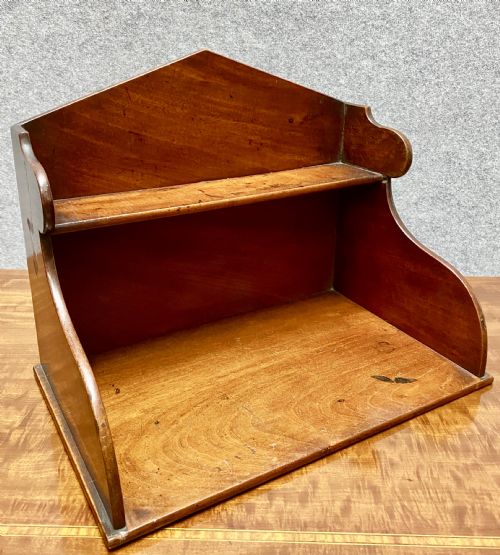
You are most likely to meet extending book slides and book carriers on this page. These pieces include variants such as desktop bookcases, bible boxes, and revolving bookcases.
The origins stretch from English workshops to Kashmiri examples, taking in materials like rosewood, mahogany, and oak. Forms range from simple racks to fitted cheverets and telegram folders.
Materials and construction methods
Makers utilised timber such as rosewood, mahogany, walnut, oak, maple, and satinwood to build these desk accessories. These hardwoods provided the structural rigidity needed for holding heavy volumes upright.
Metal mounts in brass and iron appear alongside wire elements, often providing mechanical support or protective edging for extending slides. Sterling silver fronts also feature on specific desk folders.
Construction techniques include patent extending actions for book slides and revolving mechanisms for tabletop bookcases. Joinery traditions reflect Georgian, Regency, and Victorian cabinet-making standards.
The listings show desk accessories spanning the 18th Century, Regency period, Victorian era, and Edwardian period in oak, rosewood, and mahogany.
Assessing quality in desk accessories
The refinement of the timber grain and the choice of primary wood set examples apart. Figured rosewood, satinwood, and well-chosen mahogany indicate a higher grade of manufacture than plain utility timbers.
The integration of metalwork dictates standard. Solid brass mountings, patent actions by known makers like Betjemanns, and delicate brass inlay distinguish superior items from basic production.
Proportion and decorative restraint mark the distinction in styles such as Regency, George III, and Victorian Gothic Revival. Crisp carving and balanced sliding mechanisms demonstrate superior workshop output.
The Desk Book Organiser Glossary
- Book slide
- A device designed to hold books upright on a desk, often featuring an extending mechanism to adjust the length. These pieces expand to accommodate varying numbers of volumes.
- Cheveret
- A small piece of furniture combining a book stand or small bookshelf with a writing drawer below. This form dates back to the eighteenth century.
- Bible box
- A sloping box used historically for storing religious texts and writing materials. These compact containers often sit directly upon a desktop.
- Desk tidy
- An accessory compartmented for organising correspondence, stationery, and small desk items. They keep workspace surfaces orderly.
- Revolving bookcase
- A tabletop bookcase mounted on a pivot so the user can spin it to access different titles. These rotate smoothly on a central axis.
Desk Book Organiser: Frequently Asked Questions
What is a desk book organiser?
A desk book organiser is a tabletop accessory designed to hold, sort, or display volumes within arm's reach. Pieces range from simple book carriers to extending slides and revolving bookcases.
They appeared across the eighteenth, nineteenth, and early twentieth centuries in response to the growing volume of personal libraries and correspondence.
How do extending book slides work?
Extending book slides feature a central base with sliding sections that pull outward or push inward to adjust the total length. This allows the user to increase or decrease capacity as volumes are added or removed.
Many Victorian examples utilise hinged or pivoting ends that remain upright to support the books regardless of how far the slide is extended.
Where were these pieces used?
These items were placed on writing tables, library desks, and reading surfaces in private homes and offices. Their primary function was keeping working reference books close at hand.
More decorative forms also served to display prized volumes in sitting rooms and libraries during the Georgian and Victorian eras.
How do I date a book slide?
Dating relies upon timber choice, hardware style, and prevailing design movements such as Regency, Victorian Gothic, or Edwardian Art Nouveau. Characteristic woods like rosewood and satinwood point to specific decades.
Patent marks, such as those associated with Betjemanns, provide specific manufacturing eras for pieces from the mid nineteenth century onward.
Are these pieces made of solid wood?
Most examples utilise solid hardwoods such as mahogany, oak, walnut, and rosewood. Cabinet makers selected these dense timbers to withstand the weight and pressure of heavy volumes.
Some pieces incorporate secondary woods or decorative veneers applied to carcases, reflecting the prevailing cabinet-making techniques of their respective periods.