

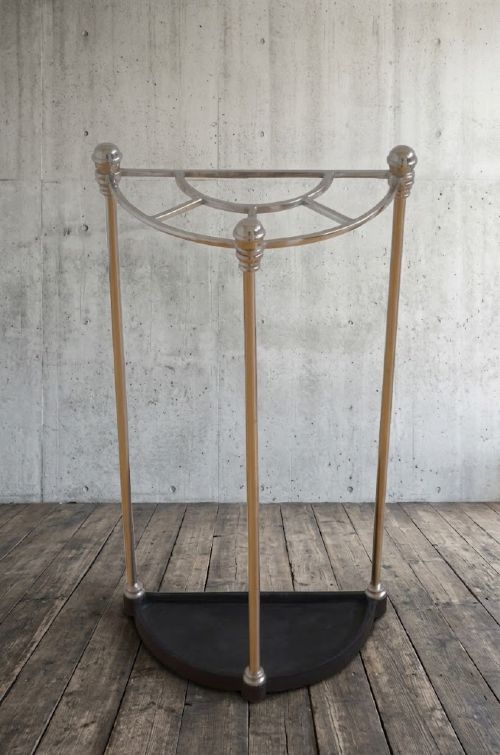
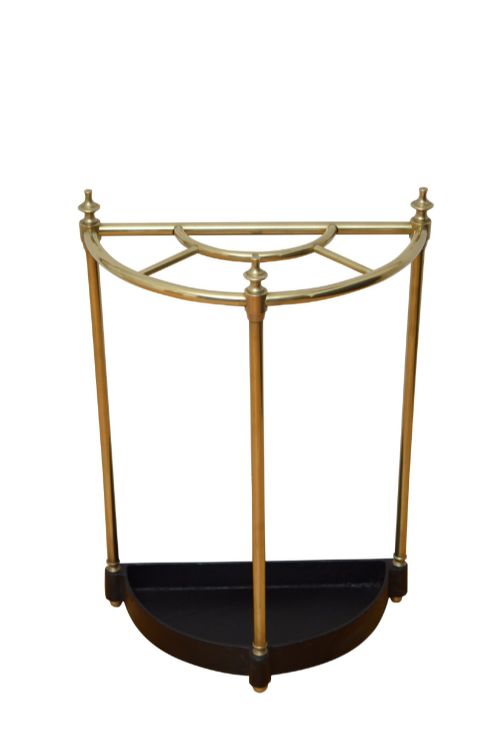
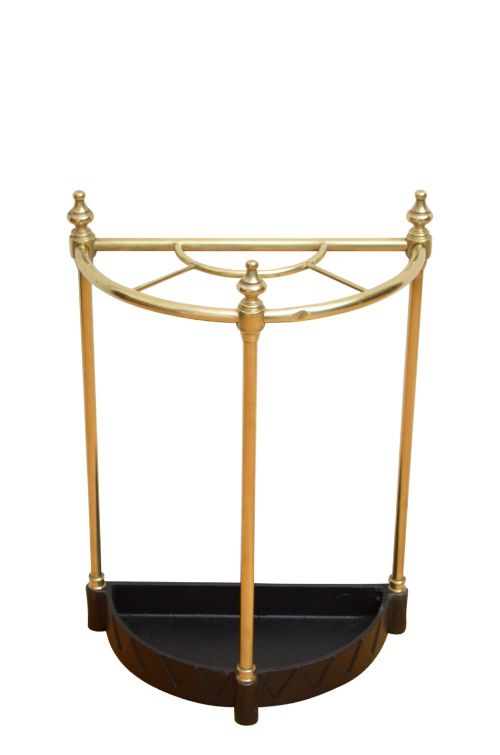

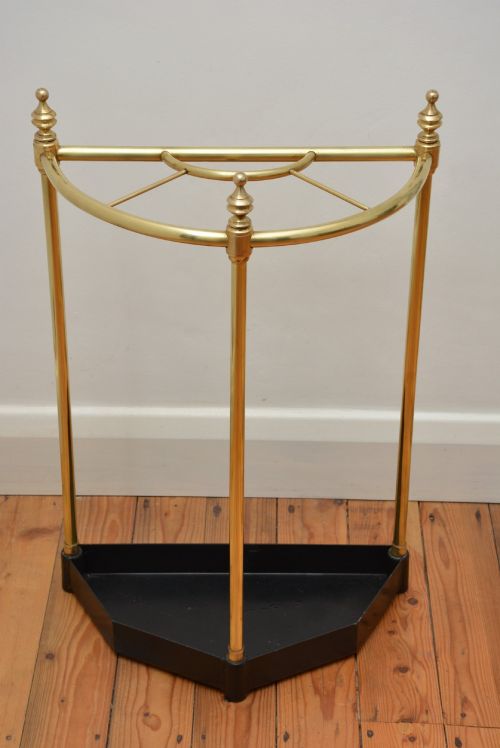
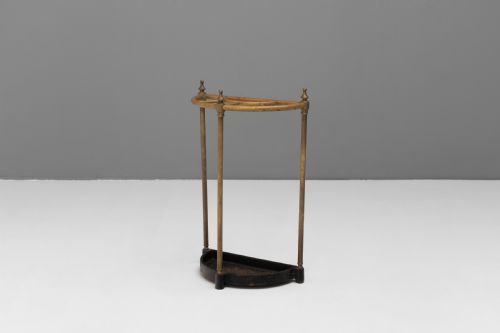


Demi Lune Cane Stand
A demi lune cane stand brings neat storage to a hallway with its half-moon shape, holding sticks and umbrellas flat against the wall.
Demi Lune Cane Stand
A demi lune cane stand is a hall furnishing designed to hold walking sticks, canes and umbrellas in a tight semi-circular footprint. These pieces fit directly against hallway walls or inside entrance passages to save floor space while keeping wet gear contained.
The pieces seen here span the Victorian era, the Edwardian period, and the 1930s Art Deco years. Common configurations include brass frames with divided loops and cast iron bases designed to catch drips.
Makers utilised materials such as oak, tubular metal, nickel plating, and brass alongside zinc liners. Forms range from simple stick loops to elaborate country house hall stands incorporating boot trays and mirror backs.
How they were made
Makers cast iron and brass to form the rigid semi-circular frames and heavy base trays that keep these tall stands stable. Brass casting and tubular metal construction allowed workshops to produce both ornate Art Nouveau patterns and clean Art Deco divisions.
Makers fitted removable zinc or dog tooth trays beneath the main frames to catch water from wet umbrellas and protect timber floors. Oak and other hardwoods appeared in more substantial hall furniture builds alongside metal loops.
Demi Lune Cane Stand Retail Price Guide 2026
Typical asking prices for demi lune cane stand among the pieces listed under this phrase on Sellingantiques today, from the lower quarter to the upper quarter. They describe what is for sale here now, not the wider market.
Periods represented span from Victorian and Edwardian eras through to Art Deco designs of 1930.
What varies in quality
Quality rests in the weight of the metal and the integrity of the base tray. Heavy cast iron and thick brass frames endure daily knocks from heavy walking sticks far better than thin tubular alternatives.
Finer examples retain original removable drip trays and feature crisp casting detail in the stick loops. The presence of integrated elements like boot trays or hall mirror sections alters the substantial nature of the piece.
The Demi Lune Cane Stand Glossary
- Demi-lune
- A half-moon shape that allows furniture to sit flush against a wall. This profile defines the footprint of these cane and umbrella stands.
- Stick loop
- The individual metal ring or division that keeps walking sticks and umbrellas upright. Multiple loops organise the rack into distinct compartments.
- Dog tooth tray
- A specific pattern of drip tray edge found on hall stands. This feature catches water runoff from wet umbrellas.
- Tubular metal
- Hollow metal piping used in the construction of lighter frames. This material became common in twentieth century manufacturing.
- Zinc liner
- A corrosion resistant metal insert placed at the base of the stand. It prevents moisture from damaging the floor or the frame itself.
Demi Lune Cane Stand: Frequently Asked Questions
Where should I place a demi lune cane stand?
These half-moon stands suit entrance halls, porches, and narrow corridors because their flat backs sit flush against the wall.
They occupy minimal floor space while keeping walking sticks and umbrellas neatly organised near the main door.
How do I maintain brass and cast iron stands?
Keep the metal dry and clean the removable drip trays regularly to prevent water marks or corrosion.
Avoid harsh chemical polishes that strip away age patination, preferring a soft dry cloth for routine care.
What is the purpose of the tray at the bottom?
The base tray catches water, mud, and debris dripping from wet umbrellas after use.
Most stands feature removable zinc or metal trays that lift out easily for cleaning and protect your hallway flooring.
How do I tell Victorian stands from later pieces?
Victorian and early Edwardian models often feature heavier brass castings, ornate stick loops, and traditional oak frames.
Stands from the 1930s tend to show cleaner Art Deco lines, tubular metal construction, and nickel plating.