


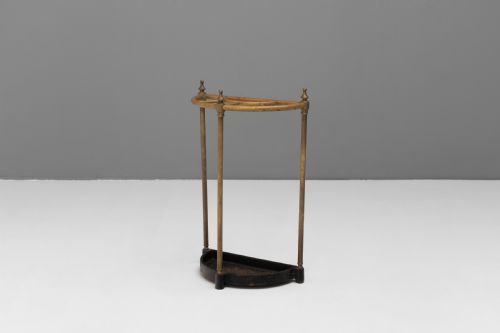


Demi Lune Cane Holder
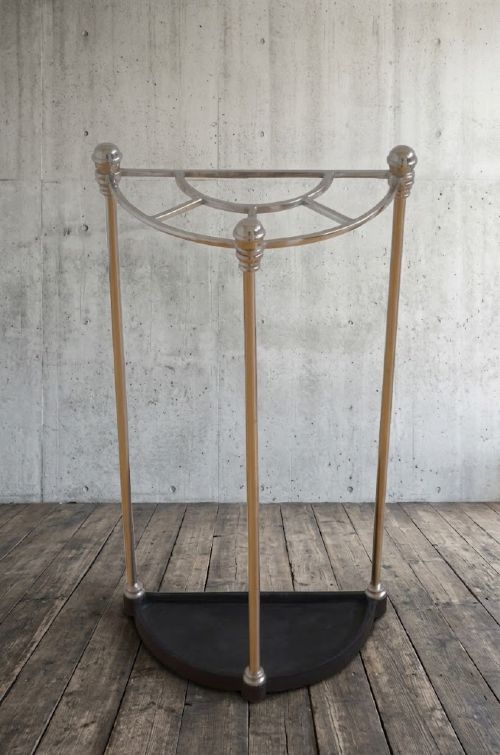
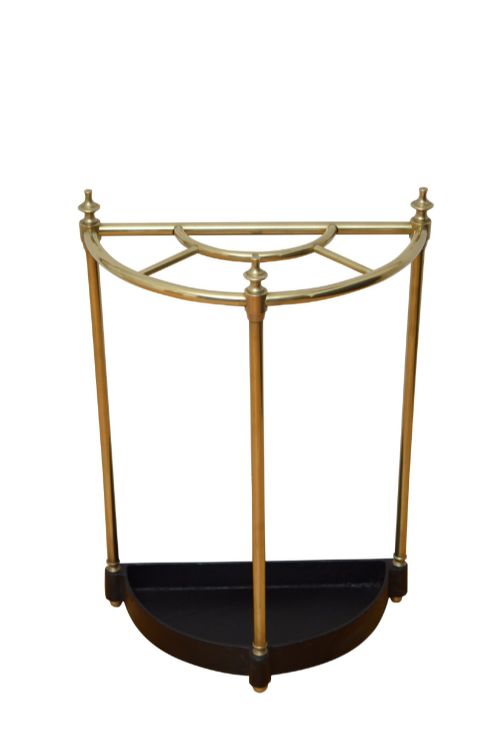
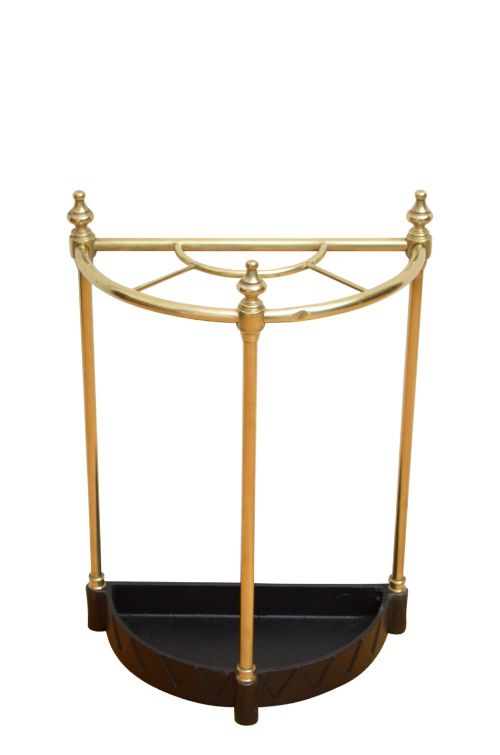
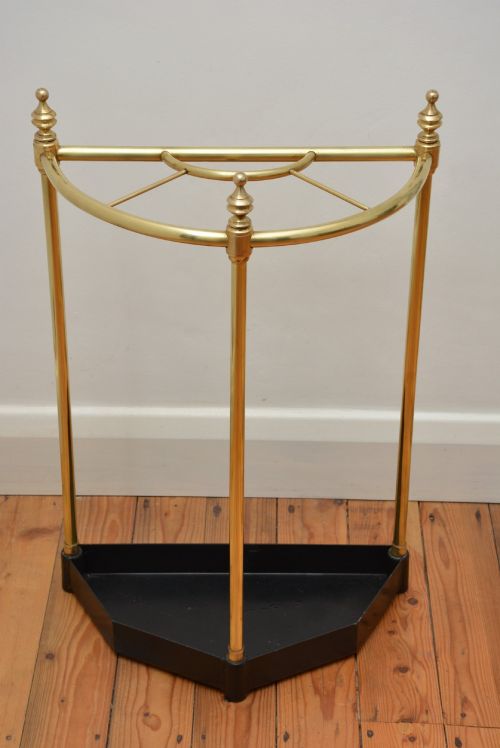
These demi lune cane holder pieces are half-moon hallway furnishings designed to hold walking sticks and umbrellas neatly against a wall.
Demi Lune Cane Holder
A demi lune cane holder is a semicircular hallway furnishing designed to fit flush against an entryway wall while holding walking sticks and umbrellas. These hall pieces emerge from the Victorian, Edwardian, and Art Deco periods, spanning the late nineteenth and early twentieth centuries.
Most examples encountered on this page utilise brass, cast iron, or nickel plating, often paired with a drip tray to catch rainwater. The forms range from simple brass stick loops to robust country house hall stands incorporating oak and zinc.
Makers in Britain and Scotland produced these half-moon stands to manage hallway clutter in townhouses and country estates alike. The surviving inventory reflects designs with multiple divisions to keep individual canes upright and separated.
Materials and construction
Construction relies heavily on cast and tubular brass, frequently shaped into semi-circular frames with integrated loop dividers. Manufacturers utilised cast iron for added weight and stability in the base, ensuring the stand remains upright when loaded with heavy walking sticks.
Several pieces incorporate timber such as oak for the main body, complemented by metal trays designed to catch moisture from wet umbrellas. Nickel plating appears on later Art Deco pieces, providing a bright reflective finish over the underlying metal.
Demi Lune Cane Holder Retail Price Guide 2026
Typical asking prices for demi lune cane holder among the pieces listed under this phrase on Sellingantiques today, from the lower quarter to the upper quarter. They describe what is for sale here now, not the wider market.
Many a Victorian hall stand secretly yearns to catch a sword stick rather than a mere umbrella.
Factors separating standard pieces from finer examples
Quality rests on the integrity of the structural metalwork and the presence of decorative stylistic details like Art Nouveau curves or specific dog tooth trays. Simpler utilitarian brass loops differ markedly from elaborate country house hall stands that combine multiple materials such as oak and zinc.
The sophistication of the division framework determines how well the stand organises sticks without tangling handles. Heavier base construction and intact original drip trays indicate superior workshop output from the Victorian era onward.
The Demi Lune Cane Holder Glossary
- Demi-lune
- A half-moon shape characteristic of these hallway stands. This curved profile allows the furniture to sit flat against a wall.
- Stick loop
- The upper metal ring or division that holds walking sticks and umbrellas in place. These loops keep the canes separated.
- Drip tray
- The bottom receptacle designed to catch water from wet umbrellas. Trays protect hallway floors from moisture damage.
- Dog tooth tray
- A specific patterned tray border found beneath certain umbrella stands. This decorative edge enhances the visual appeal of the base.
Demi Lune Cane Holder: Frequently Asked Questions
What is a demi lune cane holder?
A demi lune cane holder is a semicircular stand built to hold walking sticks and umbrellas in a hallway. Its flat back allows it to stand against an entryway wall.
These pieces use metals like brass and cast iron alongside wooden frames to organise hall items effectively.
How do I date a brass cane holder?
Dating relies on stylistic clues and construction methods spanning the Victorian, Edwardian, and Art Deco eras. Art Deco pieces often feature nickel plating and geometric divisions.
Earlier Victorian and Edwardian examples lean towards heavy cast brass or incorporate oak and zinc components.
Where were these umbrella stands placed?
These stands occupied the entrances of British townhouses and country estates. They provided a designated spot for guests to leave walking sticks and wet umbrellas.
The half-moon footprint ensured the furnishings saved floor space in narrow hallways.
What materials make up these stands?
Materials include brass, cast iron, tubular metal, and nickel plating. Some larger hall stands also incorporate oak and zinc.
Metal components offered durability against daily wear from heavy walking canes and wet umbrella tips.