



Deep Seat Sofa
When you search for a deep seat sofa, you find substantial nineteenth and twentieth-century English seating built for long hours of lounging.
Deep Seat Sofa
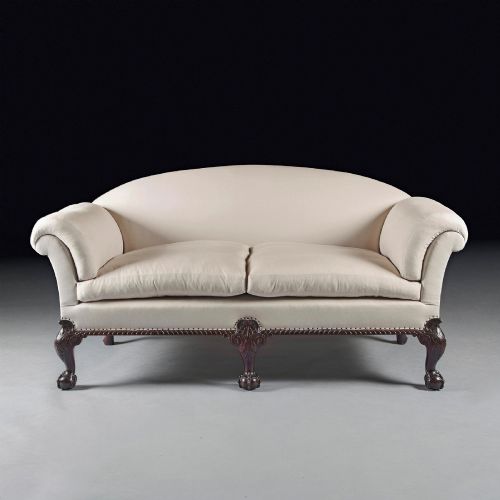
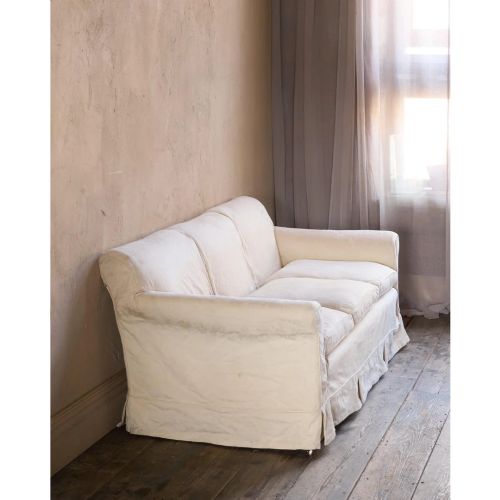
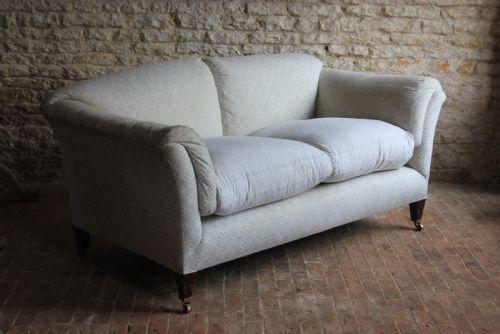
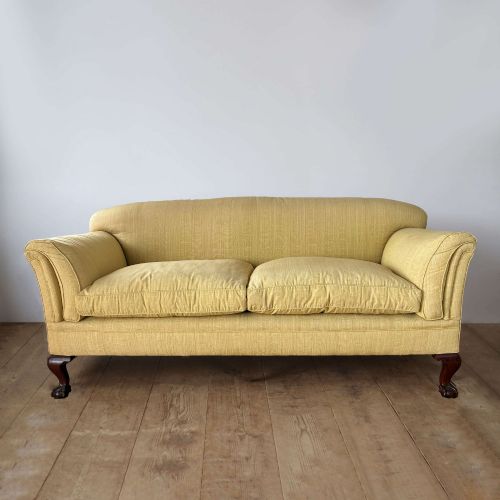
A deep seat sofa provides an extended platform for lounging, frequently appearing in traditional English country house interiors from the Victorian, Edwardian, and 1930s periods. These substantial pieces are designed for comfort, offering generous proportions that distinguish them from standard parlor seating.
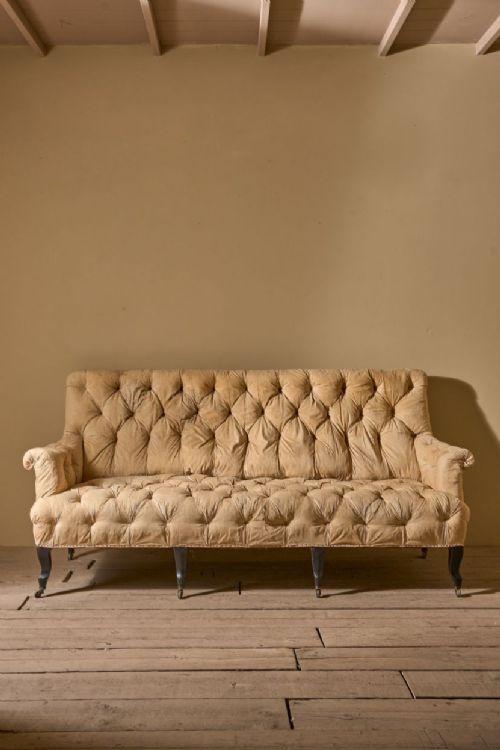
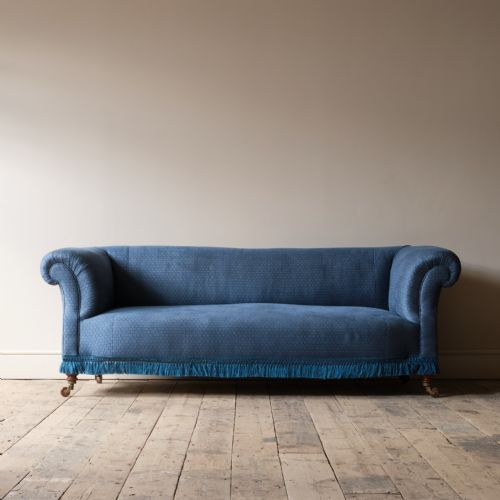
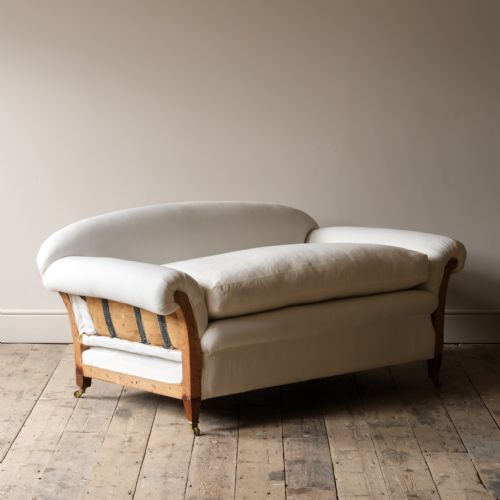
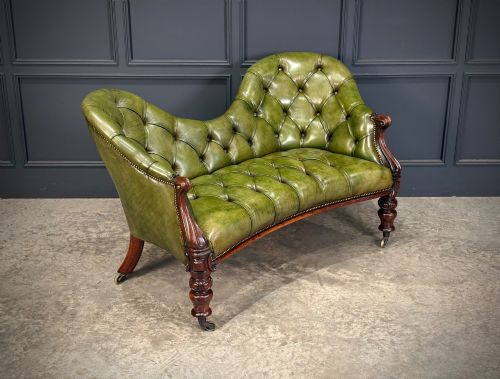
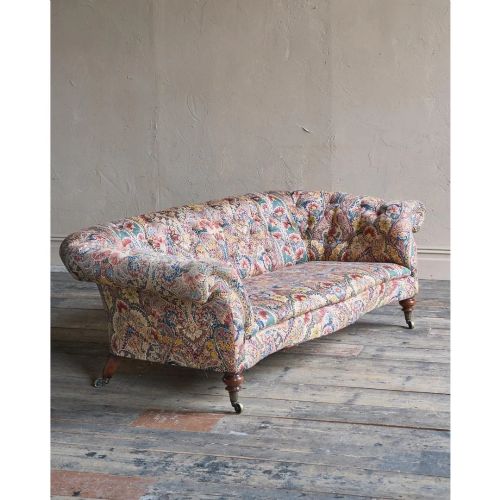
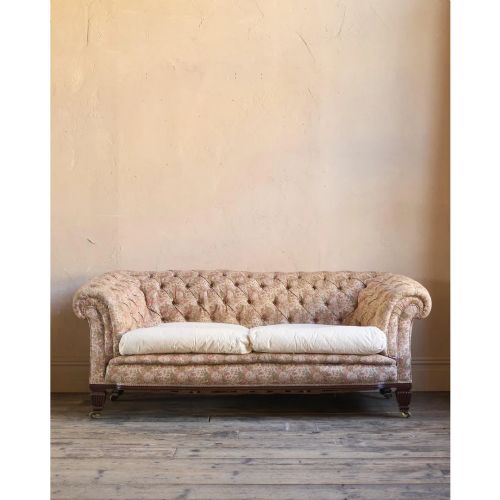
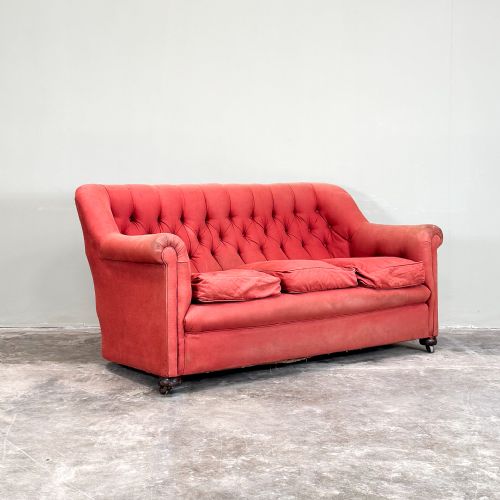
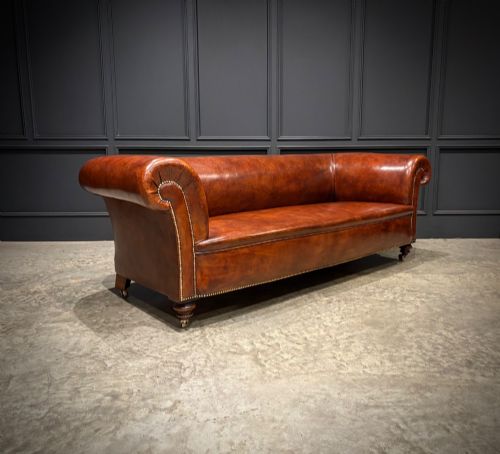
You will encounter various formats on this page, ranging from nineteenth-century Chesterfield and button-back settees to early twentieth-century country house models upholstered in ticking, velvet, or leather. Many examples incorporate low wooden frames standing on casters or ball and claw feet.
Origins stretch from formal Victorian drawing rooms to relaxed country houses, with makers ranging from notable London workshops to provincial cabinet makers. The common thread across these pieces is the pronounced depth of the seat, which separates them from conventional settees of the same eras.
Materials and construction
Frames are constructed from sturdy timbers such as mahogany, walnut, oak, and general hardwoods, providing a rigid skeleton to support heavy upholstery. Traditional coil springs and horsehair stuffing form the dense interior padding, often finished with feather down cushions for softness.
Upholstery materials recorded in the evidence include supple leather, heavy velvet, damask, calico, and robust cotton ticking. Exposed wooden elements frequently feature turned legs, brass casters, or hand-carved ball and claw details.
Techniques relied on deep buttoning, hand-tacking, and rigorous internal webbing to maintain structural integrity under heavy daily use. Makers utilised durable textiles designed to withstand decades of sitting and lounging.
Several Victorian conversational sofas allowed two people to sit close while facing opposite directions without awkward neck twisting.
Assessing craftsmanship and proportion
Quality in a deep seat sofa rests primarily on the integrity of the internal frame and the resilience of the traditional spring system. Pieces with robust hardwood frames and undisturbed original webbing or stuffing hold their shape far better over generations.
The harmony of proportions also defines superior examples, where the generous depth of the seat balances comfortably with the height of the back and arms. Finer pieces display carefully turned wooden legs, crisp carving, and precise buttoning executed by skilled hands.
Originality of upholstery materials and surviving maker stamps add significant distinction, separating standard utility pieces from high-workshop commissions.
Howard and Sons·Gillows·Maple and Son·Hampton and Sons·Whytock and Reid
The Deep Seat Sofa Glossary
- Chesterfield
- A traditional upholstered sofa characterised by arms and back of the same height and deep button tufting. This form remains a staple of nineteenth-century English seating design.
- Button-back
- An upholstery method where buttons are pulled deep into the padding in a diamond grid pattern to secure the filling and create a textured surface. This technique adds both visual rhythm and firm support to the backrest.
- Ticking
- A tightly woven cotton or linen fabric traditionally used as a durable foundation cover beneath outer upholstery. It frequently appears on unrestored country house pieces in its original striped pattern.
- Chaise longue
- An upholstered seating form combining a chair with an elongated seat for reclining. Nineteenth-century variants often feature a single scrolled end and exposed wooden framing.
- Ball and claw
- A furniture foot carved to resemble a bird's talon clutching a ball, popular on eighteenth-century designs and later revival pieces. This detail often anchors heavy nineteenth-century frames.
Deep Seat Sofa: Frequently Asked Questions
How do I identify a country house sofa?
Country house sofas generally present relaxed, generous proportions designed for domestic comfort rather than formal reception rooms. They often feature deep seats, low profiles, and unpretentious upholstery like ticking or faded velvet.
Look for evidence of long use and traditional upholstery methods beneath the surface, such as hessian webbing and hand-tied springs. These pieces evolved through generations of family living rather than strict adherence to court styles.
What is the difference between a settee and a sofa?
Historically, a settee described a two-seater wooden or upholstered bench with a back, while a sofa denoted a fully upholstered piece designed for reclining. Over time, the terms have become largely interchangeable in descriptions.
In older listings, settees often emphasise exposed wooden frames and upright seating, whereas deep seat sofas prioritize plush padding and lounging proportions.
Are original un-restored pieces better?
Original un-restored pieces retain their authentic internal stuffing, webbing, and fabric layers, which appeals to collectors who value untouched provenance. This state allows a restorer to see exactly how the maker intended the piece to be constructed.
Conversely, a professional restoration ensures the internal springs and support systems are sound for daily sitting. The choice depends on whether historical preservation or immediate domestic utility is the priority.
How do I care for antique leather upholstery?
Antique leather requires gentle cleaning with a damp cloth and periodic treatment with appropriate leather dressings to prevent drying and cracking. Avoid harsh chemical cleaners and keep the material away from direct heat sources.
Allowing the leather to breathe and maintaining a stable room environment preserves the natural patina accumulated over a century or more.