


Decorative Wooden Chairs
These decorative wooden chairs bring warmth, character, and distinctive period craftsmanship into a room.
Decorative Wooden Chairs
Decorative wooden chairs encompass an eclectic mix of seating forms spanning the nineteenth and early twentieth centuries, including armchairs, hall chairs, side chairs, and spinning chairs. Makers utilised varied woods such as mahogany, walnut, oak, satinwood, rosewood, and yew to construct these functional yet ornate pieces. Styles range from Victorian and Edwardian to Renaissance Revival, Regency style, Arts and Crafts, and Moroccan influences.
Buyers encountering this selection will frequently find Edwardian and Victorian pieces alongside specialist forms like X-frame armchairs, bobbin chairs, and inlaid occasional seating. Regional expressions and revival aesthetics appear throughout, showing the broad appeal of ornamental woodwork across different decades.
The category extends beyond standard seating to incorporate window seats, benches, settees, and even sedan chairs, all sharing a strong decorative focus. These items often feature hand-painted surfaces, bone inlay, intricate carving, or turned elements that elevate them above plain utility.
How they were made
Cabinetmakers and joiners constructed these frames using solid hardwoods like mahogany, walnut, and oak, often employing traditional joinery alongside applied decorative elements. Surfaces frequently received detailed hand-painting, elaborate wood carvings, or contrasting wood veneers.
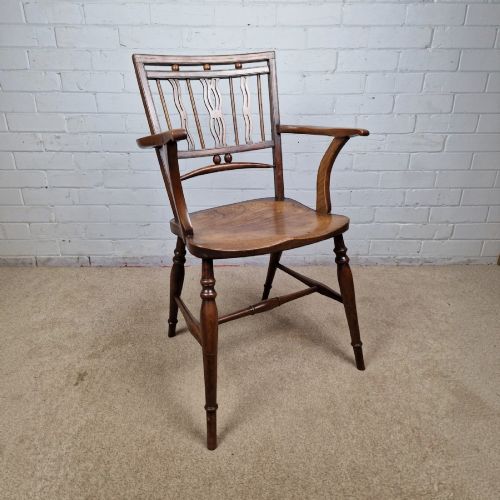
Inlay work incorporating satinwood, bone, or other contrasting materials added visual complexity to smooth timber planes. Turned components, such as the distinctive bobbins on nineteenth-century frames, relied on lathe work to create tactile, repeating profiles.
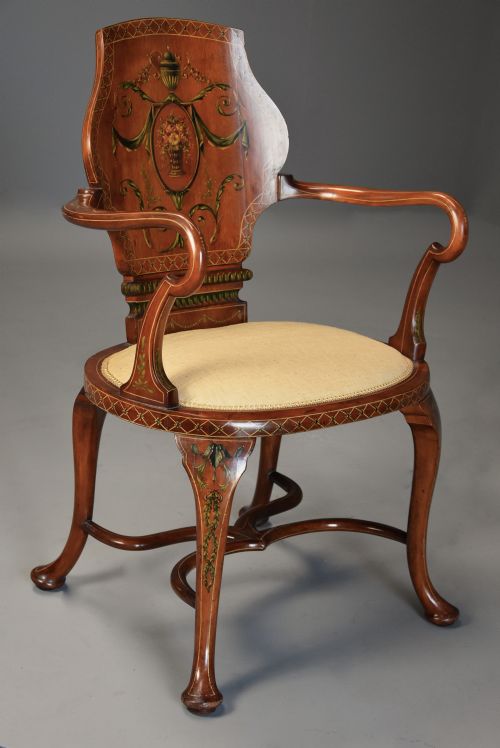
Upholstery and seating surfaces varied from woven cane panels to fabric pads, supporting the decorative ambition of each frame. Paint finishes applied to woods like beech or satinwood introduced colourful motifs and pictorial details.
Listings feature woods including mahogany, walnut, oak, satinwood, rosewood, and yew across nineteenth-century and Edwardian forms.
What varies in quality
The distinction between ordinary and exceptional pieces lies in the crispness of the carving, the precision of the inlay, and the integration of decorative motifs into the structural design. Superior examples display harmonious proportions where ornamental details complement rather than overwhelm the timber frame.
Hand-painted surfaces show variance in the skill of the brushwork, with finer pieces exhibiting delicate, controlled execution rather than simple stencilling or hasty application. The choice of primary timber and secondary woods also dictates the grade of the piece, with dense, well-figured mahogany or walnut marking higher execution.
The Decorative Wooden Chairs Glossary
- Splatt
- The central vertical slat in the back of a chair, often shaped, carved, or painted. It provides lumbar support while offering a primary surface for decorative embellishment.
- X-frame
- A chair construction utilising intersecting diagonal members that form an X shape when viewed from the side. This ancient form saw revival during the Edwardian period for decorative occasional chairs.
- Inlay
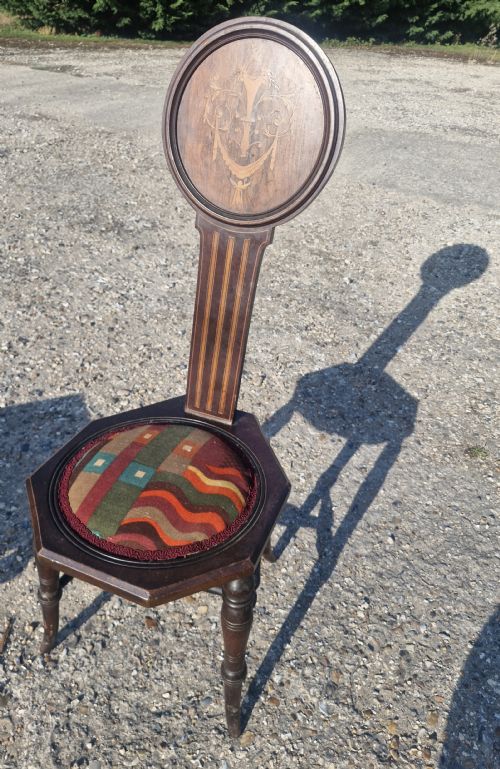
- A technique where pieces of a contrasting material, such as bone or lighter wood, are inserted into recesses cut into the primary wood surface. This creates flat, decorative patterns flush with the surrounding timber.
- Bobbin chair
- A seating form characterised by turned woodwork resembling a string of spools or bobbins. Popular in the nineteenth century, it relied on repeated lathe-turned spheres and cylinders.
- Hall chair
- A stiff-backed wooden chair designed for an entrance hall, typically featuring a solid timber seat and a heavily carved or painted back bearing family crests or decorative motifs.
Decorative Wooden Chairs: Frequently Asked Questions
What is a spinning chair?
A spinning chair is a low-seated wooden chair historically designed for women working at a spinning wheel. They often feature narrow, decorated backs and short legs.
Over time, these pieces became popular as decorative occasional chairs in Victorian and Edwardian parlours due to their compact size and intricate carving.
How do I identify an Edwardian chair?
Edwardian chairs typically date from the period between nineteen hundred and the First World War. They often combine lighter woods like satinwood or mahogany with painted decoration and delicate inlay.
These pieces frequently draw inspiration from earlier Georgian or Sheraton styles while maintaining the lighter proportions favoured at the turn of the twentieth century.
Where were hall chairs placed?
Hall chairs stood in the entrance halls of larger homes to offer brief seating for callers waiting to be announced. Because they were positioned in public areas, they were designed to impress visitors with bold carving, painted crests, or architectural wooden frames.
Their sturdy construction meant they were rarely moved into comfortable living spaces.
What is a Glastonbury chair?
A Glastonbury chair is a distinctive wooden armchair with a panelled back and an X-form understructure, often associated with Gothic Revival design. They draw inspiration from early medieval church furniture and historical artefacts.
These chairs use solid oak and deep mortise and tenon joints to create a heavy, architectural silhouette suitable for rustic or revivalist interiors.