





Decorative Landscape Art
Decorative landscape art brings the natural world indoors through centuries of diverse craft, from glass vases to oil paintings.
Decorative Landscape Art
Decorative landscape art encompasses a wide variety of objects that capture natural scenery across different periods and mediums. Buyers searching for this phrase encounter items ranging from oil paintings and watercolours to cameo glass vases and earthenware plaques.
The selections span multiple eras, with strong representation from the nineteenth and early twentieth centuries, alongside earlier seventeenth-century works. Forms include wall hangings, table screens, architectural prints and decorative vessels.
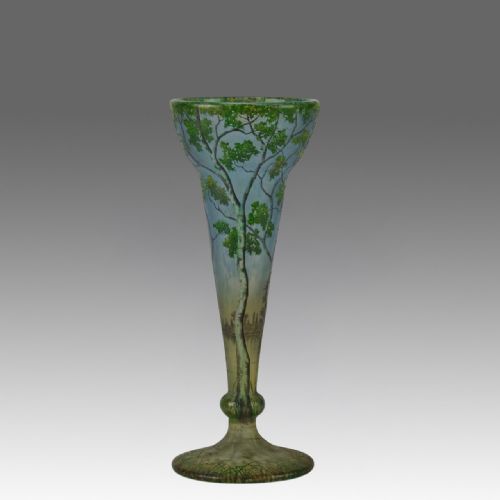
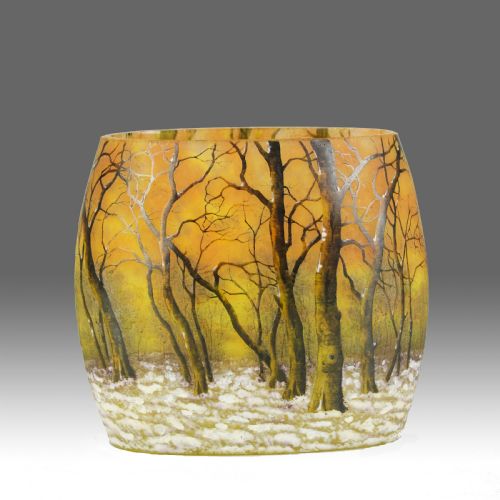
Glassware featuring scenic motifs forms a prominent group, particularly pieces produced during the Art Nouveau and Art Deco movements. These range from acid-etched glass to leaded window panels depicting woodlands and rivers.
Materials and Techniques
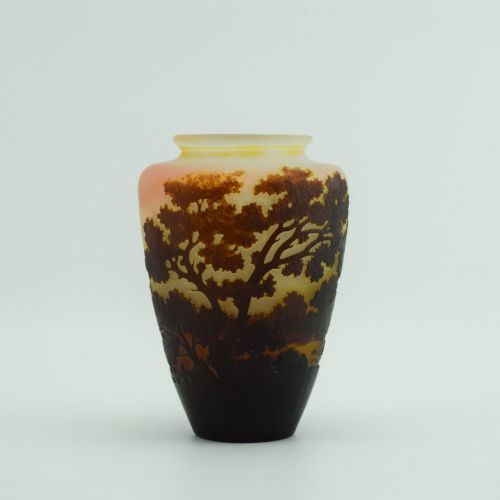
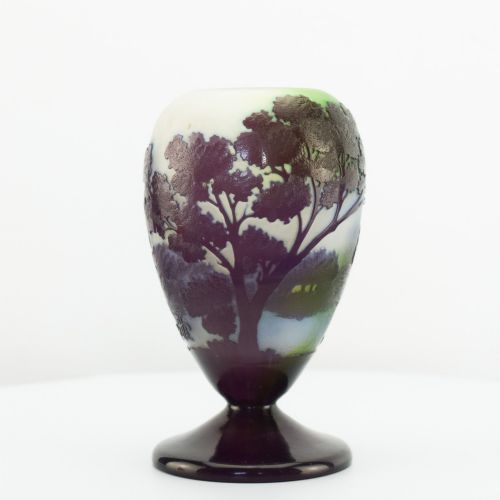
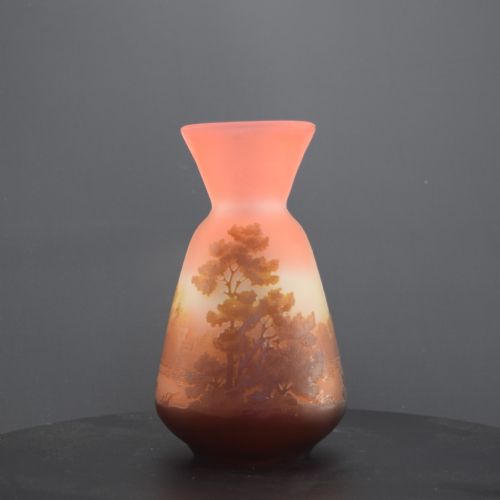
The creation of these pieces relies on diverse artisanal methods, combining traditional painting, glassblowing, and textile weaving. Cameo glass items utilise multi-layered acid-etching techniques to reveal intricate landscape designs in relief.
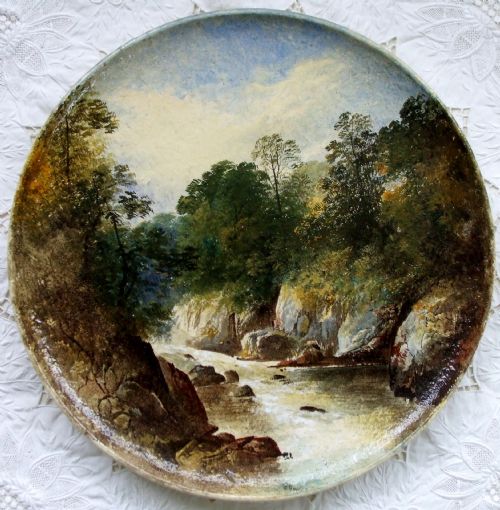
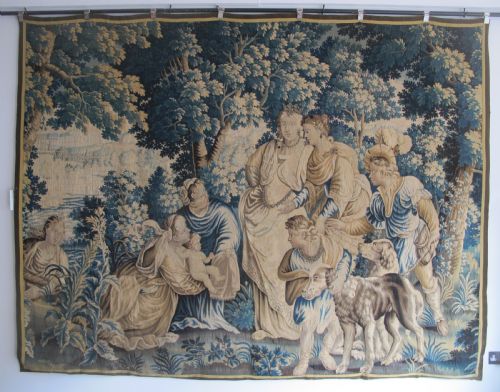
Pottery plaques and earthenware plates employ hand-painted enamels and underglaze decoration applied to fired ceramic bodies. Textile works such as tapestries and silk screens combine fine wool and silk threads to build detailed pictorial compositions.
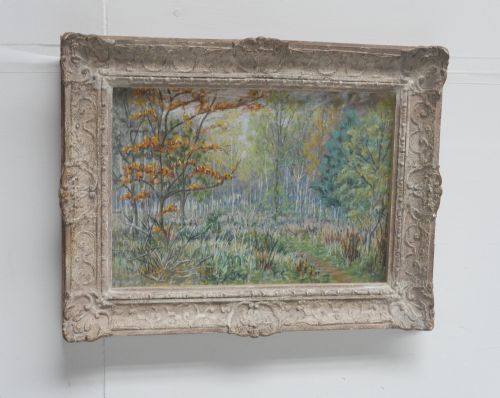
Works on paper and canvas utilise oil, pastel, watercolour, and lithographic printing to render topographical views and pastoral scenes. Wood and metal are frequently used for framing, carved stands, and cloisonné vessels.
Decorative Landscape Art Retail Price Guide 2026
Typical asking prices for decorative landscape art among the pieces listed under this phrase on Sellingantiques today, from the lower quarter to the upper quarter. They describe what is for sale here now, not the wider market.
Listings feature periods spanning from the seventeenth century through to the mid-twentieth century, alongside materials like cameo glass, wool, and earthenware.
Assessing Quality and Execution
Quality in these works is determined by the precision of the execution and the skill of the handling in the chosen medium. In cameo glass and ceramics, the depth of detail, subtlety of colour shading, and clarity of the motif distinguish superior examples.
For paintings and prints, the finesse of the brushwork, the preservation of the pigments, and the compositional balance dictate the standard of the piece. Maker attribution and original signing further elevate the standing of individual works within their respective categories.
Daum Freres·Galle·Legras·Clarice Cliff·Ando
The Decorative Landscape Art Glossary
- Cameo Glass
- A form of glassware produced by encasing a glass vessel in one or more layers of contrasting colour and carving or acid-etching the outer layer to create a design in relief. This technique gained immense popularity during the Art Nouveau period.
- Cloisonne
- An ancient technique for decorating metalwork objects with colourful materials held in place by thin metal strips welded to the base. Artisans fill the resulting compartments with enamel before firing.
- Earthenware
- A type of pottery fired at relatively low temperatures, remaining porous until glazed. Copeland pottery plaques provide notable examples of this medium decorated with scenic views.
- Lithography
- A planographic printing process based on the repulsion of oil and water, used to produce multi-coloured prints and illustrations. It allowed for the accessible reproduction of landscape art during the nineteenth century.
- Tapestry
- A form of textile art woven by hand on a loom, featuring pictorial designs created by interweaving warp and weft threads. Historically employed both for wall decoration and insulation.
Decorative Landscape Art: Frequently Asked Questions
What periods do these pieces span?
The items range from seventeenth-century oil paintings and tapestries to twentieth-century glass and pottery. Nineteenth-century works are particularly common.
Production methods shift across these eras, moving from traditional hand-woven textiles and oil canvases to industrial glass techniques and earthenware plaques.
How should I display a glass landscape vase?
Glass vessels benefit from placement near natural light sources that illuminate the layered colours and etched motifs. Window panels and vases with translucent qualities respond especially well to direct daylight.
Ensure stability by placing them away from heavy foot traffic areas, particularly when dealing with footed or delicate glass forms.
Are textile pieces suitable for wall hanging?
Many of these pieces are specifically constructed as wall tapestries or panels designed for interior vertical display. They add texture and warmth to large wall surfaces.
Avoid hanging textiles in direct, strong sunlight to preserve the integrity of the wool and silk fibres over time.