


Decorative Glass Oil Burner
These decorative glass oil burner examples combine period illumination with tactile craftsmanship, offering a warm focal point for any room.
Decorative Glass Oil Burner
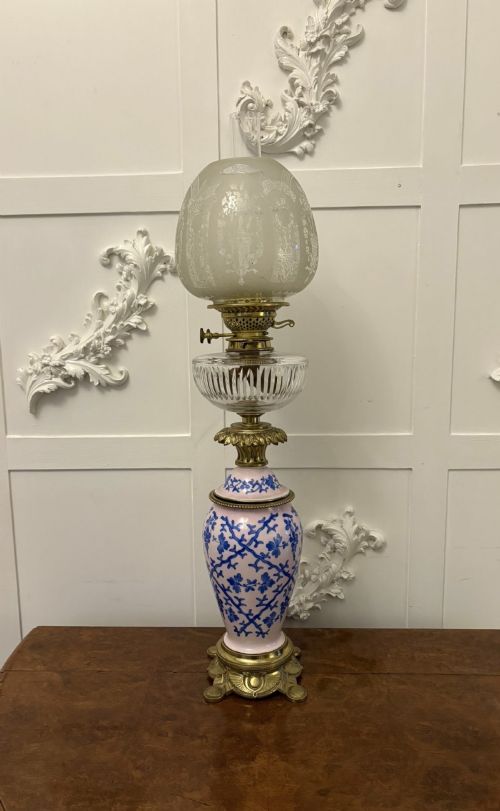
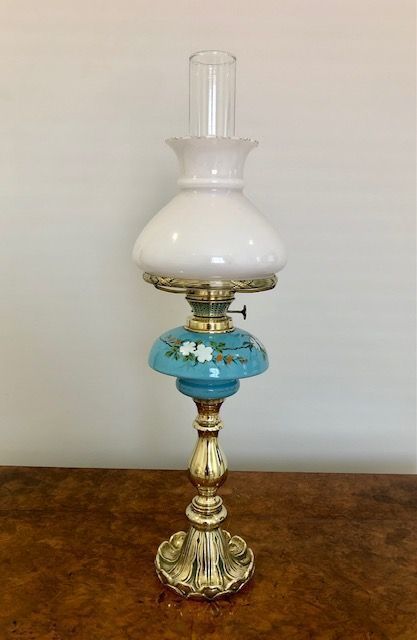
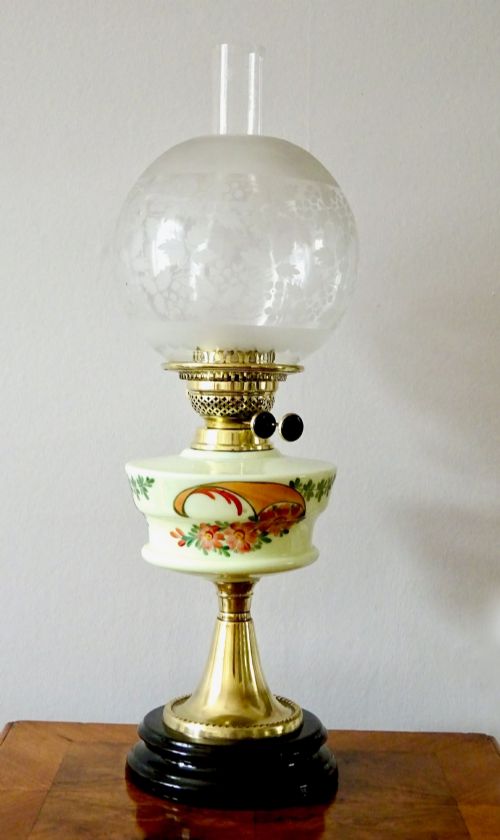
The selections on this page span the Victorian and Edwardian eras, with examples dating from eighteen sixty through to nineteen ten. You will encounter table lamps and oil lamps that incorporate glass reservoirs alongside ceramic, porcelain, brass, copper, and ebonised wood elements.
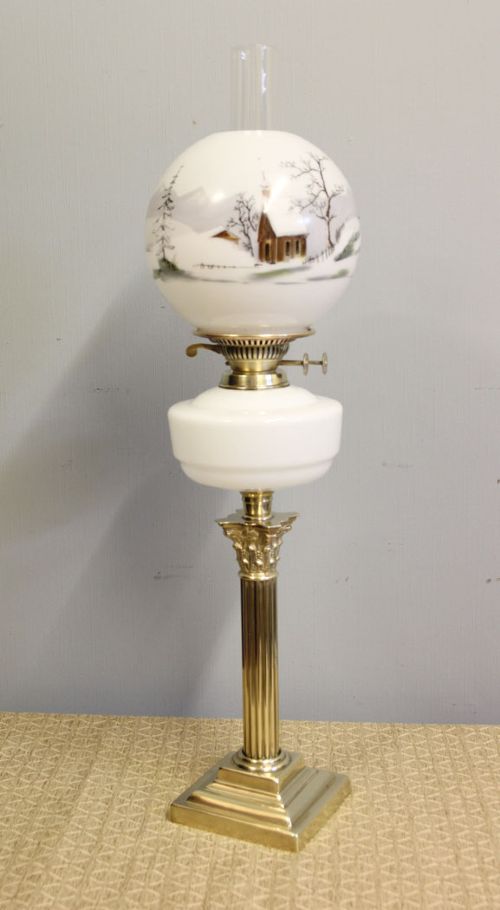
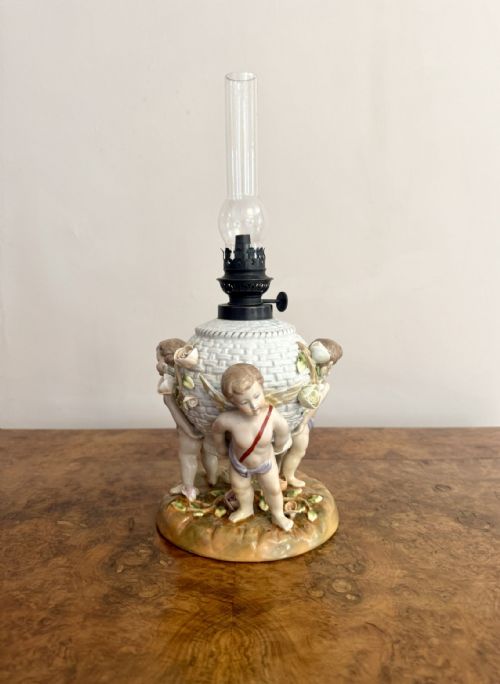
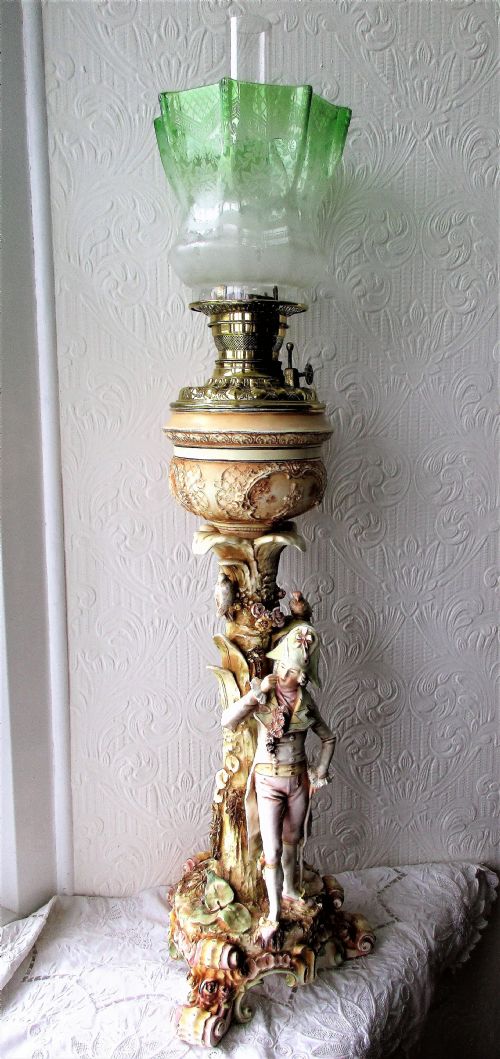
Most entries reflect the Victorian aesthetic, often featuring elaborately painted porcelain figures, Corinthian columns, and winter scene shades. These objects capture the domestic interior tastes of the nineteenth century, bringing period character and colour into modern spaces.
How they were made
Makers combined blown or pressed glass reservoirs with metal collars and heavy bases made from brass, copper, or ebonised wood. Porcelain and ceramic components were frequently hand-painted or glazed to introduce figurative details and seasonal scenes.
Structural elements relied on metal casting for columns and burners, while milk glass and opaline glass were utilised for shades and reservoirs to diffuse the flame's light softly across the room.
Listings span the Victorian and Edwardian periods, featuring materials such as brass, glass, porcelain, ceramic, milk glass, opaline glass, ebonised wood, and copper.
What varies in quality
The standard of modelling in the porcelain figures and the crispness of the brass or copper casting define the upper tiers of these pieces. Hand-painted details on shades and reservoirs show greater precision and depth in superior examples.
Material combination and weight indicate manufacturing ambition, where solid brass collars and substantial glass formations distinguish more substantial lamps from standard domestic lighting.
The Decorative Glass Oil Burner Glossary
- Milk glass
- An opaque, milky-white or coloured glass used for lamp shades and reservoirs. It diffuses light evenly and took various pastel shades during the Victorian period.
- Opaline glass
- A delicate, translucent glass with a milky appearance that often displays subtle fire-opalescence. It added a refined texture to decorative lighting components.
- Corinthian column
- A classical architectural style adapted for lamp stems, featuring ornate acanthus leaves on the capital. This design was popular in late nineteenth-century metalwork.
- Ebonised wood
- Timber treated to imitate ebony, providing a dark, contrasting base for brass and glass reservoirs. It offered stability and a sharp visual anchor for the lamp.
Decorative Glass Oil Burner: Frequently Asked Questions
How do I date an oil lamp?
Dating relies on stylistic clues, material combinations, and manufacturing patents marked on the burner mechanisms. Victorian examples often feature ornate porcelain or classical brass motifs, while Edwardian pieces lean towards simpler lines.
Examining the construction of the collar, wick knob, and glass-blowing techniques helps narrow down the decade of production between eighteen sixty and nineteen ten.
Are these lamps still safe to burn?
Most antique lamps are sold for decorative display rather than functional daily lighting. Converting them for modern electrical use requires careful rewiring by a professional.
If retained for oil burning, the burner mechanism and reservoir integrity must be thoroughly checked to prevent fuel leaks and ensure safe operation.
What fuels did these lamps use?
Nineteenth-century lamps typically burned paraffin, kerosene, or colza oil depending on the specific decade and burner design. The introduction of Duplex burners allowed for brighter illumination using standard paraffin.
Fuel selection depended entirely on the internal wick mechanism housed within the brass collar.
How do I clean opaline glass safely?
Cleaning requires warm water and mild soap applied with a soft cloth to protect delicate surfaces and painted details. Abrasive cleaners must be avoided to prevent scratching the glass or removing hand-painted decoration.
Metal components should be polished separately with appropriate cleaners while taking care not to stain adjacent glass areas.