





Decorative Glass Jug
These decorative glass jugs bring colour and presence to a room, offering both practical service and striking display.
Decorative Glass Jug
When you search for decorative glass jug, you encounter Victorian and Edwardian vessels spanning the 1860s to the 1920s, with a strong showing of Victorian examples. These pieces serve as water jugs, claret jugs, dessert wine containers, and decorative ewers.
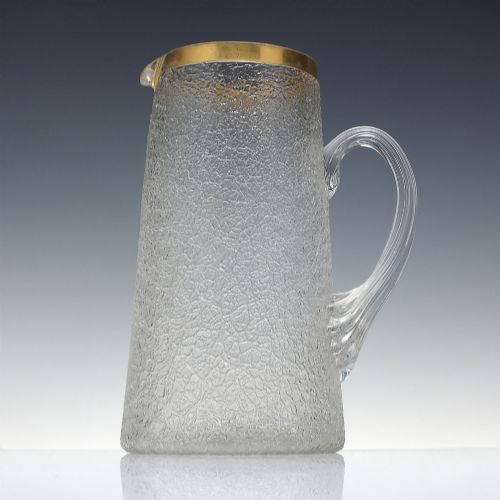
The forms range from tall overshot water pitchers with gilded rims to elaborate pairs of French ormolu and glass ewers, alongside smaller cream jugs with white piping.
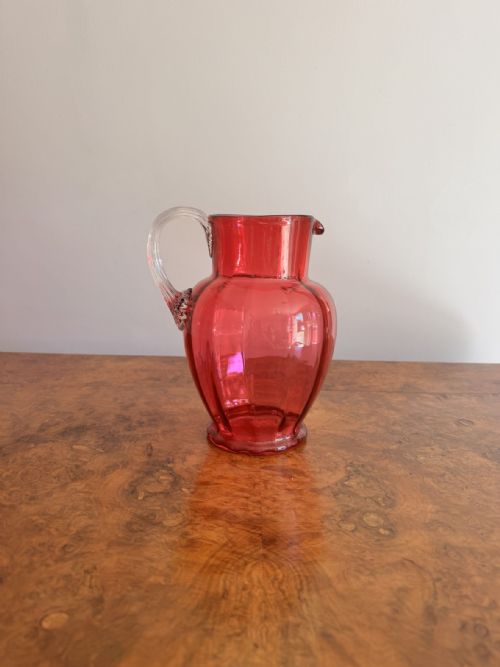
You are most likely to meet cranberry glass and clear cut glass vessels on this page, often mounted in silver plate or featuring enamel work.
How they were made
Makers utilised glassblowing and hand-finishing techniques to shape the vessels, often applying contrasting glass elements such as white piping directly onto the body while hot.
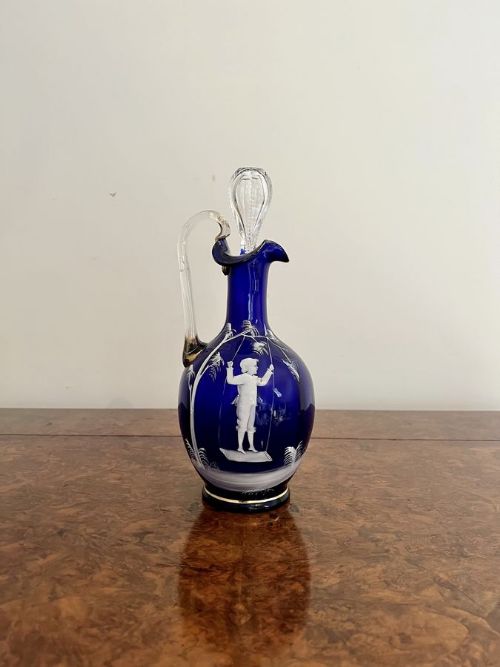
Many pieces incorporate metal components, combining glass with silver plate, silver mounts, or French ormolu, while others display surface enrichment through gold leaf and enamel painting like the Mary Gregory style.
Decorative Glass Jug Retail Price Guide 2026
Typical asking prices for decorative glass jug among the pieces listed under this phrase on Sellingantiques today, from the lower quarter to the upper quarter. They describe what is for sale here now, not the wider market.
Listings feature glass jugs from the 1860s through to the 1920s, spanning Victorian and Edwardian periods in clear and cranberry glass.
What varies in quality
Quality rests in the crispness of the glass cutting, the weight and clarity of the metal mounts, and the balance of the overall form. Stronger examples show deliberate execution in applied decorative details and secure integration between the glass body and its handle or collar.
The Decorative Glass Jug Glossary
- Ewer
- A large jug with a wide spout and a handle, traditionally used for holding water or wine at the table. These decorative forms often display ornate handles and mounts.
- Cranberry Glass
- A rich pinkish-red glass produced by adding gold chloride to the molten batch. It gained immense popularity during the Victorian era.
- Overshot Glass
- A technique where fine threads of glass are rolled onto the hot body to create a textured, frosted surface. This gives the glass a distinct tactile quality.
- Silver Plate
- A base metal coated with a thin layer of silver, commonly used for the handles, collars, and hinged lids of claret jugs and ewers.
Decorative Glass Jug: Frequently Asked Questions
How do I use a decorative glass jug today?
These pieces function well as water pitchers for the dining table or as standalone decorative objects on a sideboard or mantelpiece.
Their substantial presence and coloured glass catch the light, making them ideal focal points in a room without needing daily service.
How can I tell the Victorian pieces apart?
Victorian examples often feature vibrant cranberry glass, delicate enamel work, or heavy cut glass combined with silver-plated mounts. Their silhouettes lean towards ornate Victorian Rococo Revival or distinct mid-nineteenth-century forms.
Later Edwardian and early twentieth-century pieces shift slightly in proportion and mounting styles, reflecting changing domestic tastes.
Are these glass jugs safe for serving drinks?
Most of these historic vessels can hold liquids, though care should be taken with antique silver-plated mounts and delicate enamel decorations during washing.
Hand washing in lukewarm water preserves the metal plating and the fragile applied glass elements.