





Decorative Glass Bottle
When you search for a decorative glass bottle, you uncover a versatile collection of vessels spanning Victorian apothecary jars, scent bottles and desk inkstands.
Decorative Glass Bottle
A decorative glass bottle encompasses a varied selection of utilitarian and display vessels, ranging from Victorian scent bottles and French apothecary jars to desk inkstands and cruet sets. These pieces date primarily from the nineteenth century and the early twentieth century, reflecting domestic, medicinal and desk storage traditions of their eras.
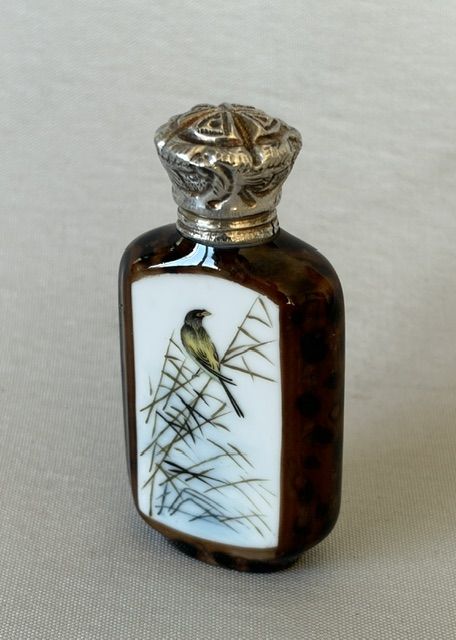
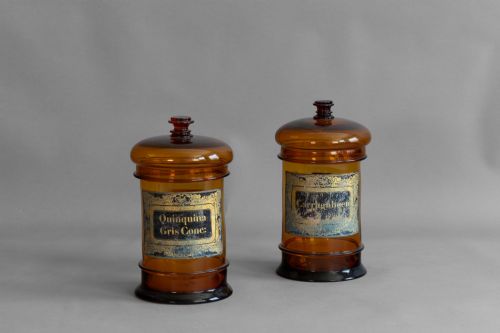
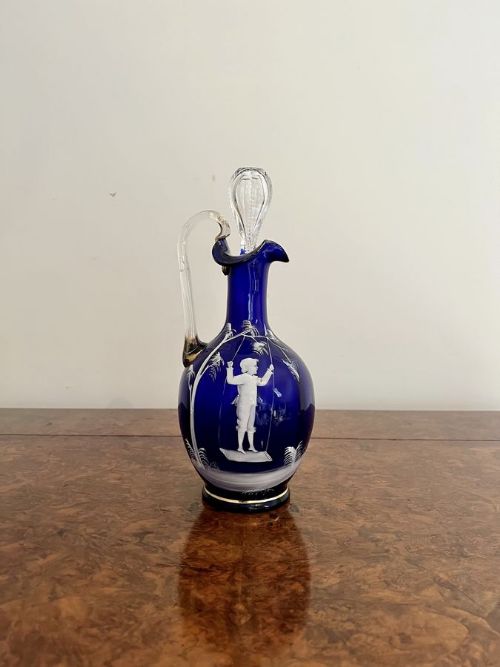
You are most likely to encounter practical containers made for specific uses, such as amber apothecary jars, black glass snuff bottles with aventurine inclusions, and blue glass decanters featuring Mary Gregory enamel decoration. Alongside these standalone vessels, the selection includes fitted items like inkstands complete with original glass bottles and multi-bottle cruet sets mounted in silver or wood.
How they were made
Makers utilised mouth-blown and moulded techniques to shape the glass, sometimes incorporating internal elements like aventurine inclusions or applying delicate enamel paint to the surface. Vessels intended for display or refined domestic use often received metal mounts, ranging from silver collars on scent bottles to gilt bronze mountings on spirit barrels.
Associated desk stands and frames brought together disparate materials, pairing glass bottles with carved walnut wood panels, gilt bronze, and bespoke stands from periods spanning the Charles X era through to Art Nouveau designs.
Listings feature glass vessels from the 1860s through to the mid-twentieth century, including works by specific artists and makers.
What varies in quality
Quality in these pieces rests upon the crispness of the glass moulding, the clarity of the material, and the execution of surface embellishments such as hand-painted enamel work or silver and gilt bronze mounts. Pieces that retain their original fitted stands, stoppers, or matching sets demonstrate a higher degree of preservation.
The sophistication of the design period also shapes the character of the object, distinguishing utilitarian workshop containers from refined salon pieces like French amber apothecary jars or specialised scent barrels.
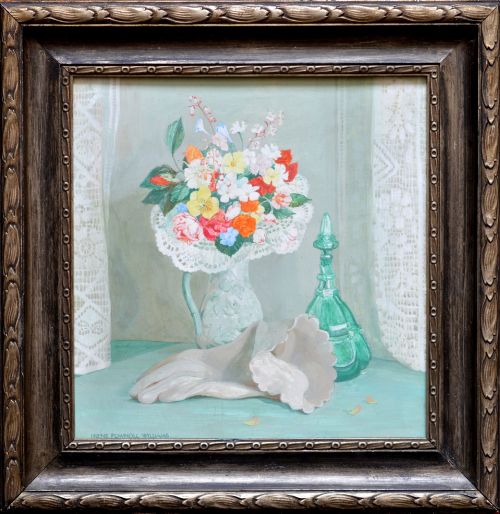
Irene Christobelle Pownoll Williams
The Decorative Glass Bottle Glossary
- Apothecary jar
- A vessel originally used by pharmacists to store medicines and dry ingredients. These containers frequently appear in pairs and feature heavy glass walls designed for preservation.
- Aventurine inclusion
- Metallic spangles suspended within the glass matrix, creating a glittering appearance. This technique is particularly associated with Venetian glass production.
- Cruet set
- A matched group of glass bottles or cruets held within a metal or wooden frame for table condiments. They typically date from the Victorian period.
- Mary Gregory glass
- Glassware decorated with white or tinted enamel silhouettes depicting figures in pastoral settings. This style gained popularity during the nineteenth century.
- Inkstand
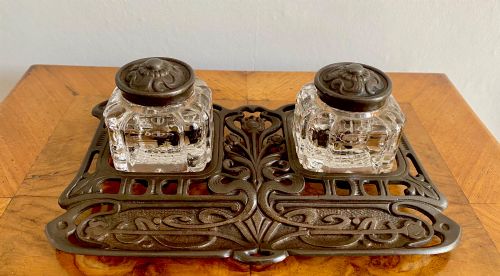
- A desk tray fitted with one or more ink bottles alongside pen rests. They are frequently constructed from wood like walnut with glass and metal components.
Decorative Glass Bottle: Frequently Asked Questions
What were apothecary jars used for?
Apothecary jars served as storage containers in pharmacies and dispensaries for holding dry drugs, liquids, and medicinal herbs. Their heavy glass construction protected the contents from light and moisture.
Over time, these utilitarian vessels transitioned into decorative objects valued for their uniform shapes, coloured glass, and historical labels.
How do I identify a Victorian scent bottle?
Victorian scent bottles are typically small handheld glass containers often fitted with hinged metal caps, screw-top lids, or silver mounts. They were designed to hold perfumes for personal use.
Many examples incorporate coloured glass, cut glass patterns, or enamel painted decoration characteristic of nineteenth-century manufacturing.
Where should I place an inkstand at home?
An antique inkstand works well on a traditional desk, writing table, or library bookshelf where its wooden base and glass bottles can be viewed closely. Keeping it away from direct sunlight protects any fitted wood and metal mounts.
These pieces integrate naturally into study spaces or as decorative focal points on living room side tables.
How do I tell an Art Nouveau stand apart?
Art Nouveau stands exhibit characteristic organic, flowing lines inspired by natural forms, frequently dated around the turn of the twentieth century. They often accompany original glass ink bottles designed specifically to fit the curved metal framework.
This aesthetic distinguishes them from earlier, more geometric Victorian designs and later mid-century styles.