


Decorative Dragon Porcelain
These decorative dragon porcelain pieces bring mythical power and historic craft into a room.
Decorative Dragon Porcelain
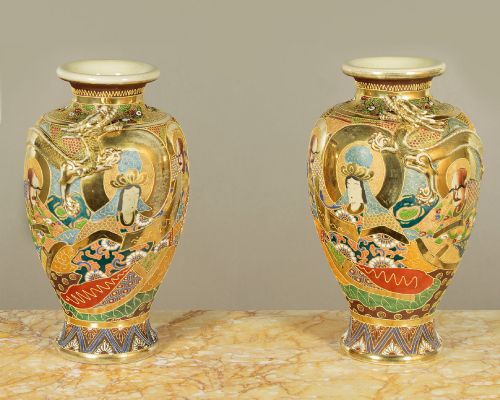
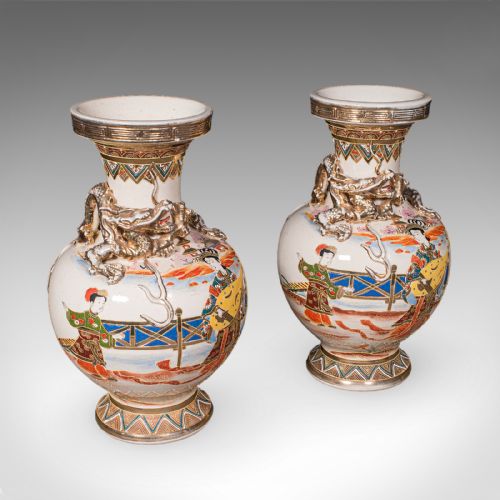
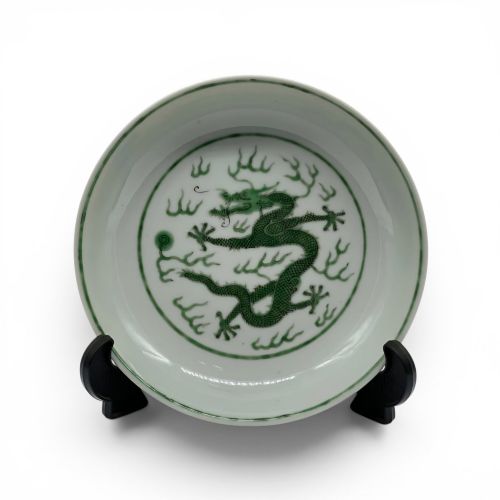
When you search for decorative dragon porcelain, you encounter a fascinating mix of English factories and East Asian workshops spanning the Georgian period through the 1930s. The selection on this page leans heavily toward English lustre bowls and Japanese ceramic vases featuring coiled and celestial dragons.
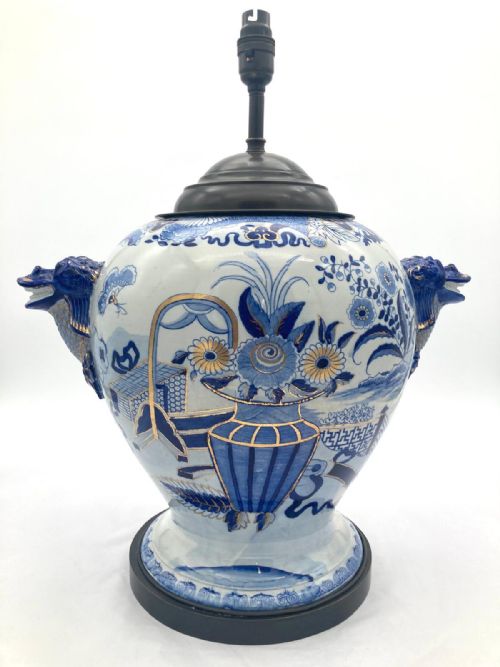
Forms range from large baluster vases and decorative plates to octagonal bowls and table lamps. You find pieces created in the Qing Dynasty style alongside British interpretations of Chinese export designs and Japanese Meiji production.
How they were made
Potters shaped porcelain, bone china, and ironstone into robust vessels before applying detailed glazes and enamels. Workshops utilised gold leaf and gilt highlights to accentuate the scales and movement of the painted dragons.
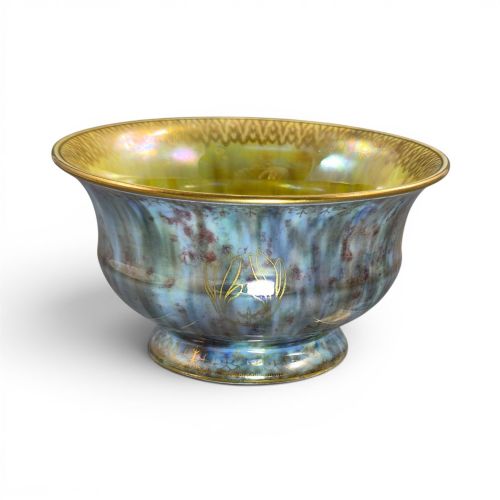
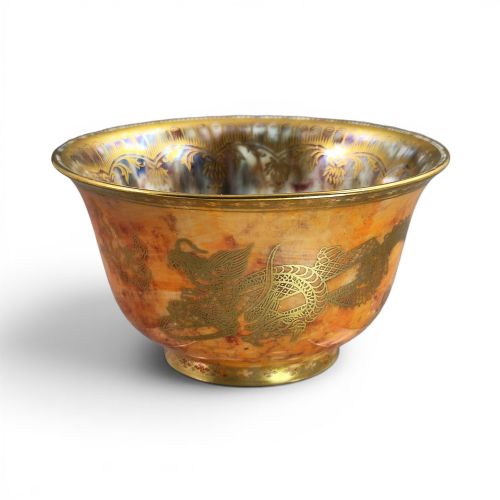
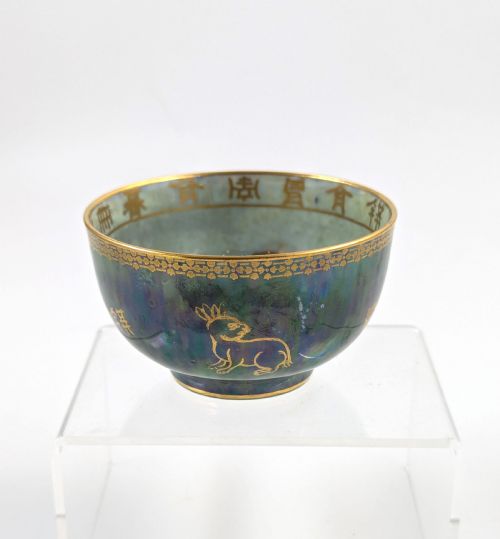
Lustre glazes required specialised firing techniques to achieve shimmering metallic finishes, particularly seen in English fairyland wares. Enamels were layered meticulously over the ceramic body to create rich colour contrasts.
Celestial dragons twist across these bowls with such fierce expressions that they appear ready to leap straight off the porcelain.
What varies in quality
Quality rests in the precision of the brushwork and the depth of the glaze rather than mere age. Master painters achieved greater fluidity in the drawing of the dragon, giving the creature a sense of vitality absent in stiffer, mass-produced examples.
The application of gilding and lustre determines the visual weight of a piece. Finer items display crisp detailing in the compartments and scales, whereas lesser examples show muddied colours and flat surfaces.
Hicks and Meigh·C.J. Mason·Royal Worcester·Wedgwood·Fukagawa
The Decorative Dragon Porcelain Glossary
- Baluster
- A tall ceramic form with a rounded body and a narrow neck. This shape provides a generous canvas for wrapping large dragon motifs around the vessel.
- Famille Rose
- A palette of opaque enamels dominated by pink or rose colours, originating in Chinese ceramics. It appears frequently on export vases and dishes.
- Lustre Glaze
- A type of ceramic glaze containing metallic oxides that produce an iridescent sheen. It was used extensively by English potteries in the early twentieth century.
- Chinoiserie
- European artistic styles reflecting Chinese motifs and decorative techniques. This style shaped many Georgian and Regency porcelain plates and vessels.
- Ironstone
- A heavy earthenware developed in England as a durable alternative to porcelain. It offers a dense body suitable for large decorative chargers and vases.
Decorative Dragon Porcelain: Frequently Asked Questions
What is decorative dragon porcelain?
These items are ceramic vessels, bowls, and plates decorated with mythical dragon motifs from various British and Asian traditions.
They encompass everything from Georgian export plates to Edwardian lustre bowls and Japanese Satsuma vases.
How were these pieces used?
Many objects served as ornamental centrepieces, chargers for display, or functional tableware in period homes.
Some larger vases and vessels were later converted into table lamps while retaining their original ceramic bodies.
How do I date these ceramics?
Dating relies on factory marks, glaze types, and stylistic indicators such as Art Nouveau or Regency Chinoiserie influences.
English lustre wares point primarily to the early twentieth century, while Meiji and Qing styles align with the nineteenth century.
Where were these dragons painted?
The decoration originates from both European potteries copying Eastern motifs and traditional East Asian workshops.
British firms like Wedgwood developed distinct fantasy interpretations, whereas Japanese kilns utilised traditional Meiji techniques.