



Decorative Brass Spark Screen
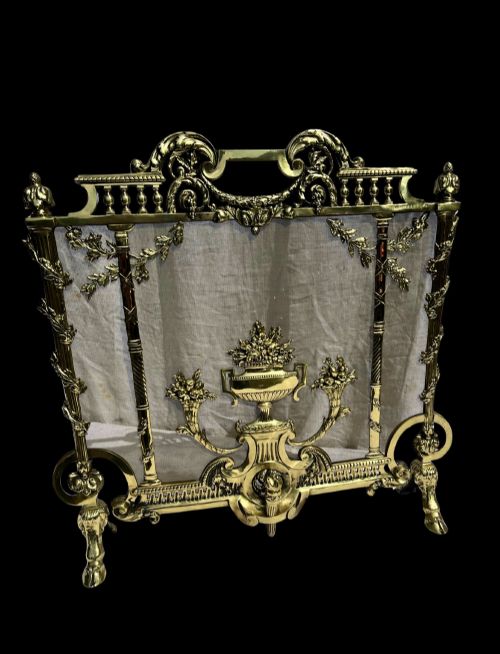
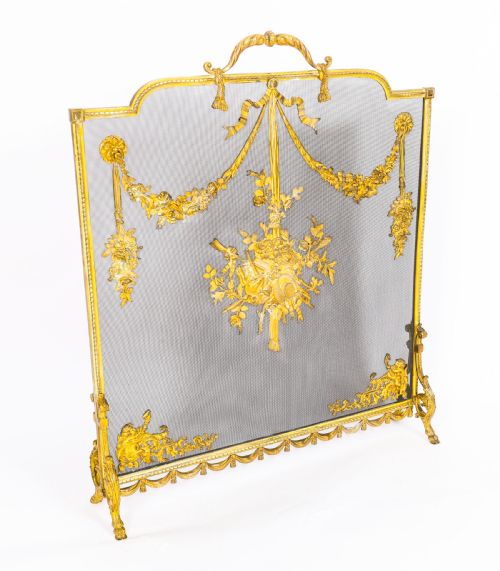
A decorative brass spark screen stands before a hearth to catch stray embers while bringing warmth and shine to a room.
Decorative Brass Spark Screen
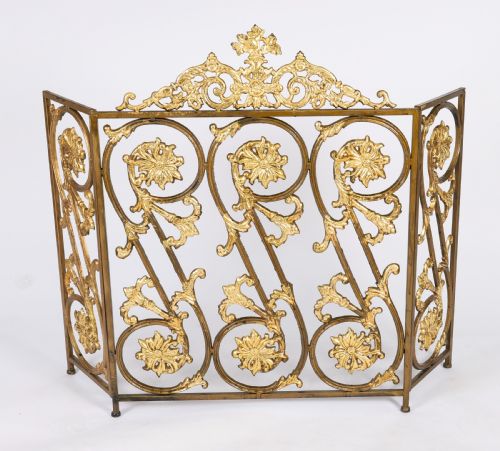
Origin and period define these hearth accessories, with French workshops contributing heavily to the ornate gilt bronze and ormolu examples seen here. Domestic English production leans towards practical folding fans and sturdy brass frames.
Materials and construction
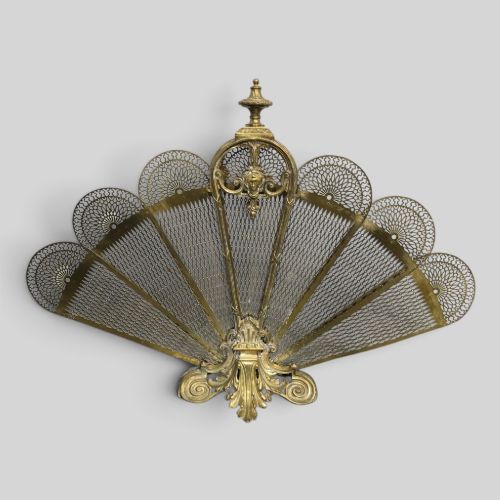
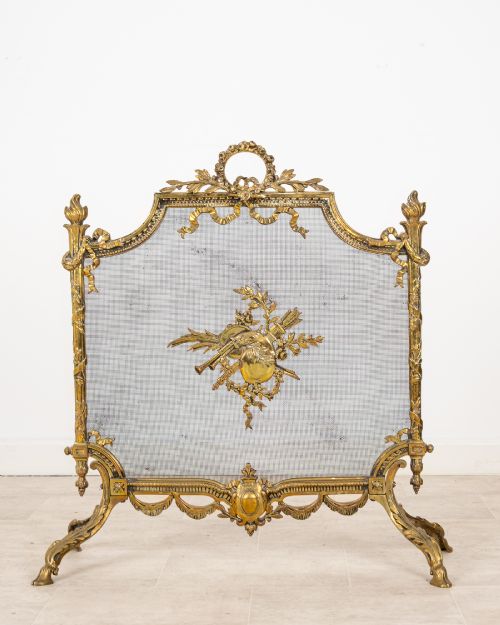
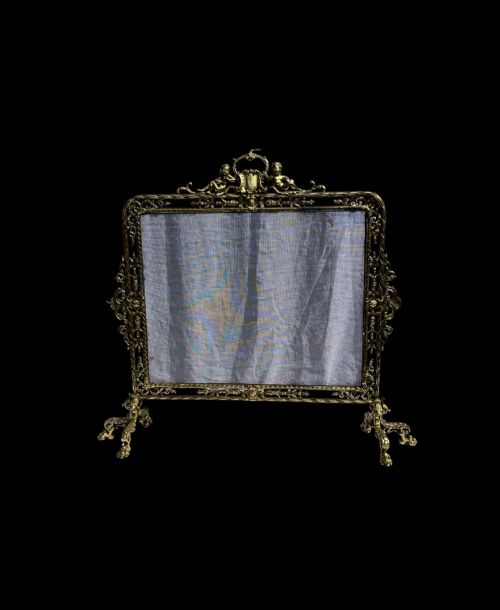
Makers utilised brass, gilt brass, and bronze as the primary structural and decorative metals, often combining cast brass frames with delicate wire mesh screens. Ormolu and gilt finishes provided a luminous surface that caught the flickering firelight.
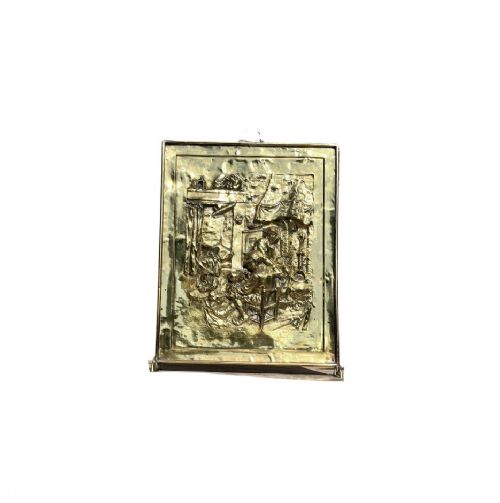
Construction techniques involved casting detailed motifs such as floral and musical trophies, then assembling the components with hinges to allow folding fan movements or gate-fronted access. Tapestry panels and cut glass sometimes integrated directly into the metal framework.
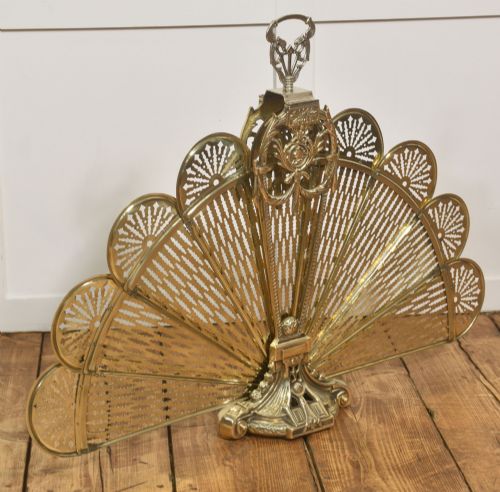
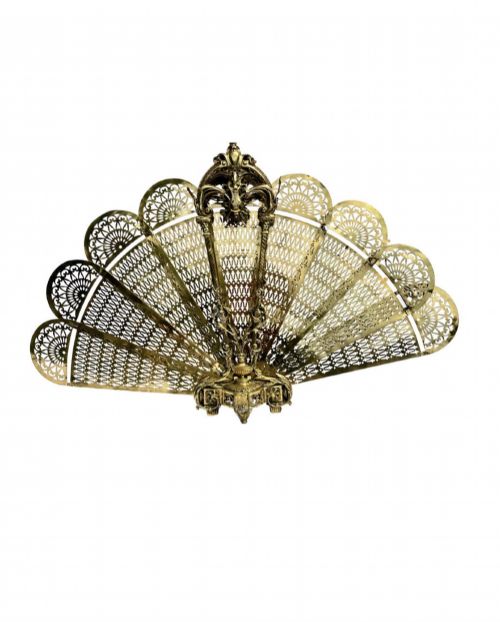
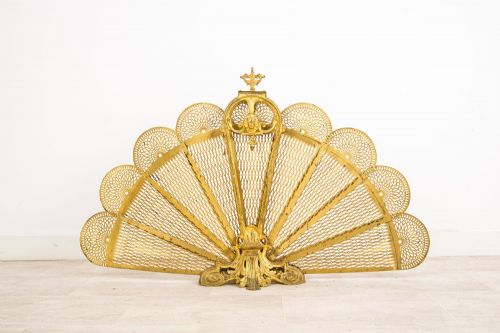
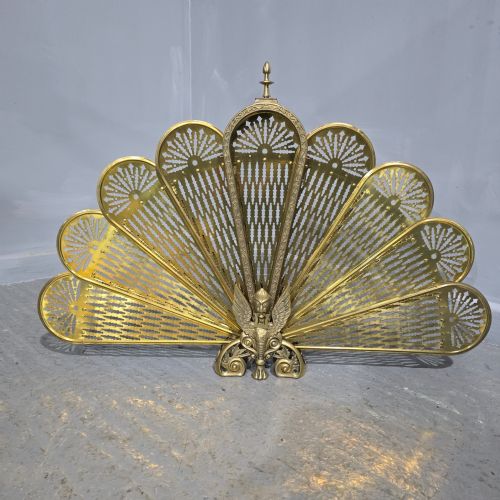
Several Victorian folding fan screens mimic the actual plumage of a peacock to bring avian theatre indoors.
Quality and craftsmanship
Quality rests upon the crispness of the cast brass decoration and the structural integrity of the folding mechanisms or hinges. Finer examples display deeply chased surface detail and substantial weight in the frame.
Design complexity also separates standard utilitarian guards from high-status French revival pieces featuring elaborate Rococo scrolls or integrated bronze trophies. The durability of the wire mesh and the precision of the folding fan blades indicate superior workshop production.
The Decorative Brass Spark Screen Glossary
- Spark screen
- A protective barrier placed in front of an open fire to catch flying embers. They utilise wire mesh or perforated metal to contain sparks while allowing heat to enter the room.
- Ormolu
- Finely ground high-carat gold applied to a bronze or brass object using a mercury amalgamation process. This technique creates a rich, durable golden finish popular in French decorative arts.
- Peacock fan
- A folding hearth screen composed of overlapping metal blades that open and close like a tail fan. This design gained immense popularity during the Victorian era.
- Rococo Revival
- A nineteenth-century design movement mimicking the asymmetrical, scroll-heavy aesthetic of the French eighteenth century. It employs C-scrolls, shell motifs, and naturalistic floral asymmetry.
- Fire guard
- A heavy protective barrier designed to prevent children and furniture from getting too close to an open hearth. They often double as decorative spark screens.
Decorative Brass Spark Screen: Frequently Asked Questions
How do I clean a brass spark screen?
Dust the wire mesh and metal frame regularly with a soft dry cloth to prevent soot buildup. Avoid harsh chemical cleaners that strip the original patina or damage gilt surfaces.
For stubborn tarnish on solid brass components, use a mild proprietary metal polish applied sparingly with a cotton swab. Keep polishes away from mesh areas and inset tapestry panels to prevent staining.
Are these screens safe to use with an active fire?
Many historical screens were manufactured primarily for decorative purposes or to cover unused hearths during summer months. Wire mesh panels can handle moderate ember containment if constructed robustly.
Check the integrity of the mesh and frame carefully before exposing antique metalwork to intense heat. Heavier nineteenth-century guards generally offer better structural reliability than delicate folding fan designs.
How do I date a brass fire screen?
Examine the stylistic cues, such as asymmetrical Rococo scrolls pointing to nineteenth-century French revival work or stylized floral motifs indicating Art Nouveau production around nineteen hundred. Construction methods like hand-cut screws or cast hinge joints also help narrow down the decade.
Victorian and Edwardian pieces often bear distinct manufacturing marks or patent numbers stamped into the reverse of the frame. Comparing the complexity of the casting work against known period pieces provides further chronological context.
What is the difference between a fire screen and a spark screen?
Traditional fire screens often functioned as decorative panels to block the heat of an unlit fireplace from reaching people seated nearby. They frequently incorporated solid panels of wood, embroidery, or glass.
Spark screens specifically integrate wire mesh or metal slats designed to permit airflow while stopping flying embers. Many nineteenth-century designs successfully bridged both categories by combining decorative brass frames with functional mesh.