



Decorative Brass Fender
A decorative brass fender sets the hearth with warmth, framing the fireplace while keeping stray embers at bay.
Decorative Brass Fender
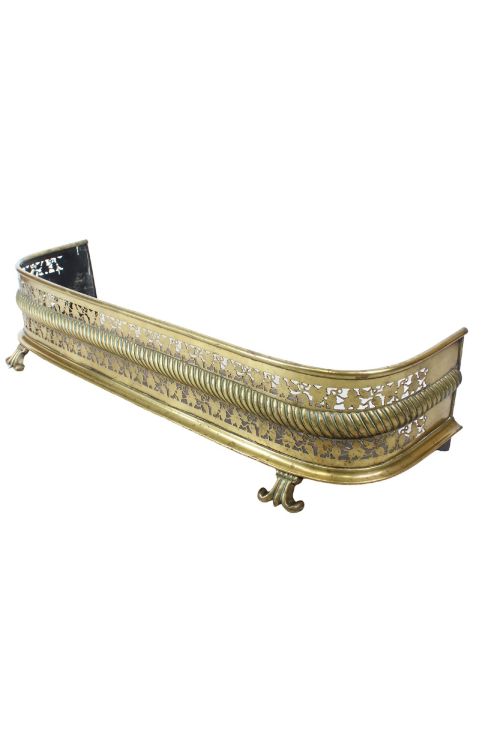
When you search for a decorative brass fender, you encounter essential fireplace furnishings from the Victorian, Edwardian, and nineteenth-century eras. These pieces sit directly on the floor in front of hearths to contain coal and ash while defining the fireplace centrepiece.
The most common examples on this page are Victorian pierced brass fire fenders, often designated as kerbs. These items combine practical hearth protection with ornate metalwork styles that reflect the aesthetic tastes of their period.
How they were made
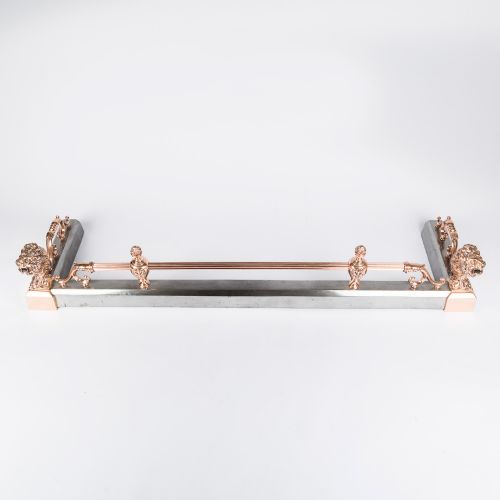
Maker construction relies heavily on sheet brass and cast iron, frequently pairing brass with steel or copper for contrast and structural strength. Pierced decoration dominates the metal surfaces, created by cutting intricate patterns directly through the sheet brass.
Certain pieces introduce bronze elements, wooden components, or polychrome finishes to add colour and texture to the metal framework. Gate-fronted designs incorporate hinged sections that allow easier access to the hearth floor.
Decorative Brass Fender Retail Price Guide 2026
Typical asking prices for decorative brass fender among the pieces listed under this phrase on Sellingantiques today, from the lower quarter to the upper quarter. They describe what is for sale here now, not the wider market.
Some nineteenth-century hearth guards come with built-in gates, proving that even coal containment required a formal doorway.
What varies in quality
Quality differences emerge in the crispness of the pierced metalwork and the weight of the underlying brass or steel structure. Heavier gauges of metal provide greater durability and indicate more substantial manufacturing effort.
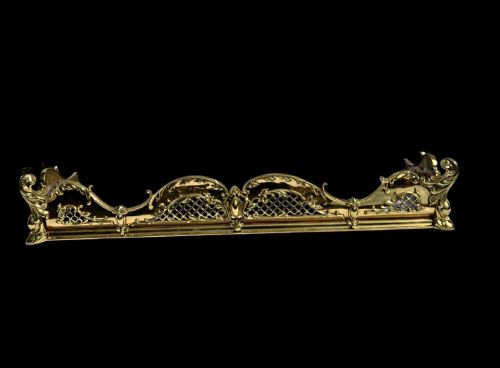
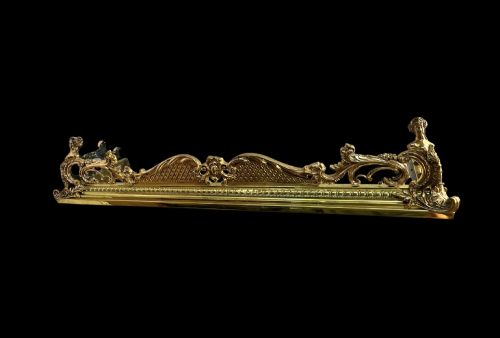
The complexity of the decorative style also separates standard items from more ambitious work, such as detailed Rococo Revival curves or Art Nouveau linear patterns. Better examples maintain integrated construction where mixed metals like copper and brass are joined with precision.
The Decorative Brass Fender Glossary
- Fender
- A low metal guard placed around the hearth to keep coals and ash from spilling onto the floor. It forms the immediate boundary of the fireplace.
- Kerb
- An alternative term for a fireplace fender, often used interchangeably in historical listings. This describes the low stone or metal barrier enclosing the hearth space.
- Pierced brass
- Sheet metal decorated by cutting decorative patterns right through the material. This technique lightens the visual weight of the brass while displaying complex designs.
- Polychrome
- A finish featuring multiple colours applied to the metal surface. This adds painted or enamelled detail to the fireplace accessory.
- Gate-fronted
- A fender design incorporating a hinged front section that opens like a gate. This feature assists with tending the fire or cleaning the hearth.
Decorative Brass Fender: Frequently Asked Questions
What is a decorative brass fender used for?
These metal barriers sit in front of open hearths to stop burning fuel and hot embers from rolling onto carpets or floorboards. They create a neat boundary around the fireplace area.
Beyond safety, they frame the hearth visually and anchor the fireplace arrangement within the room during the nineteenth and early twentieth centuries.
How do I date a brass fender?
Dating relies on observing the stylistic cues and materials present in the metalwork, such as heavy Victorian casting or flowing Art Nouveau lines. Reference points include distinct periods like the Edwardian era or the nineteenth century.
Construction methods also provide clues, as earlier pieces often utilise hand-piercing techniques while later ones show industrial manufacturing shifts.
Are all fenders made entirely of brass?
Many examples combine brass with other materials rather than using a single metal throughout. Listings frequently pair brass with steel, copper, or cast iron for structural support.
Some pieces incorporate wooden elements, bronze details, or polychrome surface finishes alongside the primary brass body to achieve specific decorative effects.