





Decorative Black Cabinet
A decorative black cabinet brings deep lacquer and striking gilt into a room, offering both bold presence and practical storage.
Decorative Black Cabinet
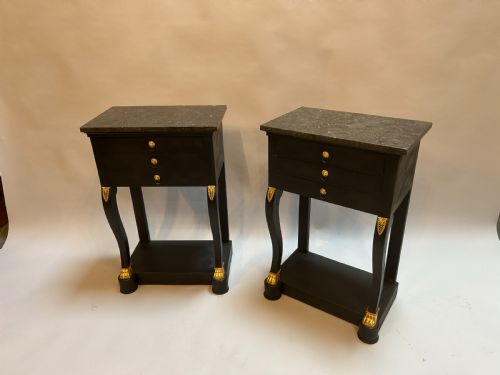
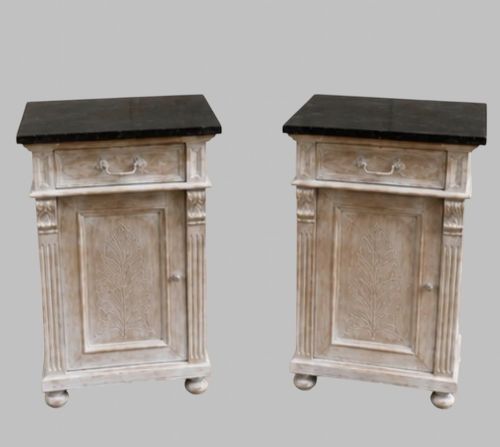
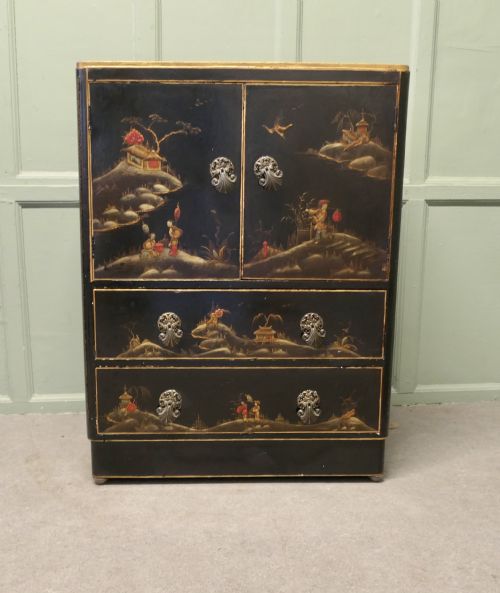
A decorative black cabinet brings together dark surfaces and striking finishes across forms ranging from compact table cabinets to full commodes and pier cabinets. When exploring a decorative black cabinet, buyers encounter diverse expressions including Japanese lacquer, Chinoiserie cupboard designs, and Victorian ebonised pieces.
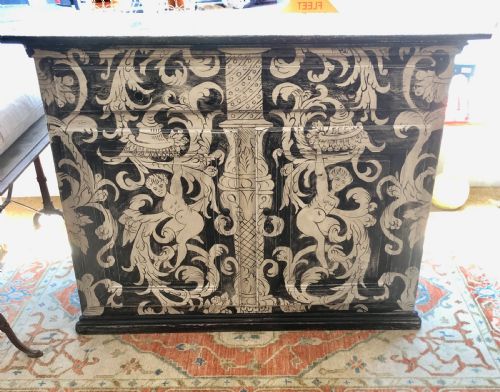
The selections span centuries, incorporating periods such as the seventeenth century, nineteenth century, and early twentieth century. Common forms include bedside chests, table cabinets like the kodansu, and larger painted buffets.
Origin and style intersect through French Empire designs, Meiji and Taisho period Japanese works, and English painted pieces. Each variant uses its dark surface to frame intricate details, whether through gilt metal mounts, hand-painted scenes, or contrasting wood inlays.
Materials and construction
Makers built these pieces primarily from wood, often applying layers of paint, black lacquer, or ebonisation to achieve the characteristic dark ground. Walnut and ebony appear alongside softer woods that serve as a foundation for decorative surface treatments.
Surface ornamentation relies heavily on hand-applied paint, gilt, and gilt metal mounts. Japanese pieces utilise traditional lacquer techniques on table cabinets, while European makers incorporate porcelain mounts, brass details, and intricate painted motifs such as Chinoiserie landscapes.
Decorative Black Cabinet Retail Price Guide 2026
Typical asking prices for decorative black cabinet among the pieces listed under this phrase on Sellingantiques today, from the lower quarter to the upper quarter. They describe what is for sale here now, not the wider market.
Listings feature woods such as walnut and ebony, alongside finishes in lacquer, gilt metal, paint, and brass across various European and Asian traditions.
Variations in quality
The refinement of the surface finish dictates much of the visual depth, particularly in how lacquer or paint handles light and shadow. Hand-painted details, whether depicting Chinese motifs or European grotesque scenes, show varying degrees of precision and artistic execution.
Hardware and secondary materials also separate standard examples from finer ones. The integration of solid brass, gilt metal mounts, or porcelain panels alters the overall presence and structural integrity of each cabinet.
The Decorative Black Cabinet Glossary
- Ebonised
- Wood stained or painted to imitate ebony. This dark finish gained popularity in nineteenth-century furniture to create dramatic contrast with gilt metal mounts.
- Chinoiserie
- European decorative style reflecting Chinese artistic traditions. It frequently appears on lacquer cabinets featuring painted figures, pavilions, and landscapes.
- Kodansu
- A small Japanese portable chest or cabinet with multiple internal drawers. These table cabinets often display fine lacquer work and intricate metal hardware.
- Pier Cabinet
- A narrow display cabinet designed to fit against the wall space between windows. Victorian examples often incorporate glass doors and porcelain plaques.
Decorative Black Cabinet: Frequently Asked Questions
Where should I place a black cabinet?
These pieces function well in living spaces, hallways, or bedrooms where the dark finish provides a strong visual anchor against lighter walls. Smaller table cabinets sit comfortably on desks or larger sideboards.
Larger commodes and pier cabinets serve as primary focal points in a room, offering surface display space alongside enclosed storage for books or objects.
How do I care for lacquer surfaces?
Dust lacquer and painted finishes gently with a soft, dry microfibre cloth to prevent scratching the delicate surface layers. Avoid commercial polishes or harsh chemical cleaners.
Keep these cabinets away from direct sunlight and steady moisture to protect the wood substrate and prevent the dark finish from fading or cracking over time.
What is the difference between ebonised wood and black lacquer?
Ebonised wood is typically a timber such as walnut or fruitwood that has been stained or painted black to mimic solid ebony. The grain of the wood often remains subtly visible beneath the treatment.
Black lacquer involves building up multiple resin or varnish coats to create a deep, glossy, and uniform finish that completely obscures the underlying wood structure.
Are these cabinets suitable for everyday storage?
Bedside chests and larger cupboards provide practical enclosed compartments for books, linens, and personal items. Table cabinets work well for smaller collections and papers.
While functional, consideration should be given to the delicate nature of painted or lacquered surfaces when storing frequently handled or heavy items.